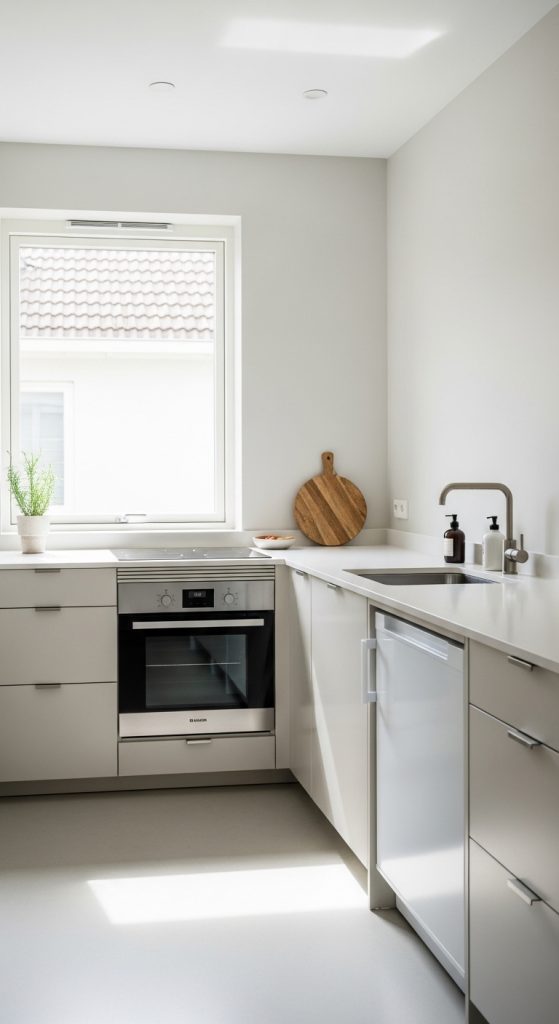
A small kitchen does not have to mean limited functionality or style. In fact, with smart planning and a few creative ideas, even the tiniest kitchens can become highly efficient and visually appealing. Many people struggle with cramped kitchens, where storage is limited, counters are crowded, and movement is restricted. But the key to a functional tiny kitchen lies in maximizing space, organizing intelligently, and choosing practical tools. Small kitchens require a different mindset compared to larger ones; every inch counts. By using multi-purpose furniture, vertical storage, and clever organization techniques, you can transform your kitchen into a space that feels larger than it actually is. In this guide, we will explore ten actionable ideas for tiny kitchens. These tips cover layout optimization, storage solutions, lighting, and design elements that make your kitchen not only functional but also pleasant to cook and work in. Whether you live in a studio apartment, a small house, or a city flat, these ideas will help you use your tiny kitchen efficiently, maintain order, and enjoy cooking without the frustration of clutter.
1. Optimize Vertical Space
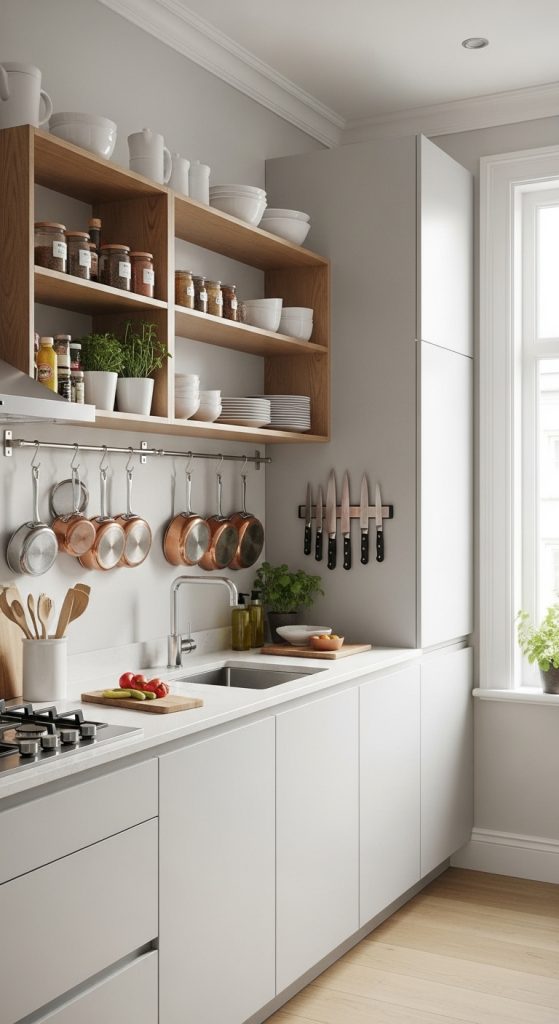
When floor space is limited, using vertical space is essential. Installing tall cabinets that reach the ceiling is an excellent way to add storage without taking up more room. Open shelves can also be mounted on walls to store dishes, spices, or small kitchen appliances. Hooks and racks for hanging pots, pans, and utensils help keep countertops clear. Magnetic strips for knives or spice jars attached to walls are another smart use of vertical space. Even the inside of cabinet doors can be used to hold measuring spoons, cutting boards, or cleaning supplies. For small kitchens, every inch of wall space matters. Make sure to group items based on how often you use them so that frequently used tools are easy to reach. When organizing vertically, balance practicality and aesthetics. Open shelving can make the kitchen feel airy but too much clutter can be overwhelming. By thinking upward, you free up counter space, maintain easy access to essentials, and give your tiny kitchen a more organized and spacious appearance.
2. Use Multi-Purpose Furniture
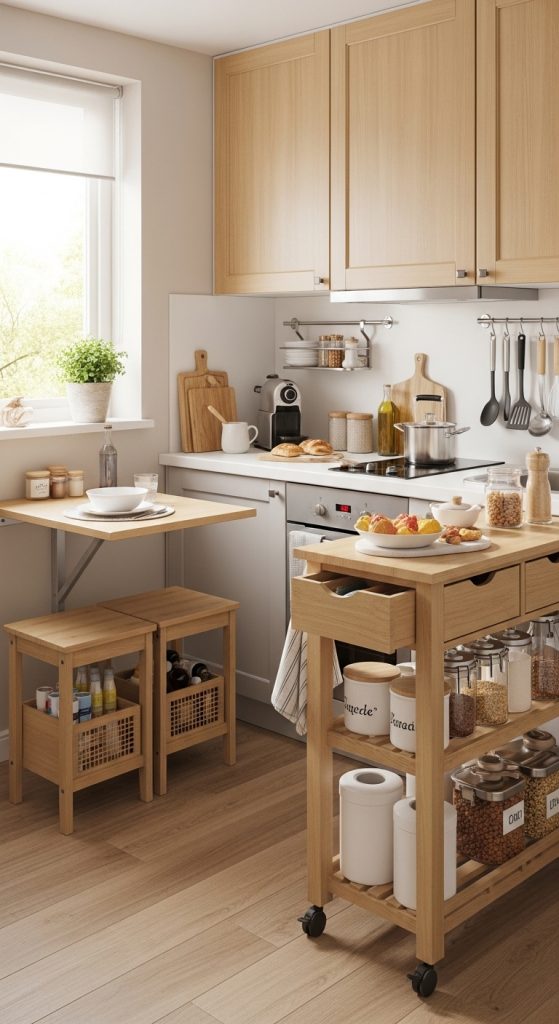
Multi-purpose furniture is a lifesaver in small kitchens. Items like kitchen islands with built-in storage, foldable tables, or benches that double as storage units can save space and add functionality. A rolling cart can serve as extra counter space, a dining surface, or a storage unit for pots and pans. Fold-down tables are perfect for kitchens where a permanent dining table would take too much space. Even stools can include storage under the seat, allowing you to hide small items like cutting boards or kitchen linens. When choosing multi-purpose furniture, focus on quality and mobility. Lightweight pieces are easier to move around, and furniture with wheels provides flexibility for changing the layout depending on your needs. Multi-purpose furniture reduces clutter by consolidating functions into one piece, giving your tiny kitchen a cleaner and more organized look. It allows you to cook, prepare, and dine comfortably without feeling cramped. Carefully selecting these pieces ensures your kitchen remains both practical and stylish.
3. Incorporate Pull-Out Storage
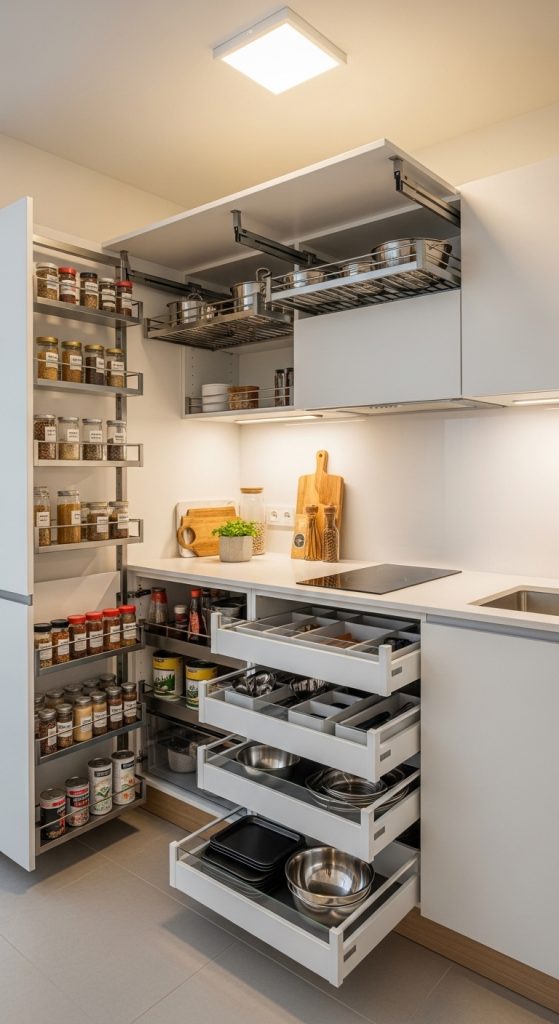
Pull-out storage solutions are perfect for small kitchens where deep cabinets can be hard to access. Pull-out drawers, pantry racks, and sliding shelves help you reach items at the back without moving everything in front. Spice racks, trash bins, and cutlery organizers that slide out of cabinets keep your kitchen organized and efficient. Pull-out storage is especially useful for narrow spaces between cabinets or appliances. These systems also prevent items from getting lost in the back of cupboards. You can use pull-out racks for pots, pans, or baking sheets, ensuring every piece has a designated spot. Installing pull-out baskets in lower cabinets allows you to store vegetables or cleaning supplies neatly. For small kitchens, pull-out storage maximizes every inch and reduces the need for extra furniture or shelving. It makes cooking more efficient because you can quickly locate and access what you need. With this approach, your tiny kitchen will function more like a full-sized kitchen while keeping clutter out of sight.
4. Choose Compact Appliances
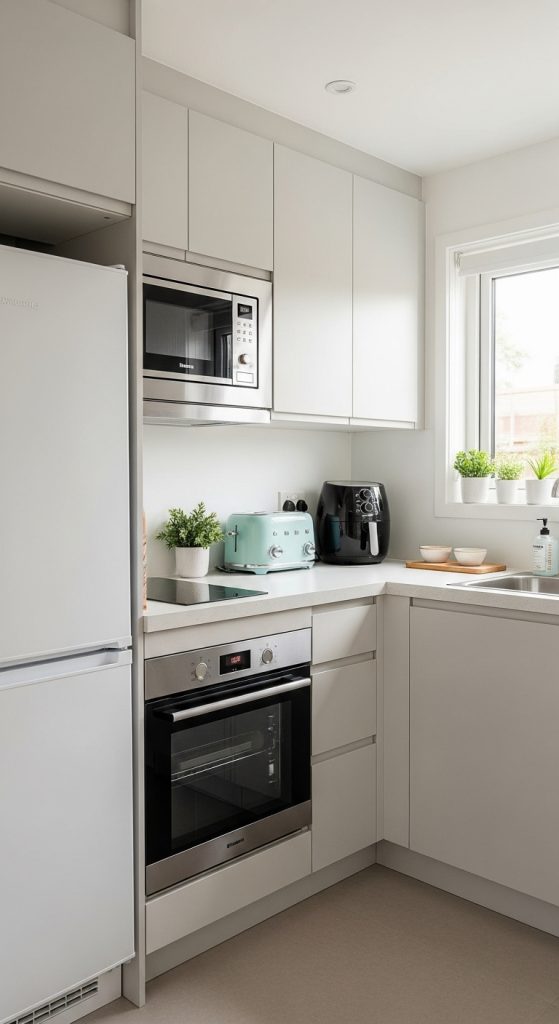
In a tiny kitchen, traditional appliances may occupy too much space. Compact appliances are designed to fit in small kitchens without sacrificing performance. Look for smaller ovens, slim refrigerators, and multi-functional cookers that combine several functions into one unit. For example, an air fryer or a toaster oven can replace a conventional oven for small meals. Stackable appliances, such as microwaves above ovens, also help save counter space. When selecting appliances, measure your kitchen carefully to ensure proper fit and ventilation. Consider energy-efficient models that use less electricity, which is particularly useful in smaller spaces where multiple appliances are running simultaneously. Compact appliances allow you to maintain full kitchen functionality while keeping the space uncluttered. Choosing the right-sized appliances makes cooking easier and ensures your kitchen remains comfortable to move around in. Even in a tiny kitchen, well-chosen appliances can provide all the capabilities of a larger kitchen.
5. Maximize Counter Space
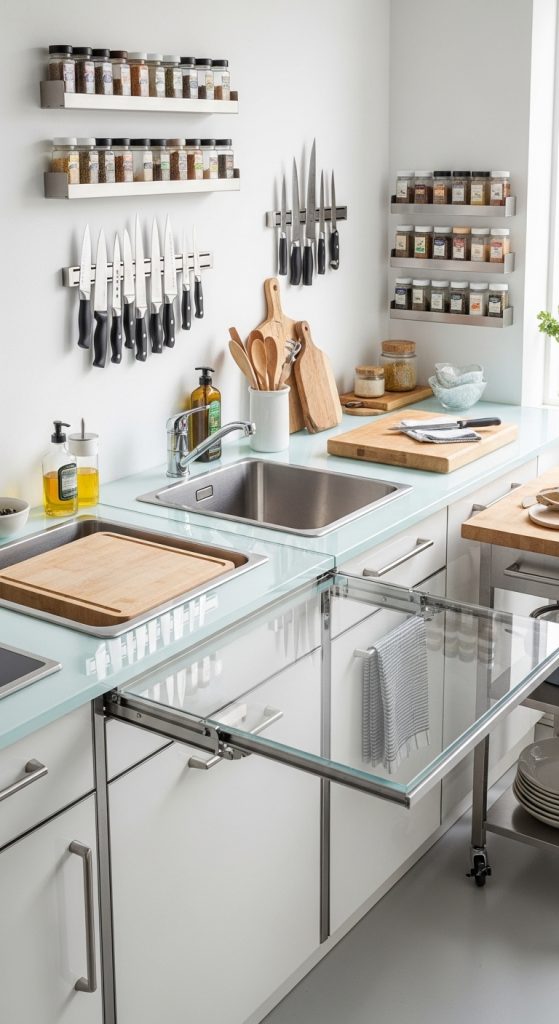
Counter space is often limited in small kitchens, but there are ways to create more working area. Cutting boards that fit over the sink or stove provide extra space for food preparation. Foldable or pull-out countertops can be installed in unused corners. Keeping counters clear of small appliances and utensils also makes the kitchen feel larger. Use wall-mounted racks or magnetic strips to store knives and frequently used tools instead of placing them on the counter. Consider a rolling kitchen cart that doubles as a prep surface when needed. By organizing and prioritizing your counters for essential tasks, you can create an efficient workflow for cooking and cleaning. Even small additions, like a slim shelf above the counter or under-cabinet hooks, can free up valuable space. Maximizing counter space in a tiny kitchen is crucial because it allows you to cook comfortably, store items efficiently, and maintain a clean, uncluttered appearance.
6. Light and Color Choices
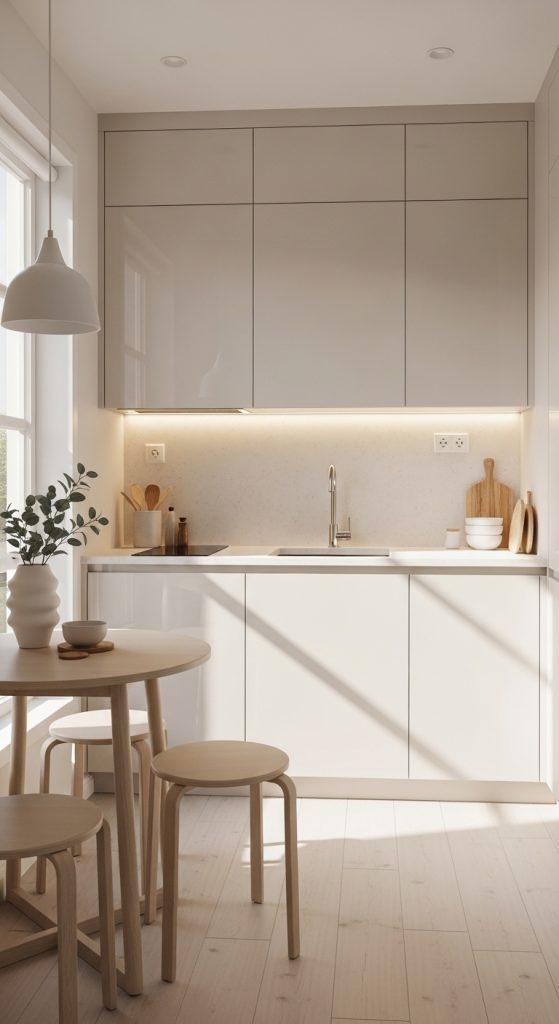
Lighting and colors can significantly impact how spacious a tiny kitchen feels. Bright, natural light makes a room feel open, so avoid heavy curtains that block sunlight. If natural light is limited, use under-cabinet lighting or LED strips to illuminate counters. Light-colored walls, cabinets, and countertops reflect light and create a more open feel. Consider using a monochromatic color scheme or soft neutral tones to avoid visual clutter. Glossy finishes on cabinets or tiles also reflect light, adding to the illusion of space. Mirrors can be strategically placed to make a kitchen feel larger. Choosing the right light and color can make a small kitchen more inviting, airy, and visually spacious. Even subtle adjustments, like painting the inside of cabinets a light color or installing a glass cabinet door, contribute to a brighter, more open kitchen environment. In tiny kitchens, these small design choices have a big impact on the overall feel and comfort.
7. Install Efficient Storage Organizers
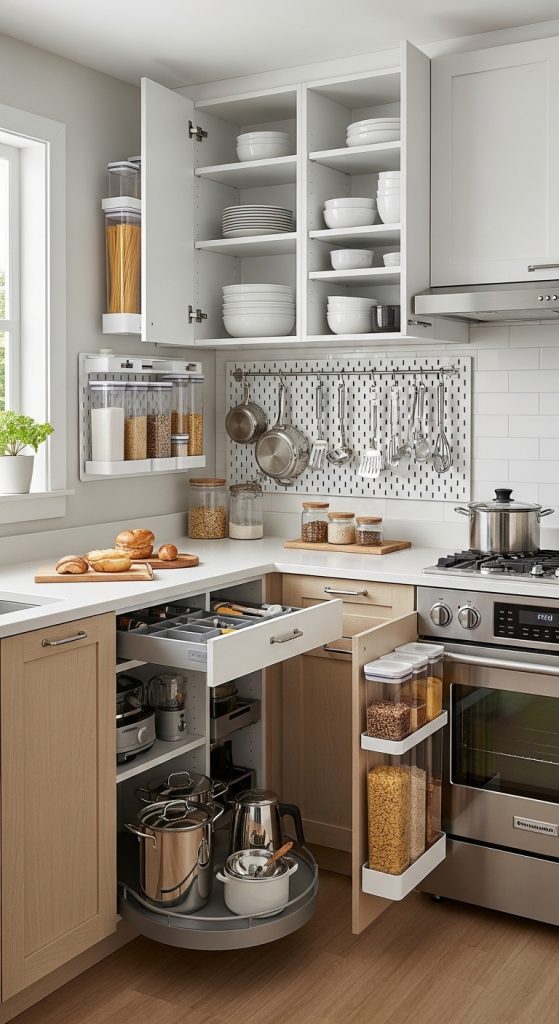
Efficient storage organizers help maximize every inch of a small kitchen. Drawer dividers, shelf risers, and lazy Susans ensure that items are easy to access and well-organized. Stackable containers for dry goods reduce clutter and make the most of vertical cabinet space. Pegboards can hold pots, pans, and kitchen tools, providing both storage and easy visibility. Labeling containers and shelves makes it easier to find items quickly and maintain order. Small baskets or bins inside cabinets help separate items like snacks, canned goods, or baking supplies. Efficient storage organizers not only save space but also simplify cooking and cleaning tasks. By designing storage thoughtfully, you can keep your tiny kitchen tidy, organized, and fully functional without overcrowding counters or cabinets.
8. Create a Smart Workflow
A smart workflow ensures that your tiny kitchen is functional and efficient. Arrange your kitchen tools, appliances, and work zones according to their use. For example, keep knives and cutting boards near prep areas, pots and pans near the stove, and dishes near the sink or dishwasher. Group similar items together to reduce unnecessary movement while cooking. Use designated areas for food prep, cooking, and cleaning to avoid cluttering any single spot. Planning your workflow carefully allows multiple kitchen tasks to happen smoothly, even in a small space. A smart layout reduces frustration and makes cooking in a tiny kitchen much more enjoyable. Even minor adjustments, like placing a trash bin near prep areas or storing frequently used spices within arm’s reach, improve efficiency and save time.
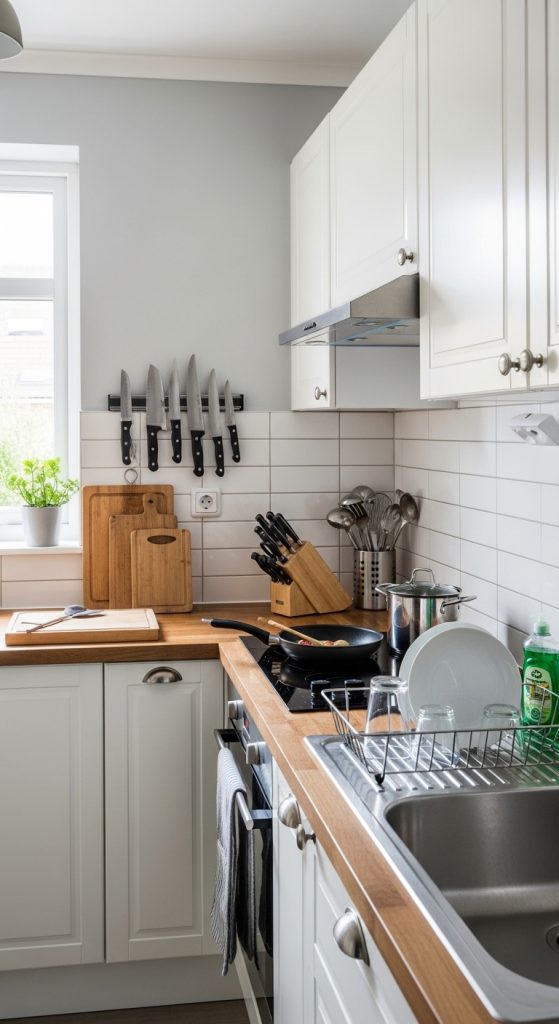
9. Utilize Corner Spaces
Corners in tiny kitchens are often overlooked but can be used creatively. Corner cabinets with rotating shelves or lazy Susans make accessing items easy. Corner shelves or hanging racks can hold spices, small appliances, or decorative items without taking up valuable space. For cooking areas, a corner countertop can serve as an extra prep surface. Corner drawers with specialized inserts maximize storage by fitting uniquely shaped items. By effectively using corner spaces, you can expand storage and functionality without adding more furniture. Proper corner utilization makes a small kitchen feel more spacious, organized, and practical. Small adjustments, like adding a rotating shelf inside a corner cabinet, can transform awkward areas into highly functional storage zones.
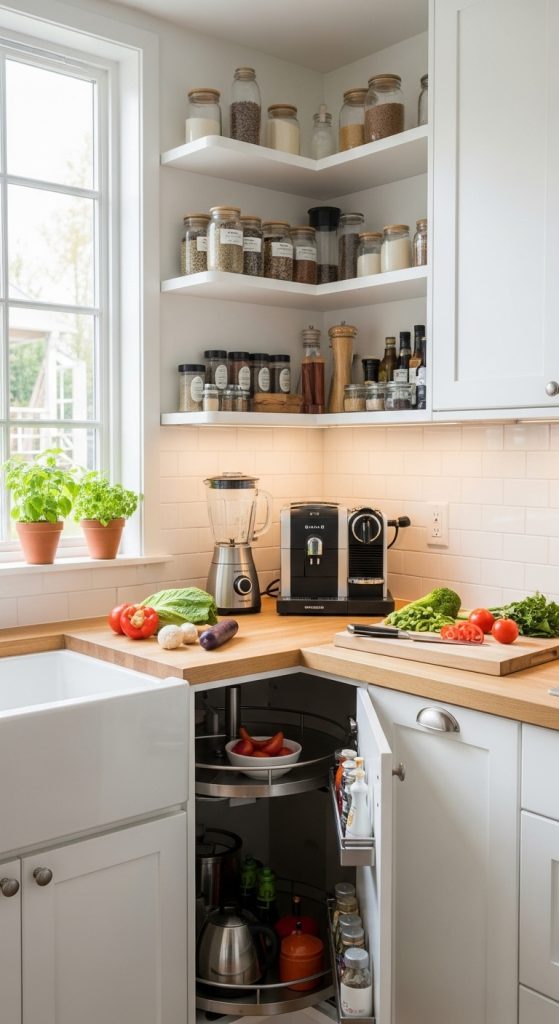
10. Keep it Minimal and Clutter-Free
A tiny kitchen functions best when it is minimal and clutter-free. Limit the number of items on countertops, avoid unnecessary decorations, and store appliances that are not frequently used. Regularly declutter drawers, cabinets, and shelves to maintain order. Choose a few essential tools and utensils rather than trying to keep every gadget you own. A clean, minimal kitchen not only looks larger but also makes cooking more efficient. Minimalism in a tiny kitchen focuses on functionality, organization, and simplicity. By keeping only what you need, you reduce stress, save space, and create a comfortable cooking environment. Regular maintenance, combined with smart storage solutions, ensures that even the smallest kitchen remains fully usable, attractive, and enjoyable.