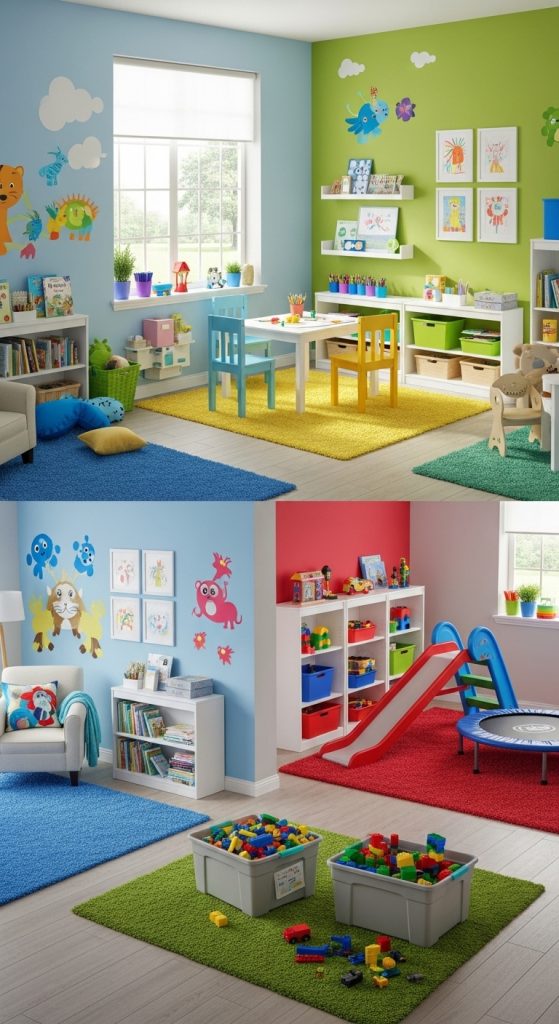
Designing a kids playroom is an exciting opportunity to create a space where children can explore, learn, and grow. A well-planned playroom is more than just a room filled with toys. It should encourage creativity, physical activity, problem solving, and independent play. At the same time, it should be safe, organized, and easy for parents to maintain. Whether you have a small corner of a room or a full dedicated playroom, thoughtful design choices can make the space both fun and functional.
When planning a kids playroom, it is important to consider several factors. Safety is the most important priority. Furniture should be sturdy, materials should be child-friendly, and sharp edges should be avoided. Storage is another essential element because children accumulate toys, books, puzzles, and art supplies quickly. Good storage solutions help keep the space tidy and teach children organizational habits from a young age.
Color, lighting, and furniture layout also play a major role in creating an engaging environment. Bright colors can stimulate creativity, while comfortable seating and soft flooring make the room inviting. Parents can also include educational areas, craft stations, reading corners, and activity zones.
This article explores ten creative kids playroom design ideas. Each idea includes design concepts, preparation steps, materials, and practical tips to help you create a playful and organized environment for children.
1. Creative Art and Craft Corner
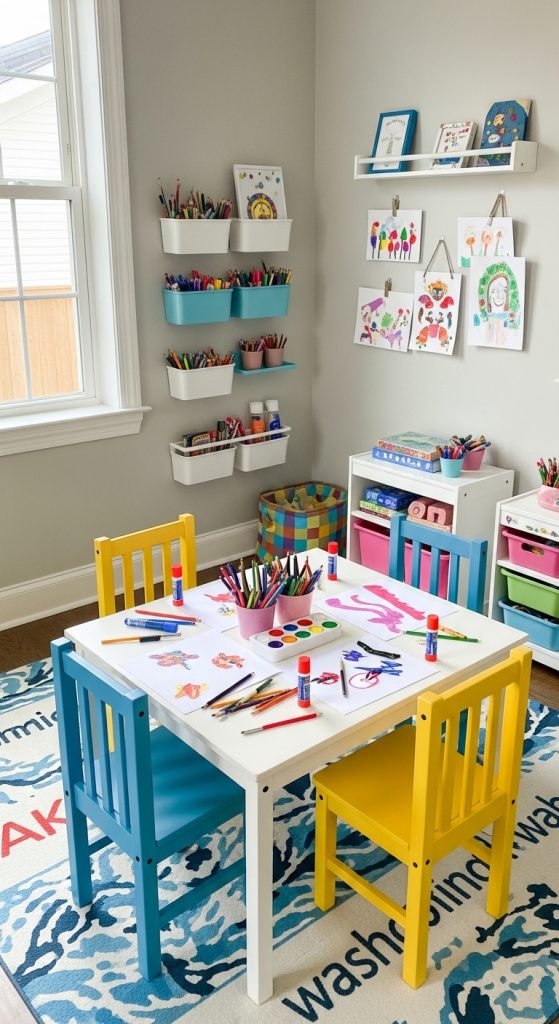
An art and craft corner is one of the most valuable additions to a kids playroom because it encourages creativity, imagination, and hands-on learning. Children naturally enjoy drawing, painting, cutting, and creating, so giving them a dedicated space for artistic activities can keep them engaged for hours.
To design an art corner, begin by choosing a small section of the playroom near a wall or window. Natural light is helpful for drawing and painting activities. Install a child-sized table and chairs so children can sit comfortably while working on their projects.
The preparation materials for this area include washable paints, crayons, markers, colored pencils, craft paper, glue sticks, child-safe scissors, and paintbrushes. Storage is also important, so consider using labeled plastic containers, small shelves, or wall-mounted organizers to keep supplies accessible but tidy.
Protecting the walls and floors is another important step. You can use washable paint on the wall or attach a chalkboard panel or whiteboard where children can draw freely. For flooring, a washable mat or vinyl floor covering can make cleaning easier after messy projects.
Finally, display your child’s artwork on a small gallery wall using frames or clips. This not only decorates the playroom but also boosts children’s confidence by celebrating their creativity.
2. Cozy Reading Nook
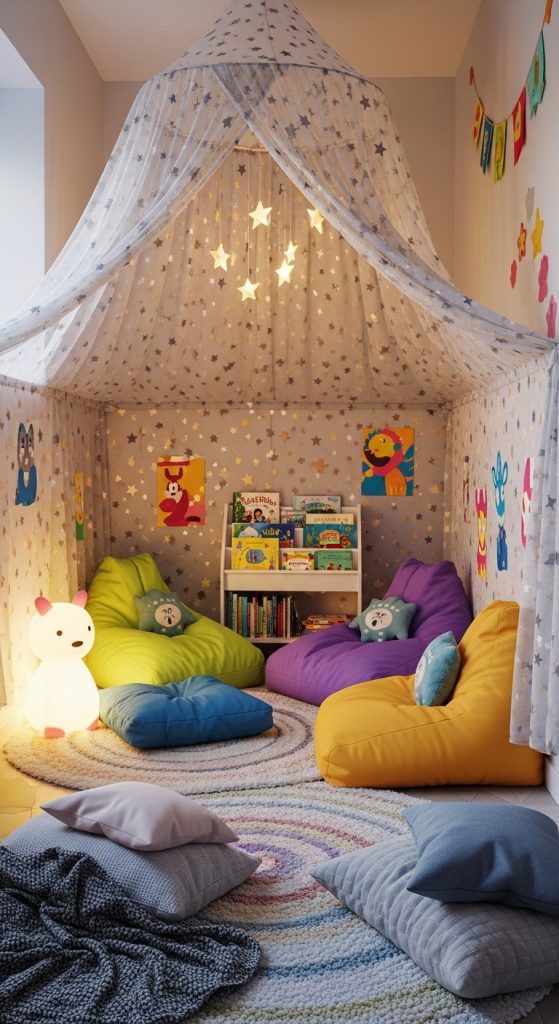
A reading nook can transform a playroom into a place where children develop a love for books and storytelling. Creating a quiet and comfortable reading area encourages children to spend time exploring stories and building their imagination.
Start by selecting a quiet corner of the playroom that feels calm and relaxing. Soft lighting works best in this space, so you can use a small floor lamp or warm wall lights to create a cozy atmosphere. The main furniture piece for this area should be comfortable seating such as a bean bag, small sofa, floor cushions, or a soft rug.
Preparation materials include a small bookshelf, children’s books, storybooks, educational books, and picture books. Choose a bookshelf that is low enough for children to easily reach their favorite books. Organizing books by size or theme can make it easier for children to choose what they want to read.
Decor elements can also make the reading nook more attractive. Add soft pillows, blankets, and gentle colors on the walls. Some parents even use a small canopy or tent to create a magical storytelling space.
Another useful idea is to include a small basket where children can place books they are currently reading. This keeps the area organized and encourages independent reading habits.
A cozy reading nook helps balance active play with quiet learning time, making the playroom both fun and educational.
3. Interactive Learning Wall
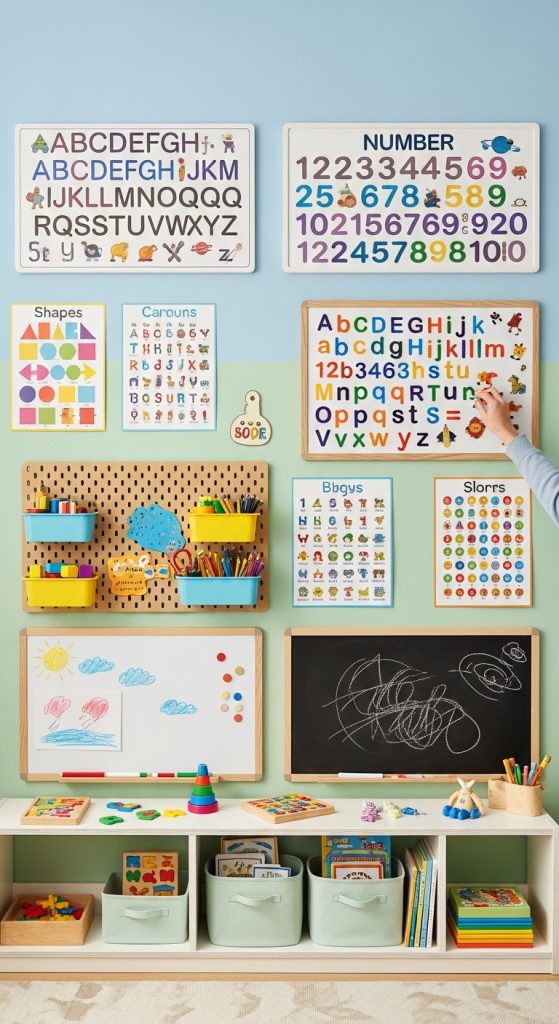
An interactive learning wall can turn an ordinary playroom wall into an educational activity center. This design idea allows children to learn while playing through hands-on activities and visual engagement.
To begin, select a large wall area in the playroom. Paint it with bright but calming colors to make it visually appealing. You can divide the wall into sections for different learning activities.
Preparation materials may include alphabet charts, number boards, magnetic boards, educational posters, puzzles, and interactive learning toys. Magnetic letters and numbers are especially useful because children can move them around to form words or solve simple math problems.
Another option is to install a pegboard wall. Pegboards allow you to hang learning tools, puzzles, small baskets, and art supplies. This keeps the wall organized while also making it interactive.
Whiteboards or chalkboards are also excellent additions. Children can practice writing letters, drawing shapes, or solving simple math problems.
Parents can rotate educational materials every few months to keep the learning wall fresh and exciting. For example, you might display alphabet charts for younger children and add geography maps or science posters as they grow older.
An interactive learning wall encourages curiosity and makes learning a natural part of everyday play.
4. Indoor Climbing and Activity Zone
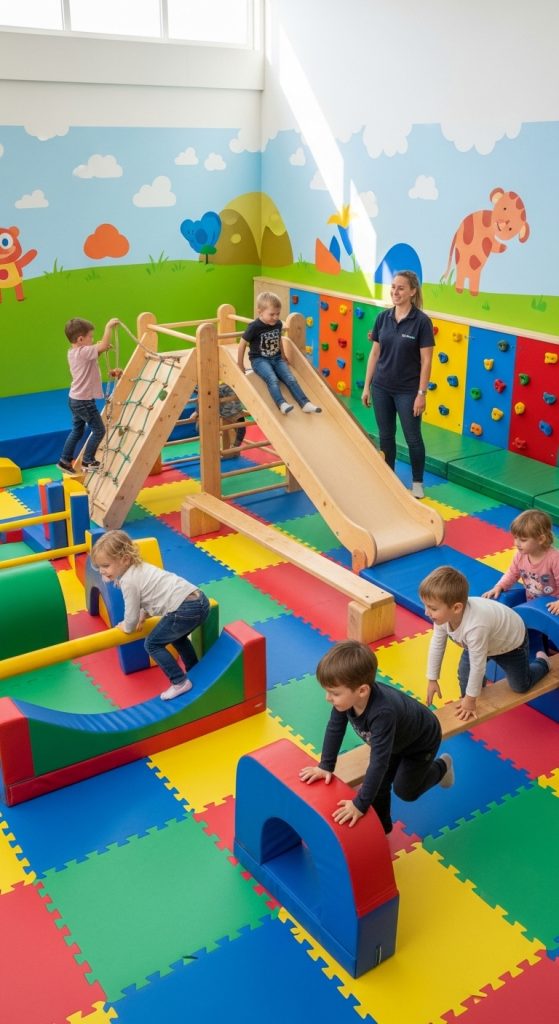
Children have a lot of energy, and an indoor climbing and activity zone can provide a safe way for them to stay active inside the home. This type of playroom design supports physical development, coordination, and strength.
The first step is to ensure safety. The floor should be covered with thick foam mats or padded flooring to prevent injuries. Soft surfaces are essential because children will be jumping, climbing, and moving actively.
Preparation materials include climbing frames, mini slides, balance beams, rope ladders, and wall climbing panels designed for indoor use. Many parents choose wooden climbing structures because they are sturdy and durable.
Make sure all equipment is securely installed and appropriate for the age of the children using it. Keeping enough open space around the equipment allows children to move safely.
Bright colors and playful shapes can make the activity zone more exciting. You can also add a small trampoline or soft obstacle course for additional physical play.
This area should always be supervised by adults, especially for younger children. Regularly checking the equipment ensures everything remains safe and secure.
An indoor climbing zone helps children burn energy, improve coordination, and stay physically active even during rainy or cold weather.
5. Toy Storage and Organization System
One of the biggest challenges in a kids playroom is managing toys. Without proper storage, toys can quickly create clutter and make the room difficult to use. A well-organized toy storage system helps maintain order and teaches children responsibility.
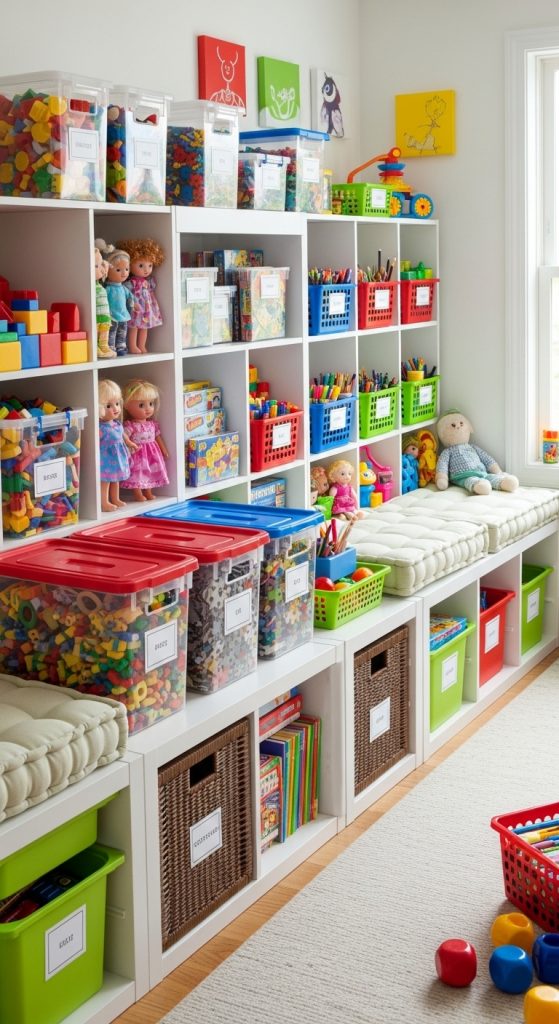
Start by sorting toys into categories such as building blocks, dolls, puzzles, vehicles, and art supplies. Once you understand what needs to be stored, you can design a storage solution that works for your space.
Preparation materials include storage bins, baskets, shelves, cubby units, toy chests, and labeled containers. Transparent bins are helpful because children can see what is inside without opening every box.
Low shelves are ideal for kids playrooms because children can easily reach their toys and put them away after playing. Labeling each bin with pictures or words helps younger children understand where each toy belongs.
Rotating toys every few months is another effective strategy. Keep some toys stored away and bring them out later to keep children interested.
Furniture with built-in storage, such as benches or ottomans, can also save space while keeping the room tidy.
A thoughtful toy organization system keeps the playroom clean, reduces stress for parents, and encourages children to develop good habits.
6. Imaginative Role Play Area
Role play areas allow children to pretend and explore different real-life roles such as cooking, teaching, or running a shop. These activities support imagination, social skills, and creativity.
To create a role play area, select a section of the playroom where children can act out different scenarios. This space should be open enough for movement and interaction.
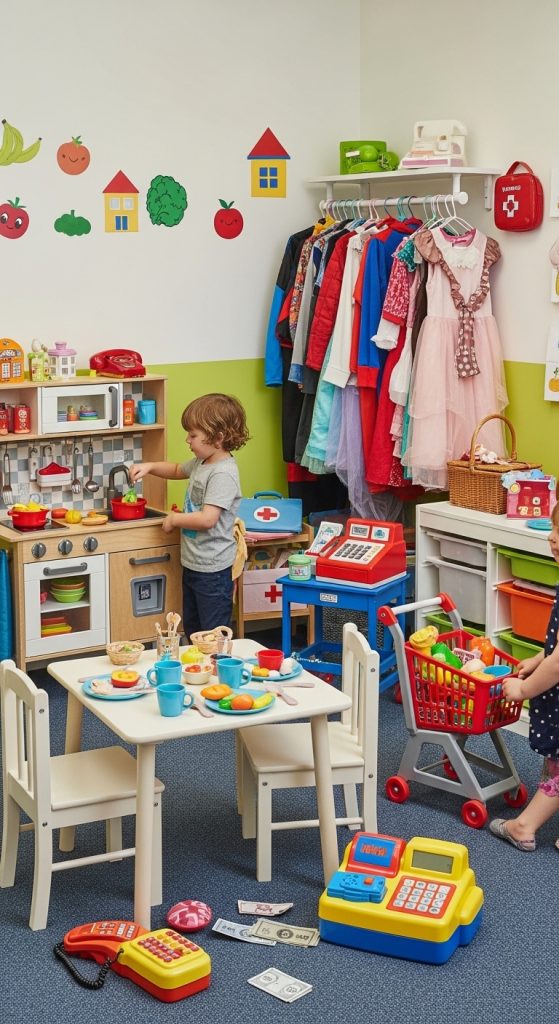
Preparation materials might include a toy kitchen set, play food, toy cash registers, dolls, costumes, and small furniture pieces. A dress-up rack with costumes such as firefighter uniforms, doctor coats, or princess dresses can make role play more exciting.
You can also add simple props like toy telephones, grocery baskets, or miniature household items. These objects help children imitate real-world situations.
Decorating the area to match the theme can make it more engaging. For example, a pretend grocery store might include shelves and toy fruits, while a play kitchen could have small cabinets and utensils.
Role play activities help children practice communication, storytelling, and problem solving. They also encourage cooperative play when siblings or friends join the activity.
An imaginative role play area can become one of the most loved parts of the playroom.
7. Building and Construction Zone
Many children enjoy building things with blocks, construction toys, and creative building kits. A dedicated construction zone provides space for children to design, experiment, and build structures.
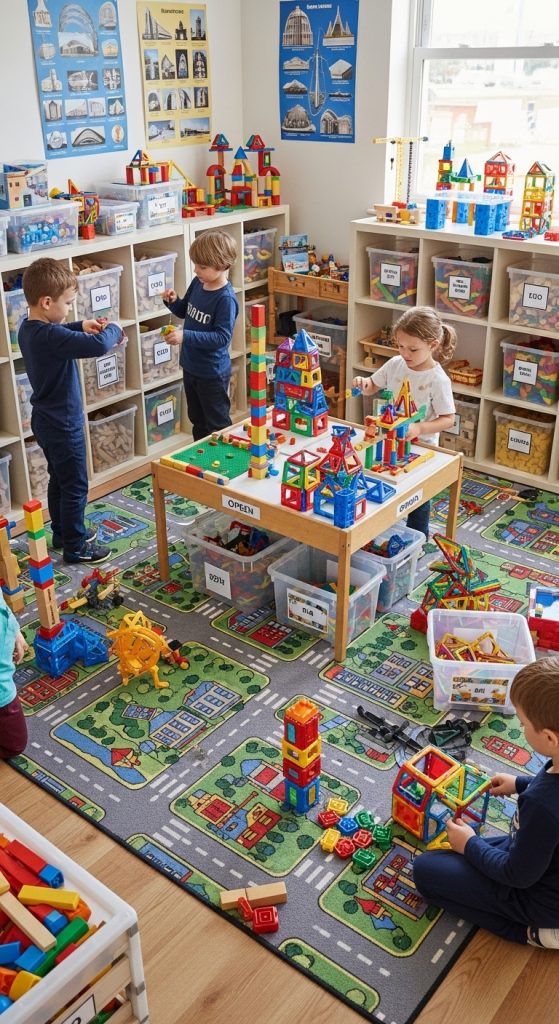
Begin by placing a large play mat or carpet in the center of this area. This provides a comfortable surface for sitting and building. The space should be wide enough so children can spread out their materials.
Preparation materials include building blocks, interlocking bricks, wooden blocks, magnetic construction sets, and toy tools. Sorting these items into containers helps children quickly find what they need.
A low table can also be added for building projects that require a flat surface. Some parents install a building board on the wall for attaching construction toys.
Storage bins placed near the building zone make cleanup easier. Children can place pieces back in their containers once they finish playing.
This area supports problem solving, creativity, and fine motor skills. Children learn to experiment with balance, structure, and design while building towers, houses, and creative shapes.
A construction zone encourages hands-on learning and keeps children engaged in productive play.
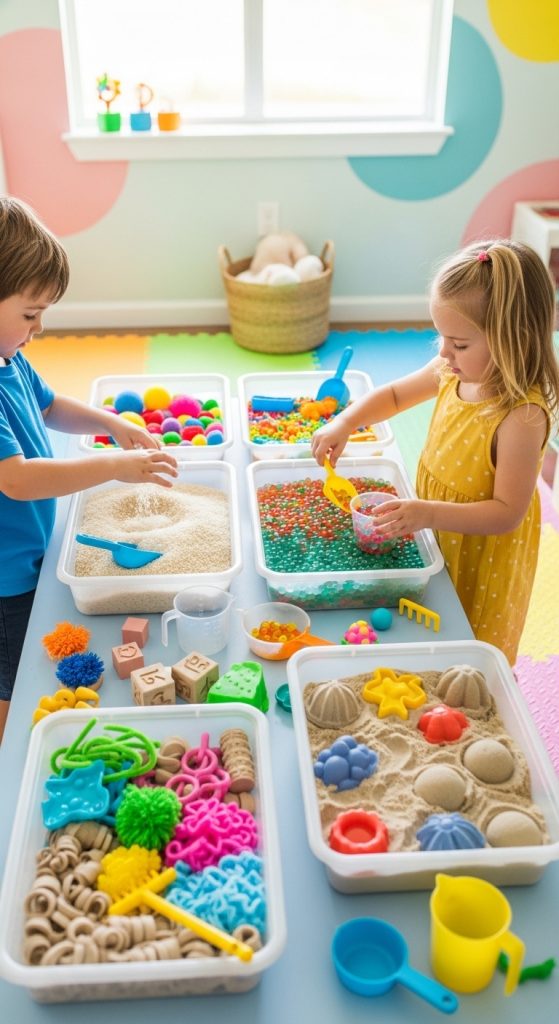
8. Sensory Play Space
A sensory play space is designed to stimulate children’s senses through touch, sound, color, and movement. Sensory activities are especially helpful for younger children because they support brain development and exploration.
To create this space, start with a sturdy table or sensory bin station. The floor should be easy to clean because sensory activities can sometimes be messy.
Preparation materials may include sensory bins filled with rice, sand, water beads, or kinetic sand. Other useful materials include textured toys, soft fabrics, and colorful objects.
Containers, scoops, measuring cups, and small tools allow children to explore textures and movements. These tools help develop hand coordination and fine motor skills.
Parents should supervise sensory play to ensure safety, especially with small objects. Using non-toxic materials is essential for younger children who may place items in their mouths.
The sensory area can be changed frequently. For example, one week it might contain colored rice, while another week it may include water play or soft foam materials.
A sensory play space allows children to experiment, explore textures, and learn through hands-on discovery.
9. Mini Performance Stage
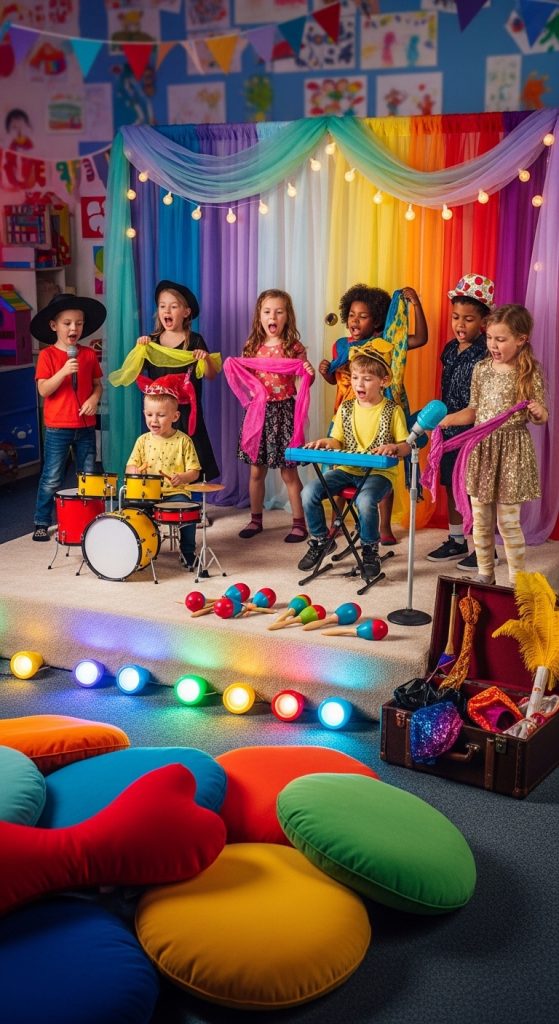
A mini performance stage can be a fun addition to a kids playroom, especially for children who enjoy music, dancing, or acting. This creative space encourages confidence and self-expression.
To design a small stage, choose a corner or raised platform area. Even a simple carpeted area with a small curtain can create the feeling of a performance stage.
Preparation materials may include musical instruments such as toy drums, keyboards, microphones, and maracas. Costume accessories like hats and scarves can make performances more entertaining.
A small speaker or music player can allow children to sing along with their favorite songs. Soft stage lighting or decorative lights can add excitement to the area.
You can also place a small audience seating area with cushions where siblings or parents can watch performances. This makes children feel proud of their presentations.
The stage area encourages creativity, storytelling, and confidence. Children can perform plays, sing songs, or practice dancing.
A mini performance stage transforms the playroom into a lively space where children can express themselves freely.
10. Multi Purpose Playroom Layout
A multi purpose playroom layout combines several activity zones in a single well-organized space. This design is ideal for families who want one room to support many types of play and learning.
Begin by dividing the room into sections based on activities such as reading, crafts, building, and active play. Using rugs, shelves, or furniture placement can help define each area without building walls.
Preparation materials include storage shelves, soft flooring, activity tables, and comfortable seating. Each zone should have easy access to the materials needed for that activity.
For example, the art station should have craft supplies nearby, while the reading area should include bookshelves and cushions. Good lighting is also important throughout the room.
Color coding different areas can make the layout visually organized. For instance, you might use bright colors for the activity zone and softer colors for the reading area.
The key advantage of a multi purpose layout is flexibility. As children grow, the room can easily adapt to their changing interests and needs.
A thoughtfully planned multi purpose playroom allows children to explore many activities in one safe, organized, and inspiring environment.