Basements often serve as storage spaces, laundry areas, or sometimes even go unused. However, with careful planning, a basement can be transformed into one of the most functional and cozy areas in your home: a basement living room. These spaces offer a chance to create a private family lounge, home theater, game area, or even a quiet retreat. Because basements typically have less natural light and can be prone to dampness, preparation and material choice are critical for comfort, durability, and style.

Before designing a basement living room, check for moisture, leaks, or uneven floors. Consider installing proper insulation and ventilation to regulate temperature and prevent mold growth. Flooring options should be moisture-resistant and durable, while walls may require special paint or finishes to keep the room bright and inviting. Lighting is essential to counteract the lack of windows, and layered light sources such as ceiling lights, floor lamps, and table lamps can create warmth.
In this guide, we explore 10 basement living room ideas, each including preparation steps, recommended materials, and practical design tips. These ideas will help you make the most of your basement space and turn it into a stylish and functional part of your home that suits your lifestyle.
1. Cozy Family Lounge
A cozy family lounge is a perfect basement living room idea for families. Begin by inspecting the basement for dampness or cracks in walls and floors. Seal any gaps and apply moisture-resistant paint or a vapor barrier to protect the walls. Proper insulation, particularly on exterior walls and ceilings, ensures that the room remains warm in winter and cool in summer.
For flooring, choose durable and moisture-resistant options like vinyl planks, engineered wood, or carpet tiles with a water-resistant backing. Large area rugs enhance warmth and comfort. Select a sectional sofa or large couch with soft cushions to accommodate family gatherings. Neutral wall colors such as beige, soft gray, or cream make the basement feel bright and welcoming.
Lighting is essential in basements. Use recessed ceiling lights along with floor lamps and table lamps to create layers of light. Adding throw blankets, cushions, and wall art provides a personalized touch. A media console and television can transform the space into a family movie area, making this basement lounge the ultimate retreat for relaxation and togetherness.

2. Modern Minimalist Basement Living Room
A modern minimalist basement living room focuses on clean lines, simplicity, and functionality. Begin by repairing any uneven walls and applying a primer to prepare the surface for painting. Light colors such as white, cream, or soft gray brighten the space and make the basement feel more open.
Furniture selection is key in a minimalist design. Choose simple sofas, a sleek coffee table, and built-in shelving to maintain organization and reduce clutter. Opt for flooring like polished concrete or luxury vinyl tiles that are moisture-resistant and easy to clean. Rugs in neutral shades can soften the room without overwhelming it.
Lighting should include recessed ceiling lights and LED strips along shelves or behind a TV unit for a modern effect. Decorations should remain minimal—a single large wall art piece or a potted plant can be enough to create interest. Hidden storage cabinets help maintain the minimalist look while keeping the space functional. This design works best for homeowners who prefer calm, clutter-free living areas.

3. Basement Home Theater
Transforming a basement into a home theater is an ideal idea for movie enthusiasts. Basements are naturally dark, which is perfect for watching films. Start by checking electrical systems to ensure they can support projectors, sound systems, and dimmable lighting. Professional installation may be necessary for optimal safety.
Soundproofing is important to avoid disturbing other rooms. Add acoustic insulation to walls and ceilings, and consider a carpeted floor to reduce noise reflection. Dark-colored walls like navy, charcoal, or deep brown enhance the cinematic experience.
Invest in comfortable seating, such as recliners or a sectional sofa, and a large TV or projector screen. Install dimmable lighting and blackout curtains to control brightness. Add a small snack bar or shelving for popcorn and drinks. This setup allows family and friends to enjoy a true movie experience, turning your basement into an entertainment hub.

4. Rustic Style Basement Living Room
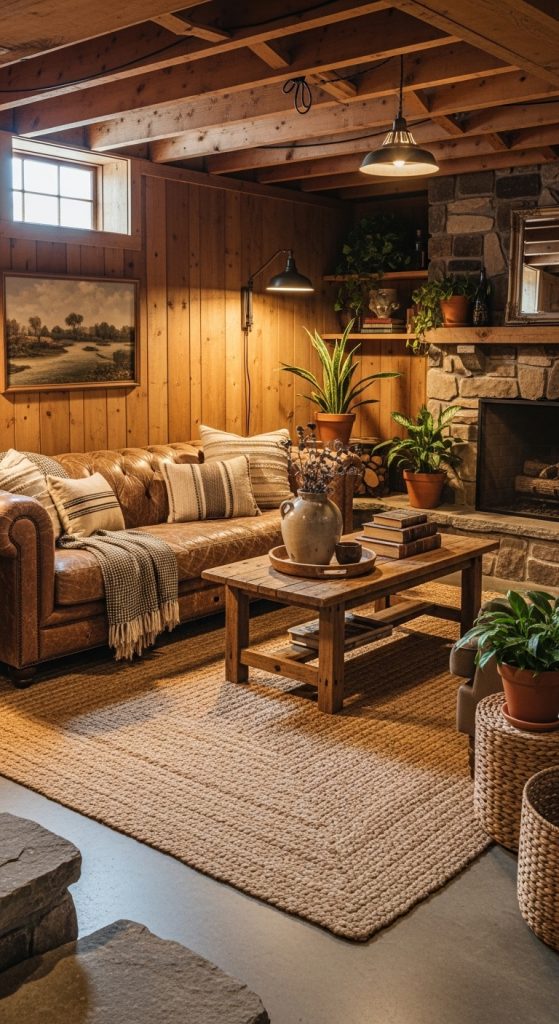
A rustic basement living room emphasizes warmth, natural materials, and a cozy atmosphere. Begin by preparing the walls with moisture-resistant drywall and insulation. Consider using wooden wall panels, exposed beams, or faux wood accents to create character. Warm paint tones like muted brown, cream, or green enhance the rustic charm.
Flooring should be durable and moisture-resistant, such as laminate or vinyl with a wood-like finish. A large woven area rug adds softness and warmth. Furniture should feature natural materials: leather sofas, wooden coffee tables, and open wooden shelves create a welcoming feel.
Lighting should include warm-toned bulbs, pendant lights, or lantern-style fixtures. Decorative touches such as vintage frames, woven baskets, and indoor plants bring the space to life. An electric fireplace can add both warmth and visual appeal. This rustic approach is perfect for turning a basement into a comforting retreat while embracing natural textures.
5. Multi-Purpose Basement Living Room
A multi-purpose basement living room is ideal for families who need versatile spaces. Begin by measuring the basement and dividing it into zones, such as a seating area, workspace, or play area. Ensure proper ventilation and lighting in each section. Use moisture-resistant flooring like vinyl planks for durability.
Furniture should be functional and adaptable. Consider a sofa bed, storage ottomans, or foldable desks to maximize space efficiency. Use rugs or shelves as room dividers to define different areas. Cabinets or built-in storage can keep toys, books, and electronics organized.
Layered lighting, including ceiling lights, task lamps, and floor lamps, ensures each area is well-lit. A multi-purpose basement can accommodate family gatherings, work-from-home setups, or children’s activities without feeling crowded, making it one of the most practical basement living room ideas.

6. Bright and Airy Basement Living Room
Many basements feel dark and closed-in. To create a bright and airy basement living room, maximize light through wall colors, flooring, and lighting design. Paint walls and ceilings in soft whites, pale blues, or cream tones. Glossy or semi-gloss finishes reflect more light.
Flooring should also be light-colored; vinyl, laminate, or engineered wood work well. Add mirrors opposite light sources to reflect both artificial and natural light. Furniture in soft, light fabrics contributes to an airy feel, while sheer curtains allow window light to pass through while maintaining privacy.
Layered lighting, including ceiling lights, floor lamps, and table lamps, brightens dark corners. Add indoor plants for freshness and color. This approach makes a basement feel spacious, welcoming, and more like a main living room rather than an underground space.

7. Industrial Style Basement Living Room
An industrial style basement embraces raw materials and architectural features. Begin by inspecting ceilings and walls; exposed beams and pipes can be incorporated into the design if they are safe. Seal concrete floors to prevent dust and moisture issues.
Brick walls or brick wallpaper add authentic industrial character. Furniture should have a mix of metal and wood finishes, such as leather sofas, metal coffee tables, and wooden shelving with metal frames. Darker color palettes like black, gray, and brown reinforce the industrial aesthetic.
Lighting can include metal pendant lights, track lighting, or exposed Edison bulbs. Keep decorations minimal and functional. This style works well in basements because it highlights structural elements instead of concealing them, creating a modern, stylish living space with unique personality.

8. Basement Living Room with Bar Area
Adding a small bar area in a basement living room is excellent for entertaining. Begin by planning plumbing and electrical connections for a mini fridge, sink, or wine cooler. Flooring should be moisture-resistant, such as tile or vinyl, especially near the bar.
Install cabinets and countertops with durable materials like laminate, quartz, or stone. Include bar stools, shelves for glasses and bottles, and proper lighting above the counter, such as pendant lights or LED strips.
The seating area can include a comfortable sofa, coffee table, and television. Use consistent colors and materials to unify the space. Ensure good ventilation to avoid lingering odors. This basement idea transforms the space into a social hub suitable for hosting friends or family gatherings.

9. Reading and Relaxation Basement Room
A basement can be a quiet retreat by designing a reading and relaxation area. Soundproof walls and ceilings reduce external noise, while warm and soft paint colors like pastel blue, soft gray, or pale green promote calm.
Include comfortable armchairs, a chaise lounge, or a small sofa for seating. Bookshelves along walls provide easy access to reading materials. Flooring should be soft underfoot, such as carpet or large rugs. Lighting is crucial—table lamps, floor lamps, and adjustable reading lights ensure adequate illumination.
Add side tables for coffee, tea, or small snacks. Minimal décor, soft cushions, and blankets create a comfortable atmosphere. This basement setup is ideal for anyone who values quiet time, reflection, and relaxation in a private space within the home.

10. Guest-Friendly Basement Living Room
A guest-friendly basement living room can serve both as a lounge and temporary bedroom. Begin with moisture control, proper insulation, and neutral wall paint. Flooring should be durable, such as vinyl planks, and a large area rug adds comfort.
Provide a sofa bed or daybed for sleeping, along with a small wardrobe or storage cabinet for guest belongings. Include bedside lamps, extra blankets, and cushions for convenience. Ensure the room has adequate ventilation and heating.
Keep décor welcoming and simple with framed pictures, soft cushions, and curtains. If space permits, add a small table and chairs for guests’ use. This idea allows the basement to function as both a living area and guest accommodation, enhancing the home’s versatility and comfort.
