Lighting is one of the most important elements in a dining room. It shapes the mood, highlights your furniture, and helps create a welcoming space for family dinners and special gatherings. The right light fixture can turn an ordinary dining room into a warm and elegant setting. At the same time, poor lighting can make even a beautifully designed space feel dull or uncomfortable.
When choosing a dining room light fixture, you need to consider style, size, materials, light output, and installation requirements. You should also think about ceiling height, table shape, and how the room is used. Some fixtures are best for formal dining spaces, while others are ideal for casual or modern rooms. In addition, preparation work such as electrical wiring, ceiling reinforcement, and proper mounting hardware is essential for safety and long-term durability.
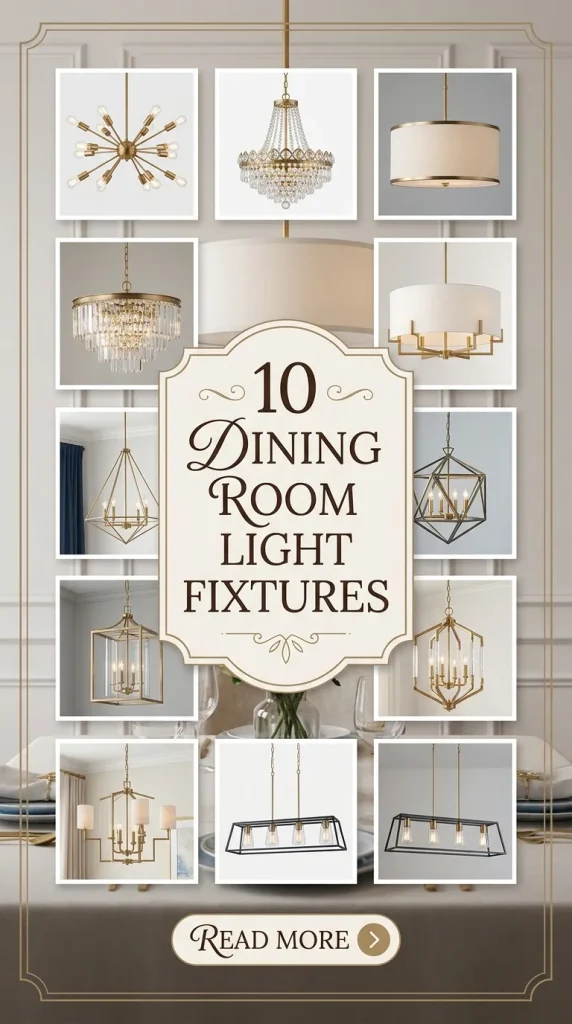
In this detailed guide, you will find ten clearly explained dining room light fixture options. Each section covers design features, materials used, preparation steps, installation considerations, and maintenance tips. The goal is to help you understand not only how each fixture looks but also how it functions and how to install it correctly in your home.
1. Chandelier Light Fixture
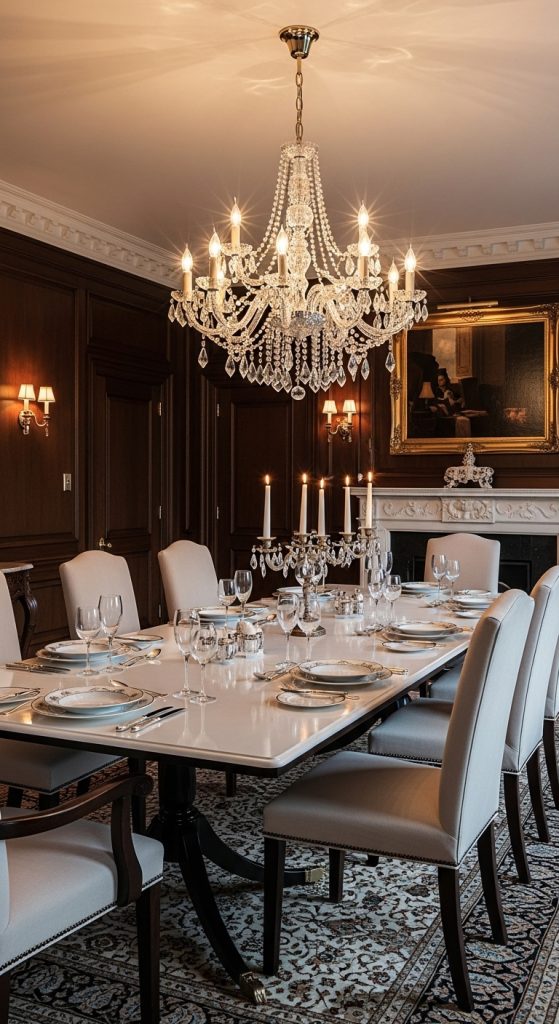
A chandelier is one of the most classic dining room light fixtures. It usually hangs from the ceiling and features multiple arms or tiers with several bulbs. Chandeliers are available in traditional, modern, rustic, and contemporary styles. Materials commonly used include crystal, glass, brass, bronze, iron, and sometimes wood.
Preparation for installing a chandelier is very important. First, you must ensure the ceiling junction box is rated to support the weight. Heavy crystal chandeliers may require a reinforced electrical box secured directly to a ceiling joist. Measure the height from the dining table to the ceiling. Typically, the bottom of the chandelier should hang 30 to 36 inches above the table.
When selecting a chandelier, consider the size of your dining table. A common rule is that the fixture should be about half to two-thirds the width of the table. Dimmable LED bulbs are highly recommended because they allow you to adjust brightness for different occasions.
Maintenance includes dusting regularly and cleaning glass or crystal parts with a soft cloth. Proper installation and safe wiring ensure long-lasting performance and safe operation.
2. Pendant Light Fixtures
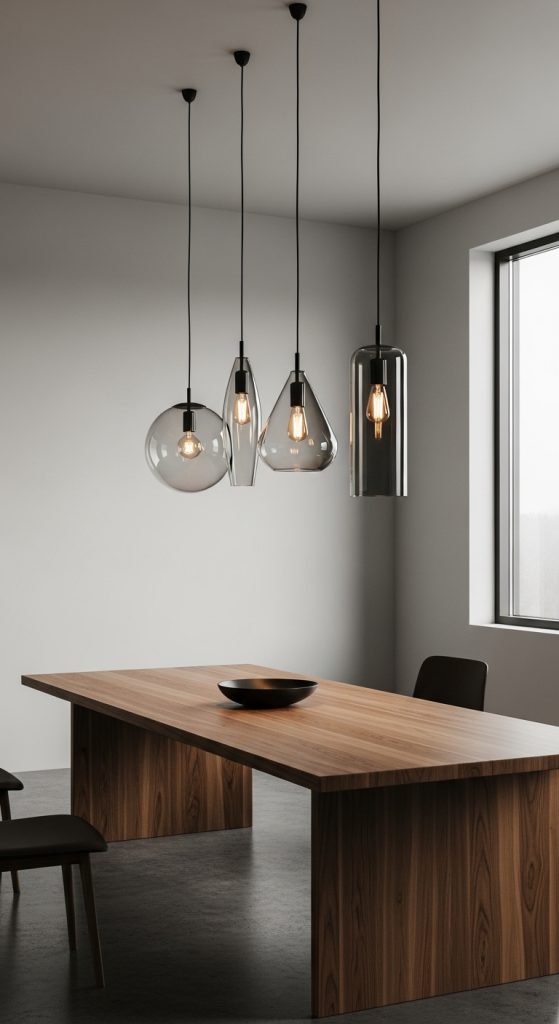
Pendant lights are single light fixtures that hang from the ceiling by a cord, chain, or metal rod. In dining rooms, they are often used in groups of two or three above rectangular tables, or a single large pendant above a round table. They offer a modern and clean look.
Common materials include glass, metal, fabric shades, and concrete. Industrial-style pendants may use steel or iron, while minimalist designs often use matte black or brushed nickel finishes. Glass pendants can be clear, frosted, or tinted to soften the light.
Before installation, measure the table length and plan equal spacing between multiple pendants. Electrical preparation includes installing individual ceiling boxes for each pendant or using a linear mounting plate that supports several lights from one junction box.
Pendant lights work best with adjustable cords or rods, allowing height customization. Make sure the bottom of each pendant is at least 30 inches above the table surface.
LED bulbs are energy efficient and reduce heat. Cleaning involves wiping the shade and checking wiring connections periodically. Proper alignment ensures a balanced and professional appearance.
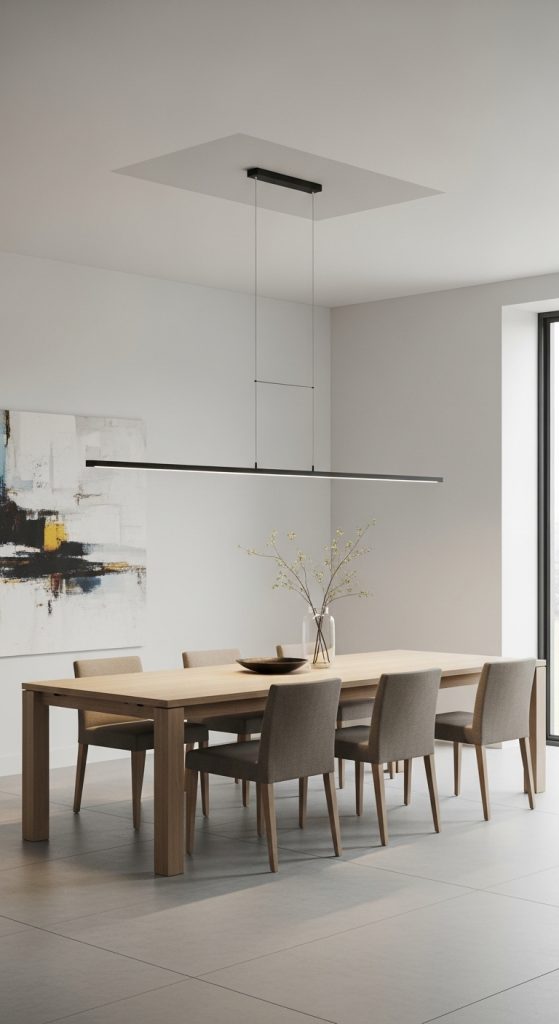
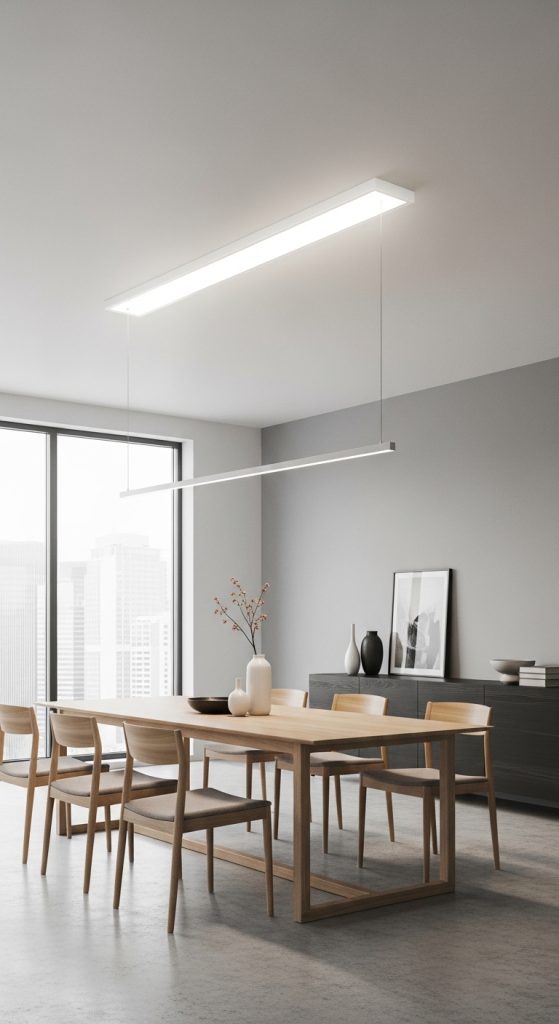
3. Linear Suspension Lights
Linear suspension lights are long horizontal fixtures designed specifically for rectangular dining tables. They provide even light distribution across the entire table surface. These fixtures are common in modern and contemporary interiors.
Materials often include aluminum frames, acrylic diffusers, steel cables, and integrated LED panels. Many linear fixtures come with built-in LED technology, eliminating the need for separate bulbs. These LEDs are long-lasting and energy efficient.
Preparation involves accurate measurement of the dining table length. Ideally, the fixture should be about two-thirds the length of the table. The ceiling must have a strong mounting bracket that can hold the fixture’s weight evenly.
Installation requires precise leveling to ensure the fixture hangs straight. Adjustable suspension cables allow you to control height. Keep the bottom of the light about 30 to 36 inches above the table.
Since most linear lights use integrated LEDs, check color temperature before purchase. Warm white light around 2700K to 3000K is ideal for dining spaces. Maintenance is simple, usually limited to cleaning the diffuser and checking electrical connections.
4. Flush Mount Ceiling Lights
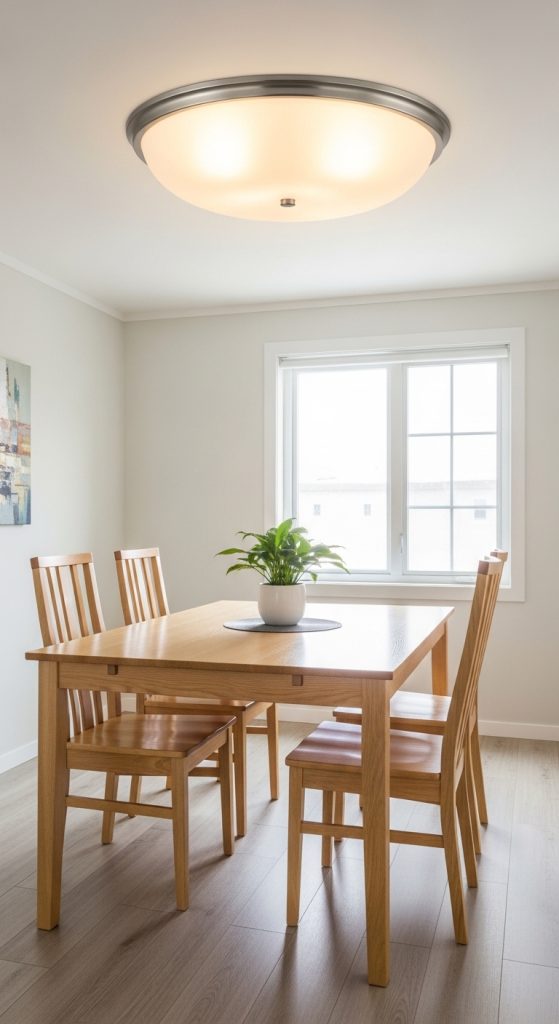
Flush mount lights are attached directly to the ceiling without hanging down. They are ideal for dining rooms with low ceilings. These fixtures provide general lighting rather than focused task lighting.
Materials commonly used include metal bases, glass covers, and acrylic diffusers. Designs range from simple round dome lights to decorative patterned glass styles.
Before installation, turn off the power at the breaker panel. Flush mount lights are generally lighter than chandeliers, so standard ceiling boxes are usually sufficient. Ensure the mounting bracket is securely attached to the junction box.
Flush mount lights should provide enough brightness for the entire room. Since they do not hang over the table, consider pairing them with wall sconces for layered lighting.
LED bulbs are recommended for efficiency. Many flush mounts come with integrated LED panels. Cleaning involves removing the glass cover carefully and wiping it with a soft cloth.
Flush mount fixtures are practical, easy to install, and suitable for casual dining areas or apartments with limited ceiling height.
5. Semi-Flush Mount Lights
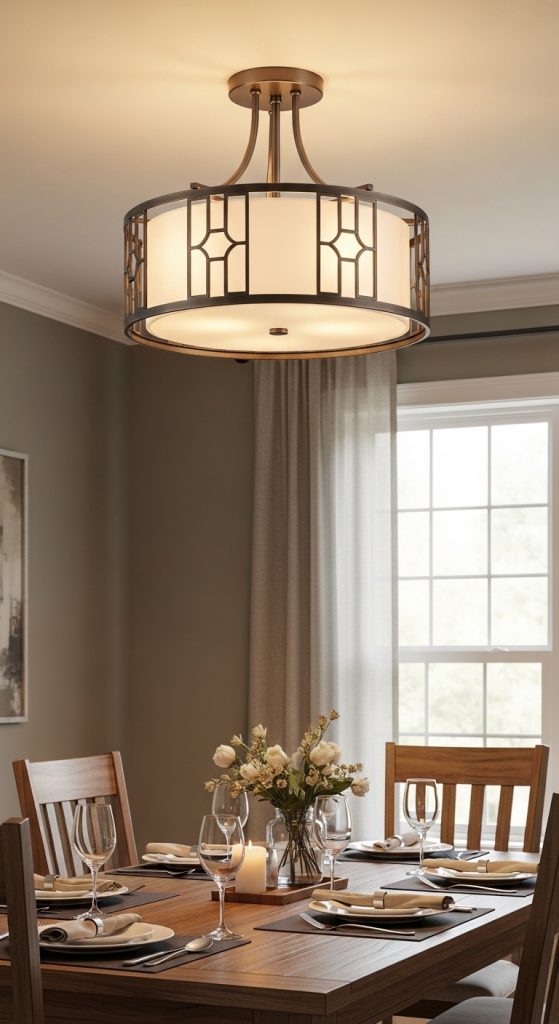
Semi-flush mount fixtures hang slightly below the ceiling, usually by a short rod or decorative stem. They offer more style than flush mounts while still being suitable for medium-height ceilings.
These fixtures are made from metal, glass, fabric, or a combination of materials. Some designs include decorative shades or exposed bulbs for a modern look.
Preparation includes checking ceiling height. Semi-flush lights work well in rooms with ceilings between 8 and 10 feet high. Secure the mounting bracket firmly to the ceiling box.
When selecting size, choose a fixture proportional to the room dimensions rather than the table alone, since it is not directly hanging over the table surface.
Use dimmable bulbs to adjust brightness for different moods. Installation steps include connecting wires, securing the fixture base, and attaching decorative elements.
Maintenance involves dusting and occasionally tightening screws. Semi-flush lights provide a balance between elegance and practicality, making them suitable for both formal and informal dining rooms.
6. Crystal Dining Room Fixtures
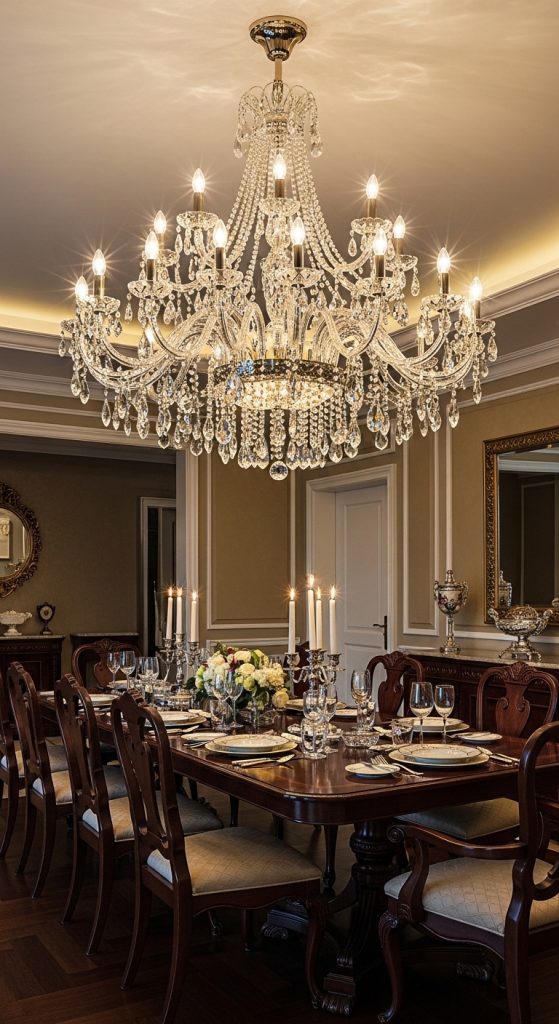
Crystal light fixtures create a luxurious and elegant atmosphere. They are often used in formal dining rooms. Crystals reflect and refract light, producing a sparkling effect.
Common materials include glass crystals, metal frames, and polished finishes like chrome or gold. High-quality crystal fixtures may use lead crystal for greater clarity.
Installation preparation is crucial because crystal fixtures can be heavy. A reinforced ceiling box attached to a ceiling joist is necessary. Professional installation may be recommended for large models.
Cleaning crystal fixtures requires extra care. Turn off power and allow bulbs to cool before cleaning. Use a soft microfiber cloth and gentle cleaner specifically designed for crystal.
Crystal fixtures look best with warm white lighting. Dimmable bulbs enhance the sparkle and allow softer lighting during meals.
While they require more maintenance, crystal fixtures add elegance and visual interest, making them a popular choice for traditional or classic dining spaces.
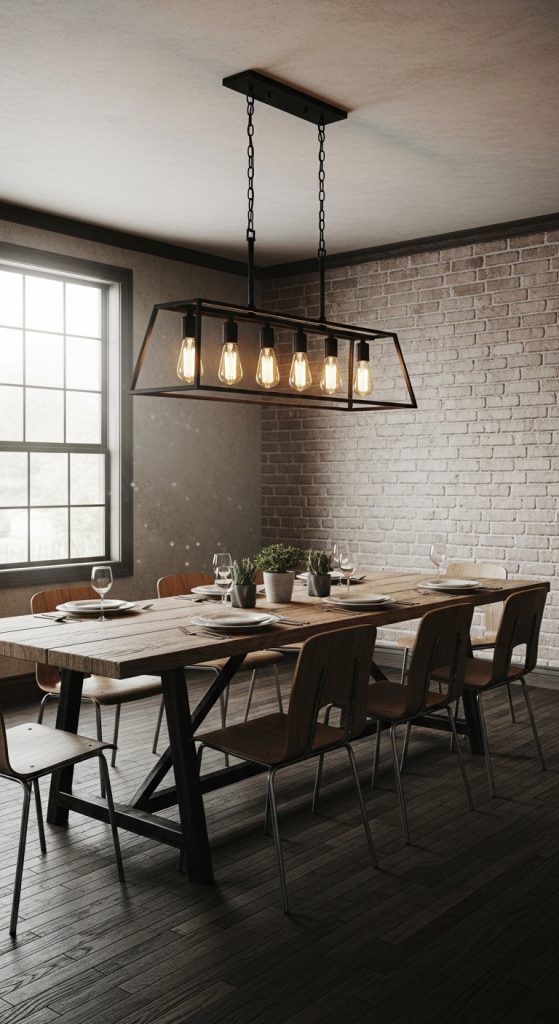
7. Industrial Style Fixtures
Industrial dining room lights feature exposed bulbs, metal finishes, and simple structural designs. They are inspired by warehouse and factory lighting.
Materials often include black iron, steel, aged brass, and sometimes reclaimed wood. Edison-style bulbs are commonly used to enhance the industrial look.
Preparation includes confirming ceiling support and planning bulb placement for even light distribution. Since exposed bulbs can produce glare, consider bulbs with warm color temperatures.
Industrial fixtures are usually lighter than crystal chandeliers but still require secure mounting. Measure hanging height carefully to avoid obstructing views across the table.
Maintenance is simple. Wipe metal surfaces regularly to prevent dust buildup. Check exposed bulbs for proper functioning.
Industrial lighting pairs well with rustic furniture, brick walls, and modern minimalist designs. It offers character and a bold appearance without being overly decorative.
8. Modern LED Panel Fixtures
Modern LED panel lights provide sleek and energy-efficient illumination. They often feature slim profiles and geometric designs.
Materials include aluminum frames and acrylic diffusers. Many models come with integrated LED systems that last for many years.
Preparation involves checking electrical compatibility and ensuring the ceiling box can support the fixture’s mounting bracket. These fixtures are typically lightweight.
LED panel fixtures may offer adjustable color temperature and brightness. Warm white is recommended for dining areas to create a comfortable atmosphere.
Installation includes securing the mounting plate and connecting wiring properly. Since LEDs are built in, bulb replacement is not needed, but the entire unit may need replacement after many years.
Cleaning is simple, requiring only a soft cloth. Modern LED panels suit contemporary dining rooms and open-plan living spaces.
9. Lantern Style Fixtures
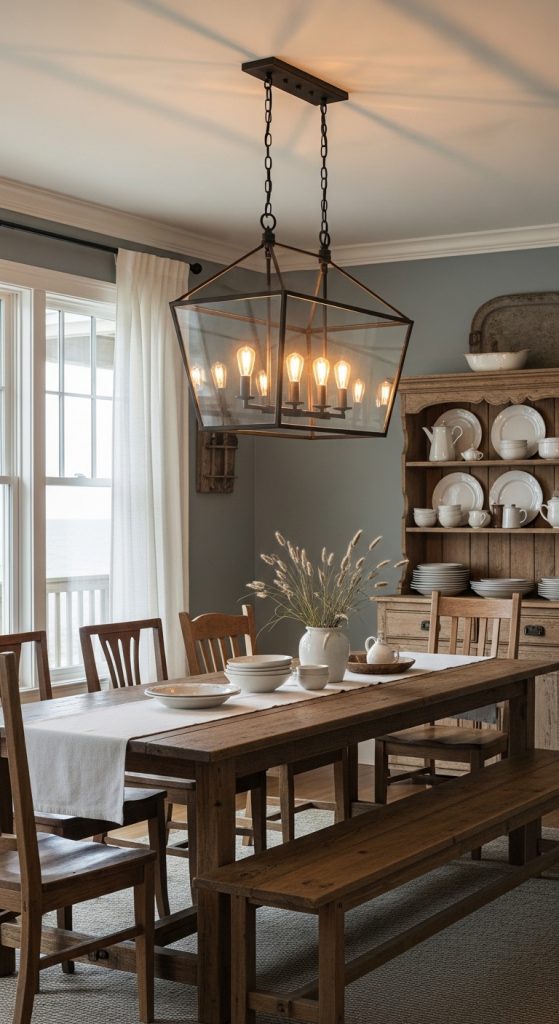
Lantern fixtures bring a traditional and slightly rustic charm to dining rooms. They often feature metal frames surrounding glass panels.
Materials include wrought iron, bronze, brass, and clear or seeded glass. Some lantern designs are open frame, while others have enclosed panels.
Preparation is similar to chandelier installation. Ensure the ceiling box is secure and rated for the fixture’s weight. Measure appropriate hanging height above the table.
Lantern lights work well in farmhouse, coastal, or transitional interiors. They provide focused downward lighting while also adding decorative appeal.
Use LED bulbs that mimic the warm glow of traditional incandescent bulbs. Cleaning includes wiping glass panels and metal frames regularly.
Lantern fixtures create a welcoming and cozy environment while maintaining a structured and classic look.
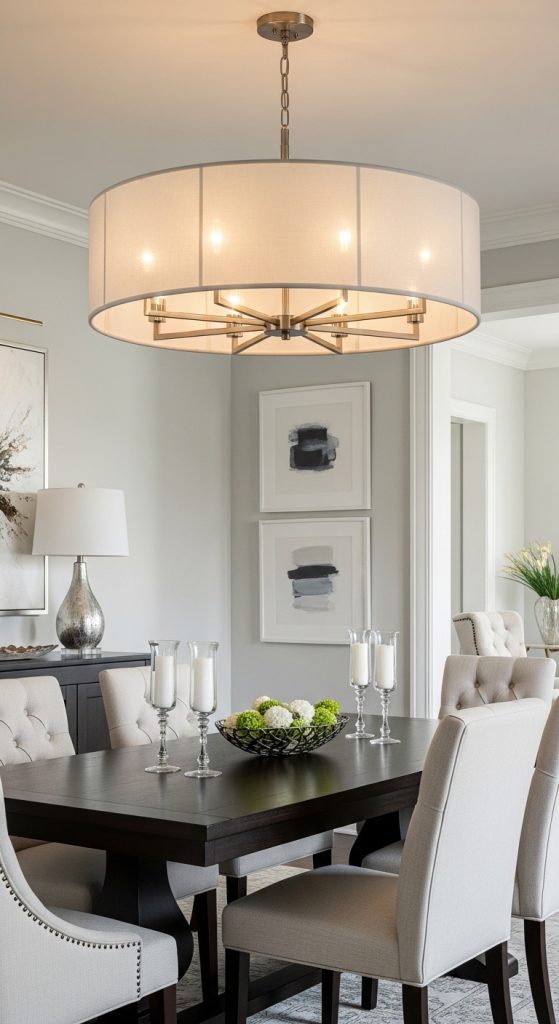
10. Drum Shade Chandeliers
Drum shade chandeliers combine the elegance of a chandelier with the softness of a fabric shade. The circular drum shade surrounds the bulbs, diffusing light evenly.
Materials include fabric shades, metal frames, and acrylic diffusers. Fabric options range from linen to silk. The inner lining may be reflective to increase brightness.
Preparation includes measuring table width and ceiling height. Install a reinforced ceiling box if the fixture is heavy. Ensure the shade diameter suits the table size.
Drum chandeliers work well in modern, transitional, and contemporary dining rooms. They provide soft, glare-free lighting, ideal for comfortable dining experiences.
Maintenance involves dusting the fabric shade gently. Some shades are removable for deeper cleaning.
This fixture style balances decoration and functionality, making it a versatile choice for many dining room designs.