Dinosaurs are one of the most exciting themes for preschool children. Their huge size, interesting shapes, and mysterious history capture young imaginations easily. Using dinosaur crafts in preschool activities is a wonderful way to combine creativity, learning, and fun. Craft activities help children develop important early skills such as hand coordination, focus, color recognition, and problem solving. When children cut, glue, paint, and build dinosaur crafts, they are not only having fun but also strengthening their fine motor skills and expressing their creativity.
Dinosaur crafts also provide opportunities for teachers and parents to introduce simple educational ideas. For example, children can learn the names of different dinosaurs, understand basic shapes, practice counting spikes or legs, and talk about colors and textures. Craft time also encourages teamwork when children share materials and discuss their creations.
Another benefit of dinosaur crafts is that they can be made using simple and affordable materials. Many projects use items that are commonly available at home or in classrooms such as paper plates, cardboard, craft sticks, and recycled materials. This makes dinosaur crafts easy to organize and suitable for preschool environments.
This article presents ten dinosaur craft ideas designed specifically for preschool children. Each activity includes preparation steps, materials needed, and simple instructions that make it easy for teachers and parents to guide young learners through creative dinosaur-themed projects.
1. Paper Plate Dinosaur Craft
Paper plate dinosaurs are simple, colorful, and perfect for preschool learners. This craft allows children to create their own friendly dinosaur while practicing cutting, painting, and assembling basic shapes.
Preparation begins by setting up a clean workspace and laying out materials for each child. Teachers may choose to pre-cut certain pieces if children are very young. The goal is to keep the activity simple while allowing children to participate as much as possible.
Materials needed include paper plates, green or other colored paint, paint brushes, construction paper, scissors, glue, markers, and small googly eyes if available.
First, children paint the paper plate to represent the body of the dinosaur. Most children enjoy using green, but they can choose any color they like. Allow the plate to dry before moving to the next step. While waiting, children can draw dinosaur spikes, legs, and tails on construction paper.
Once the paint is dry, children cut out the shapes and glue them onto the plate. The spikes can be placed along the back edge, while the legs and tail are attached underneath and behind the plate. Finally, children add eyes and draw a friendly dinosaur face.
This craft encourages creativity and helps children learn about dinosaur body parts while developing fine motor skills.

2. Handprint Dinosaur Art
Handprint dinosaur art is a fun and personal craft activity because each dinosaur is created using the child’s own handprint. Preschool children love seeing their hand shapes transform into dinosaurs.
To prepare for this activity, cover tables with newspaper or protective sheets. Have wipes or a washing station ready for cleaning hands afterward. Teachers should also prepare paper sheets for each child.
Materials include washable paint, paint trays, white construction paper, markers, googly eyes, and brushes.
Children begin by dipping their hands into paint or having paint applied to their palms using a brush. Then they press their hand firmly onto the paper to create a handprint. Once the print dries slightly, it becomes the body of a dinosaur.
Teachers can show children how the fingers become legs or spikes depending on how the handprint is positioned. After the paint dries, children use markers to draw dinosaur faces, tails, and additional details. They may also glue on small eyes for decoration.
This craft is excellent for sensory exploration. It also helps children connect art with their own bodies, making the activity memorable and engaging.

3. Cardboard Tube Dinosaur
Recycled cardboard tubes from paper towel or toilet paper rolls can easily be transformed into standing dinosaur figures. This craft teaches children about recycling while encouraging creative building.
Preparation includes collecting enough cardboard tubes and cutting small slits if necessary for attaching parts. Teachers should also prepare templates for heads and tails if children need guidance.
Materials include cardboard tubes, construction paper, glue, scissors, crayons or markers, and optional paint.
First, children decorate the cardboard tube by painting it or coloring it with crayons. This tube will serve as the dinosaur’s body. While the tube dries, children draw and cut out dinosaur heads, tails, legs, and spikes using construction paper.
Next, children attach these pieces to the tube using glue. Some teachers prefer to cut small slits into the tube so that paper parts can slide in and stand securely.
Children can personalize their dinosaurs by adding patterns, spots, or stripes. This activity encourages imagination because each dinosaur can look different.
The finished dinosaurs can stand upright, making them perfect for display or imaginative play during classroom story time.

4. Dinosaur Egg Craft
Dinosaur egg crafts introduce preschool children to the idea that many dinosaurs hatched from eggs. This activity combines art with early science learning.
Preparation involves cutting large egg shapes from cardboard or thick construction paper. Teachers may also prepare smaller dinosaur shapes that will appear to hatch from the eggs.
Materials include egg-shaped cardboard pieces, paint, colored paper, glue, scissors, markers, and cotton balls.
Children start by painting or coloring their egg shapes. Teachers can explain that dinosaur eggs were often speckled or textured. Children can add spots, lines, or patterns using markers or paint.
Next, children cut a zigzag crack across the egg shape to represent the shell breaking open. The egg is then glued onto another sheet of paper while leaving space for the dinosaur to peek out.
Children place a small dinosaur drawing or cutout inside the cracked egg. Cotton balls can be added around the egg to create a nest.
This craft helps children imagine the life cycle of dinosaurs and encourages storytelling as they talk about baby dinosaurs hatching.

5. Clothespin Dinosaur Craft
Clothespin dinosaurs are interactive crafts that preschoolers can open and close like dinosaur mouths. This adds an element of movement to the project.
Preparation involves gathering clothespins and cutting dinosaur head shapes from thick paper or cardstock. Teachers may also print simple templates to guide children.
Materials include wooden clothespins, construction paper, glue, crayons or markers, and small paper triangles for teeth.
Children color their dinosaur head pieces first. These pieces are designed so that when they are attached to the top and bottom of a clothespin, opening the clothespin makes the dinosaur mouth open.
Next, children glue the top half of the dinosaur face to the upper part of the clothespin and the lower jaw to the bottom part. Small white triangles can be added to represent sharp dinosaur teeth.
Once the glue dries, children can squeeze the clothespin to make the dinosaur talk or roar.
This craft supports creativity and also strengthens finger muscles, which are important for writing development.

6. Dinosaur Footprint Painting
Dinosaur footprint painting is an energetic craft activity that allows children to explore shapes and movement. It also introduces the idea of dinosaur tracks.
Preparation includes creating large dinosaur footprint templates from cardboard. Teachers may also prepare paint trays and long sheets of paper to create track patterns.
Materials include washable paint, cardboard footprint stamps, large paper sheets, paint trays, and aprons.
Children dip the footprint stamp into paint and press it onto the paper to create dinosaur tracks. Teachers can show children how dinosaurs walked in patterns, leaving footprints behind them.
Children can create long trails of footprints across the paper. They may also add drawings of dinosaurs at the end of the track to show which dinosaur made the prints.
This craft combines art with movement and pattern recognition. It also encourages children to think about how animals move and leave marks in the environment.

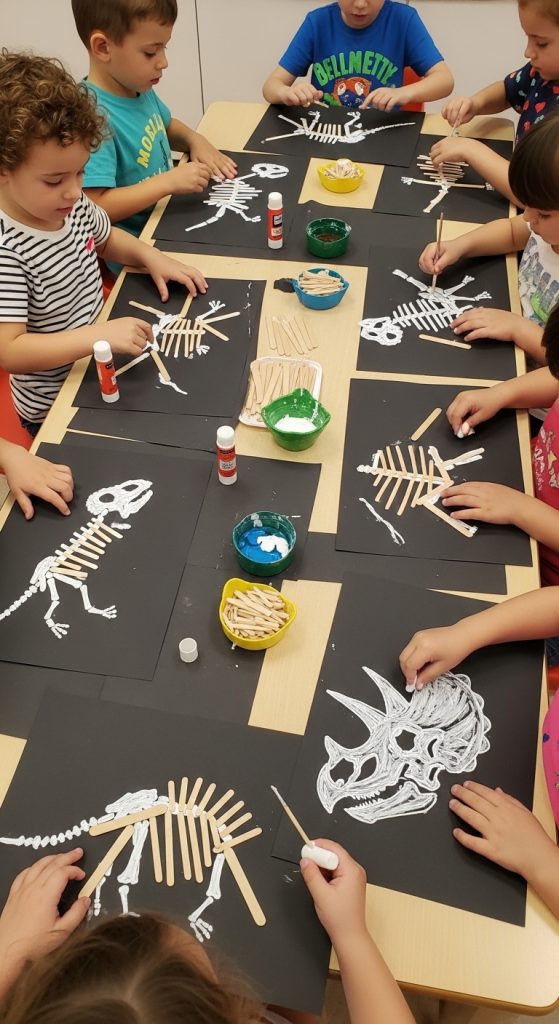
7. Popsicle Stick Dinosaur Skeleton
Creating dinosaur skeletons using popsicle sticks is a great way to introduce basic ideas about bones and prehistoric fossils.
Preparation involves providing enough craft sticks and arranging them so children can see how they might form a skeleton shape.
Materials include popsicle sticks, glue, black construction paper, white paint or chalk, and dinosaur skeleton reference pictures.
Children arrange the popsicle sticks on the paper to represent a dinosaur skeleton. The sticks can form the spine, legs, and tail. Once they are happy with the arrangement, they glue the sticks onto the paper.
After the glue dries, children use white paint or chalk to draw additional bones around the sticks.
Teachers can explain that scientists find dinosaur bones buried in the ground and use them to learn about dinosaurs.
This craft introduces simple science ideas while allowing children to experiment with shapes and structure.
8. Paper Bag Dinosaur Puppet
Paper bag puppets are a classic preschool craft that easily adapts to dinosaur themes. These puppets are perfect for storytelling and imaginative play.
Preparation includes providing paper lunch bags and cutting out dinosaur body parts ahead of time if necessary.
Materials include paper bags, construction paper, glue, scissors, markers, and googly eyes.
Children begin by decorating the bottom flap of the bag as the dinosaur’s face. This part becomes the puppet’s mouth when the bag is opened and closed.
Next, children glue paper spikes, teeth, and eyes onto the bag. They may also decorate the body of the puppet with scales, spots, or stripes.
Once the puppet is finished, children place their hands inside the bag and move the mouth to make the dinosaur talk.
Teachers can use these puppets during story time or allow children to perform small puppet shows.

9. Dinosaur Mask Craft
Dinosaur masks allow preschool children to pretend they are dinosaurs. This craft supports imaginative play and group activities.
Preparation includes cutting mask shapes from sturdy paper or thin cardboard and creating holes for eyes.
Materials include mask templates, elastic string, paint, markers, glue, and colored paper.
Children decorate the mask using paint or markers. They may add spikes, horns, or scales using cut paper pieces. Teachers can show examples of dinosaurs like triceratops or stegosaurus for inspiration.
Once the decorations are complete, elastic string is attached to the sides of the mask so children can wear them comfortably.
Children can then pretend to stomp, roar, and move like dinosaurs.
This activity combines art with dramatic play and physical movement, making it very engaging for preschool learners.

10. Dinosaur Collage Craft
A dinosaur collage allows children to combine many different materials to create a large dinosaur picture. This craft encourages creativity and experimentation.
Preparation includes collecting a variety of craft materials such as tissue paper, buttons, fabric pieces, and colored paper.
Materials include large paper sheets, glue, scissors, crayons, and assorted craft materials.
Children start by drawing a large dinosaur outline on the paper. Teachers can help if needed. Then children fill the dinosaur shape using different materials.
For example, tissue paper can represent scales, buttons can be used for eyes, and fabric pieces can form patterns on the dinosaur’s body.
Children glue each material onto the outline until the dinosaur is fully decorated.
This craft helps children explore textures, colors, and creative expression. Each collage becomes a unique piece of artwork.
