
Paper crafts are one of the easiest and most enjoyable activities for children. They require simple materials, encourage creativity, and help kids develop important skills such as hand coordination, patience, and problem solving. With just a few sheets of paper, scissors, glue, and colors, children can create beautiful and fun items. Paper crafts are also affordable and accessible because paper is something most families already have at home. This makes them perfect for school activities, weekend fun, rainy days, or creative learning sessions.

Crafting with paper allows children to explore their imagination while improving their fine motor skills. Cutting shapes, folding paper, and decorating designs help strengthen the small muscles in their hands. It also encourages focus and attention to detail. Parents and teachers can use paper crafts as a learning opportunity by combining them with storytelling, lessons about nature, or holiday celebrations.
Another advantage of paper crafts is that they can be adapted for different age groups. Younger children can work on simple folding and coloring activities, while older kids can try more detailed designs. The following ten easy paper crafts are fun, simple, and perfect for kids. Each activity includes the materials needed, preparation steps, and instructions to help children create their own handmade projects.
1. Paper Butterfly Craft
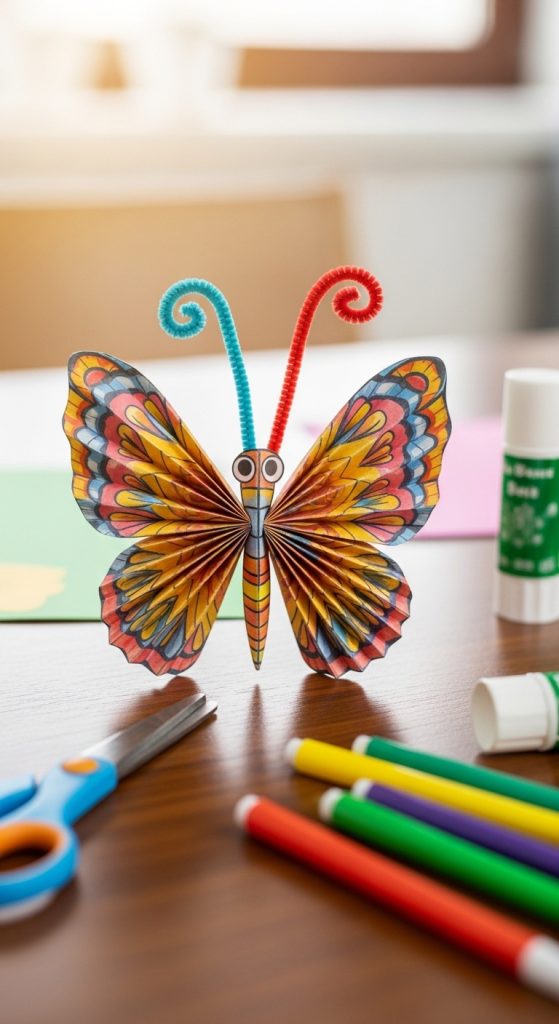
Paper butterfly crafts are colorful and simple projects that children love to make. This craft allows kids to experiment with colors, patterns, and creativity while practicing folding and cutting skills.
Materials needed include colored paper or construction paper, scissors, glue, markers or crayons, pipe cleaners or thin strips of paper for antennae, and optional stickers or glitter for decoration.
To prepare for the activity, cut a rectangular sheet of colored paper for each child. If younger children are participating, adults may help by drawing simple butterfly wing shapes on the paper to guide the cutting process.
Start by folding the paper in half. Draw half of a butterfly wing shape along the folded edge and cut along the outline. When the paper is opened, it forms a complete butterfly shape. Children can then decorate the wings using markers, crayons, or stickers. They may draw patterns such as dots, lines, or hearts to make the butterfly unique.
Next, create the butterfly body by rolling a small strip of paper or attaching a pipe cleaner in the center. Bend the ends of the pipe cleaner to form antennae.
This craft helps children learn about symmetry because both sides of the butterfly wings look the same. It is also a great way to talk about insects and nature while encouraging artistic expression.
2. Paper Plate Mask
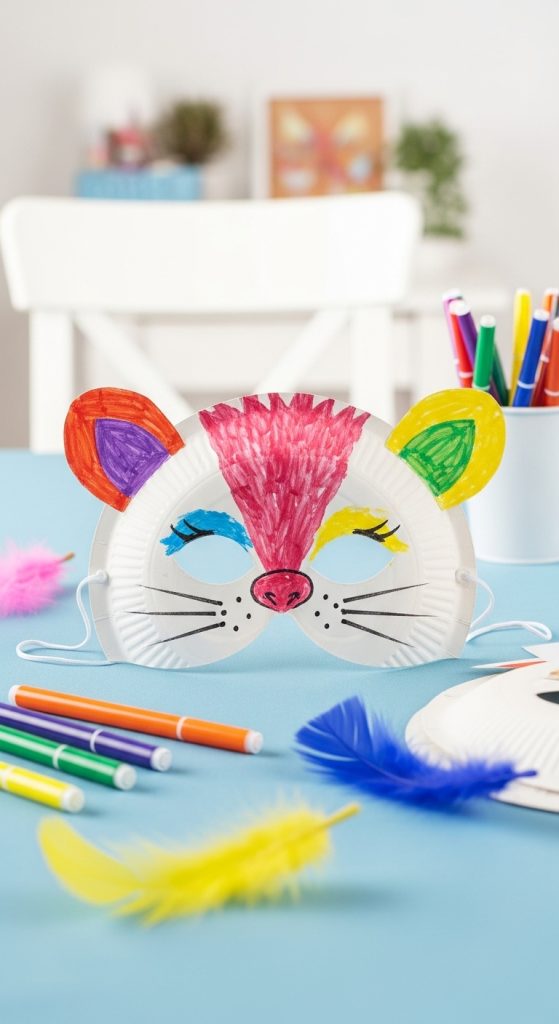
Paper masks are exciting crafts that children enjoy because they can wear and use them in pretend play. This activity combines creativity with storytelling and role playing.
The materials required include paper plates or thick paper circles, scissors, glue, markers or paint, colored paper, elastic string or ribbon, and decorative items such as feathers or stickers.
Before starting, adults should help cut eye holes in the paper plates. This makes the masks comfortable and easy for children to wear.
Children can decide what type of mask they want to create. Some may make animal masks like lions, cats, or rabbits. Others might design superhero masks or funny faces. They can draw facial features directly on the plate or glue pieces of colored paper to create ears, noses, or whiskers.
Once the mask design is complete, attach elastic string or ribbon on both sides so the child can wear it. If elastic is not available, a stick can be attached to the bottom to hold the mask.
Paper masks encourage imaginative play and allow children to act out stories. Teachers can also use this craft during classroom activities where children perform short plays or storytelling sessions.
3. Paper Flower Bouquet
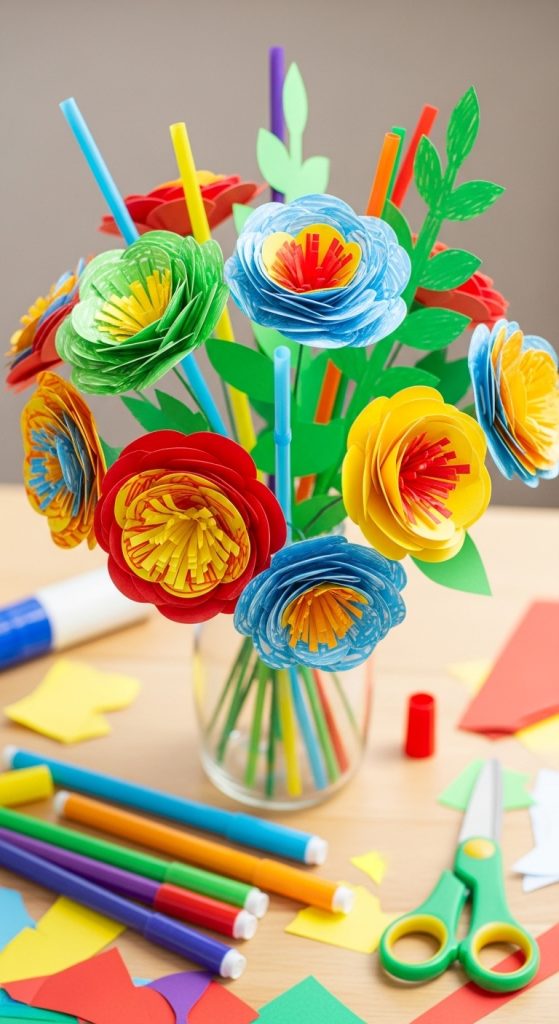
Paper flowers are beautiful crafts that children can create to decorate their rooms or give as gifts. This activity helps kids learn about shapes, colors, and design.
Materials needed include colored paper, green paper for stems and leaves, scissors, glue, markers, and straws or sticks for flower stems.
To begin, cut several flower shapes from colored paper. Simple shapes such as circles or layered petals work well for younger children. Kids can also cut different sizes to create a variety of flowers.
Next, cut thin strips of green paper for stems and leaf shapes. Glue the stem to the back of each flower and attach leaves along the stem. If straws are used, glue the flower head to the top of the straw.
Children can decorate the flowers by drawing patterns in the center or adding small paper circles to represent pollen.
Once several flowers are finished, gather them together to form a bouquet. The bouquet can be wrapped with a strip of paper and tied with ribbon.
This craft teaches children about plants and nature while allowing them to practice cutting and arranging shapes. It also makes a thoughtful handmade gift for parents, teachers, or friends.
4. Paper Chain Decoration
Paper chains are classic crafts that are simple to make and perfect for decorations. Children often enjoy making them for celebrations such as birthdays, school events, or holidays.
The materials needed include colored paper, scissors, glue or tape, and a ruler for measuring strips.
First, cut several strips of paper about one inch wide and six to eight inches long. Using different colors makes the chain look bright and cheerful.
Take the first strip and form it into a circle. Secure the ends with glue or tape. Then slide another strip through the first loop and join its ends to create the second link. Continue repeating this process until a long chain is formed.
Children can experiment with color patterns, such as alternating colors or creating a rainbow design.
Paper chains help kids understand patterns and sequences while practicing basic crafting skills. They are also useful decorations for classrooms, bedrooms, or party spaces.
Teachers often use paper chains for countdown activities, where one link is removed each day until a special event arrives.

5. Paper Airplane Craft
Paper airplanes are one of the most popular paper crafts for kids. They combine creativity with simple science concepts related to flight and motion.
The only materials required are sheets of paper and markers for decoration.
Start with a rectangular sheet of paper. Fold it in half lengthwise to create a center crease. Open the paper and fold the top two corners toward the center line to form a triangle shape.
Next, fold the triangle down and then fold the top corners inward again to create a pointed nose. Fold the airplane in half along the center line. Then fold down both sides to create wings.
Children can decorate their airplanes using markers or stickers before flying them.
After making the airplanes, kids can test how far they fly. They may experiment with different wing shapes or paper sizes to see how it changes the flight distance.
This craft introduces basic engineering ideas and encourages experimentation. It also provides a fun opportunity for outdoor play and friendly competitions among children.

6. Paper Handprint Animals
Handprint crafts are fun and personal projects for children because they use their own hands to create shapes. This activity is simple and works well for younger kids.
Materials required include colored paper, pencils, scissors, glue, and markers.
Begin by placing the child’s hand on a sheet of colored paper. Trace around the hand using a pencil. Cut out the handprint shape.
The handprint can be transformed into different animals depending on how it is decorated. For example, if the thumb becomes the head and the fingers become legs, it can resemble a dinosaur or a dog. If turned upside down, it can become a colorful bird.
Children can draw eyes, noses, feathers, or fur patterns using markers. Additional paper pieces may be glued on for ears or tails.
Handprint animals allow children to explore creativity while learning about animals and shapes. The craft also creates a keepsake because it captures the child’s hand size at a particular age.
Parents often enjoy saving these crafts as memories of their child’s early years.

7. Paper Origami Boat
Origami is the art of folding paper into shapes without cutting or gluing. An origami boat is one of the easiest projects for beginners and is perfect for kids.
The only material required is a rectangular sheet of paper.
Start by folding the paper in half. Fold the top corners down toward the center to form a triangle shape. Fold the bottom flaps upward on both sides.
Next, open the folded piece slightly and shape it into a square. Fold the bottom corners upward again to form another triangle.
Open the shape once more and pull the corners apart to create the final boat shape.
Children can decorate the boat with markers or add small paper flags.
This craft is especially fun when the boats are placed in water, such as in a bathtub or a small container. Kids enjoy watching them float.
Making origami boats helps children improve concentration and learn step by step instructions. It also introduces them to the traditional art of paper folding.

8. Paper Collage Art
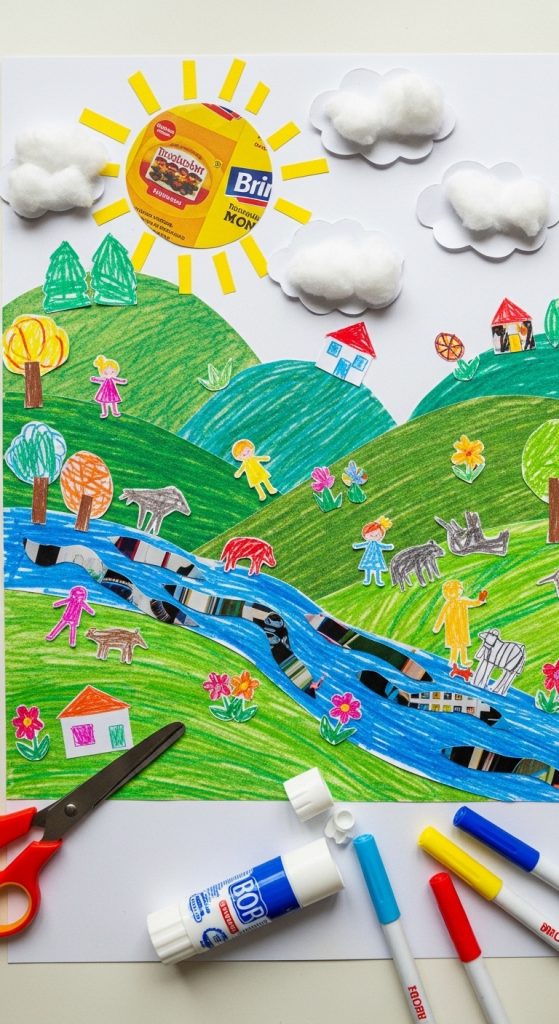
Paper collage is a creative activity that allows children to combine many pieces of paper to create a single artwork. It encourages imagination and artistic exploration.
Materials include old magazines, colored paper, scissors, glue, and a large sheet of paper as the base.
Children begin by cutting out different shapes or pictures from magazines and colored paper. These pieces can include animals, plants, letters, or abstract shapes.
Next, they arrange the pieces on the base paper to create a design. For example, they may create a nature scene with trees and animals or a city with buildings and roads.
Once the layout looks good, glue each piece in place. Kids can also draw extra details using markers or crayons.
Collage art teaches children about composition and design. It also encourages recycling by using old magazines and scrap paper.
Teachers often use collage projects in classrooms to help students express ideas visually and develop creative thinking skills.
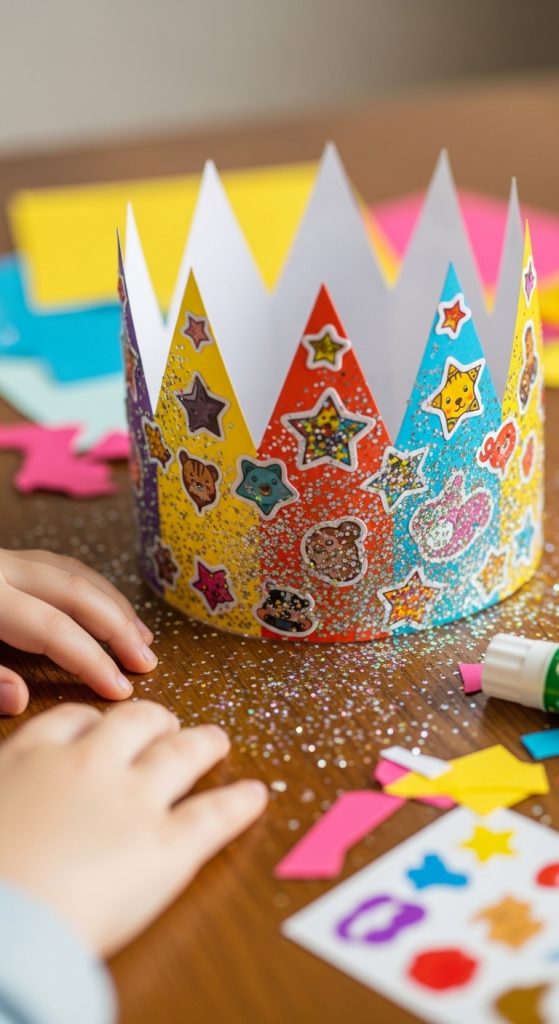
9. Paper Crown Craft
Paper crowns are fun crafts that make children feel like kings, queens, or heroes. They are perfect for birthday parties, classroom celebrations, or imaginative play.
Materials required include colored paper or cardstock, scissors, glue or tape, markers, and decorative items such as stickers or glitter.
Start by cutting a long strip of paper that fits around the child’s head. Draw a zigzag pattern along the top edge to create crown points, then cut along the line.
Children can decorate the crown using markers, stickers, or small paper shapes that look like jewels. They may draw stars, hearts, or other creative patterns.
Once decorated, wrap the crown around the child’s head and secure the ends with glue or tape.
This craft encourages creativity and role playing. Children often enjoy wearing their crowns while acting out stories or participating in games.
Paper crowns are simple but memorable crafts that make kids feel special and proud of their creations.
10. Paper Bookmark Craft
Paper bookmarks are practical crafts that children can use while reading books. They also make thoughtful handmade gifts.
Materials needed include thick paper or cardstock, scissors, markers, glue, ribbon, and optional decorative items such as stickers.
Start by cutting a rectangular strip of paper about two inches wide and six inches long. This forms the basic bookmark shape.
Children can decorate the bookmark with drawings, patterns, or favorite characters. They might draw animals, flowers, or stars.
A small hole can be punched at the top of the bookmark, and a ribbon can be tied through it to create a tassel.
Another idea is to glue a small paper character at the top so it appears to peek out from the book pages.
This craft encourages reading by giving children a personal item to use with their books. It also helps them practice creativity and design skills.
Bookmarks are easy to make and can be produced in large numbers for classroom projects or gifts for family members
