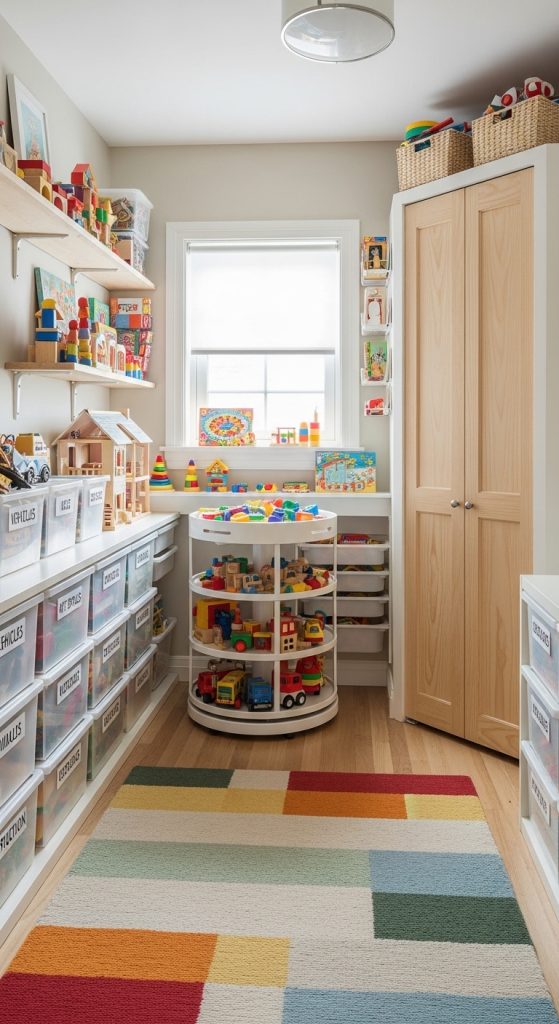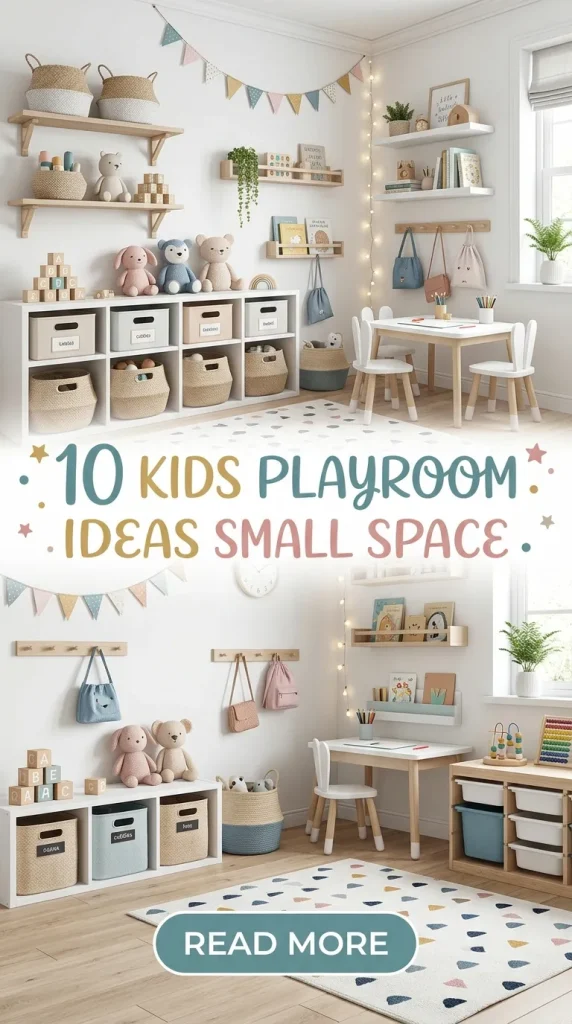
Creating a kids’ playroom in a small space can feel challenging, especially when parents want their children to have a safe, creative, and organized environment to play and learn. Many homes, apartments, and small houses do not have a dedicated large room for children’s activities. However, with thoughtful planning, smart storage, and creative design ideas, even a small area can become a functional and exciting playroom.
A well-designed playroom helps children develop creativity, independence, and organizational habits. It provides a space where toys, books, crafts, and games can be kept in one place rather than scattered throughout the house. For parents, a smart playroom design also makes cleaning and organizing easier.
When designing a small playroom, the key goals should be maximizing space, ensuring safety, and encouraging creativity. Choosing the right furniture, using vertical storage, incorporating multi-purpose items, and keeping the room visually open can make a big difference.
In this article, we will explore ten practical kids’ playroom ideas designed specifically for small spaces. Each idea includes preparation tips, materials needed, and helpful design suggestions so parents can easily create a fun and organized playroom at home. Whether you have a small bedroom corner, a spare closet, or part of a living room available, these ideas will help transform that limited space into a playful and functional area for children.
1. Create a Corner Playroom
A corner playroom is one of the easiest ways to create a dedicated play area in a small home. Instead of needing an entire room, you simply transform an unused corner of the living room, bedroom, or hallway into a fun play zone for kids.
Preparation begins by identifying a quiet and safe corner of the house where children can play comfortably. Clean the area and remove unnecessary furniture to create an open play space. Use a soft play mat or foam flooring to make the area safe and comfortable for sitting and playing.
Materials needed include a play mat, small toy storage bins, a low bookshelf, and wall-mounted shelves. Choosing low furniture allows children to access their toys independently and encourages them to develop organization habits.
Wall space can be used for hanging art boards, small chalkboards, or magnetic boards. This helps keep activities off the floor and saves space. Bright colors, simple wall stickers, and playful decorations can make the corner visually appealing for kids.
The key advantage of a corner playroom is that it requires very little space while still giving children a dedicated place for playtime. It also keeps toys contained in one area instead of spreading across the entire house.
2. Use Vertical Storage to Maximize Space
In a small playroom, floor space is limited, so vertical storage becomes extremely important. Using walls efficiently allows parents to store toys, books, and supplies without overcrowding the room.
Preparation starts with measuring the wall space available. Identify areas where shelves or storage units can be safely installed without interfering with doors, windows, or walking areas. Wall studs should be located to ensure shelves are securely mounted.
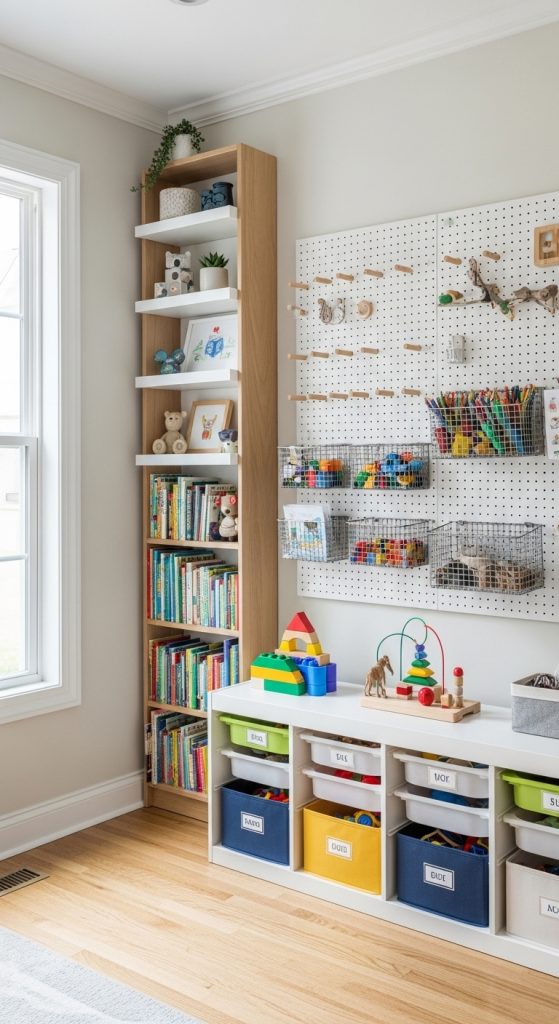
Materials required include floating shelves, wall-mounted storage bins, pegboards, and tall narrow bookcases. Pegboards are particularly useful because hooks and baskets can be rearranged as the child’s needs change.
Toys that are not used daily can be placed on higher shelves, while frequently used items should remain at child height. Labeling bins or using transparent containers helps children easily find and return their toys.
Vertical storage keeps the floor clear, making the playroom feel larger and more organized. It also allows parents to store a wide variety of items including puzzles, art supplies, building blocks, and books.
With proper planning, vertical storage can double or even triple the usable space in a small playroom.
3. Choose Multi-Functional Furniture
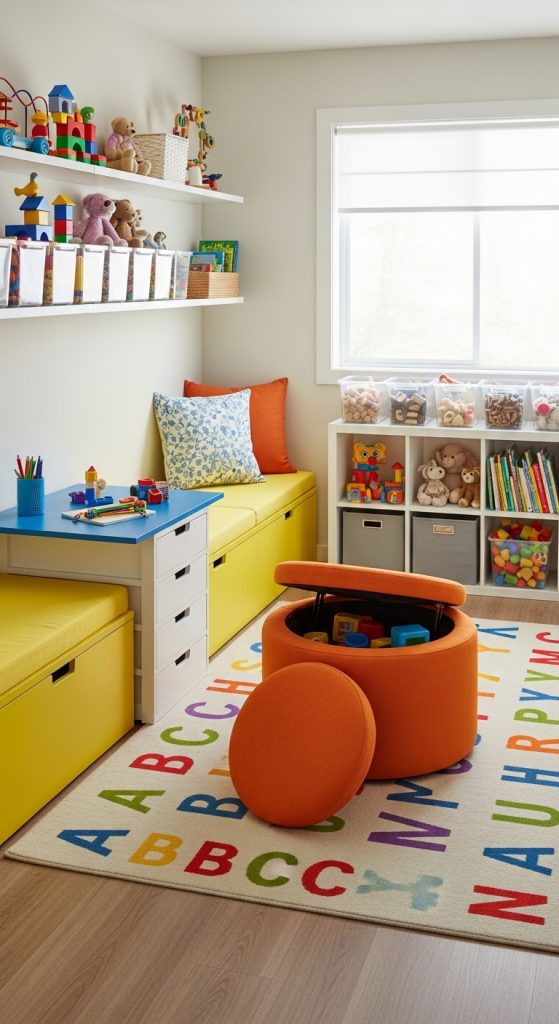
Multi-functional furniture is essential when designing a playroom in a limited area. Furniture that serves more than one purpose helps save space while keeping the room organized.
Preparation begins with evaluating the types of activities your child enjoys. If they like drawing, building, and reading, choose furniture that supports all these activities without occupying too much space.
Materials may include storage benches, foldable tables, toy chests that double as seating, and ottomans with hidden storage compartments. These items allow toys to be stored inside while still serving as functional furniture.
A small table with built-in drawers can be used for crafts, homework, and puzzles. When playtime is over, supplies can be neatly stored inside the table.
Another useful option is a foldable play table that can be stored against the wall when not in use. This creates more open floor space for active play.
Using multi-functional furniture helps reduce clutter and ensures that every item in the playroom has a practical purpose. This approach is especially helpful in apartments and small houses where every square foot matters.
4. Install Wall-Mounted Toy Storage
Wall-mounted toy storage is an excellent solution for keeping toys organized without using valuable floor space. It also makes it easier for children to access their favorite toys.
The preparation process involves identifying wall areas that are safe and reachable for children. Measure the space carefully and plan the placement of storage units so that they remain stable and balanced.
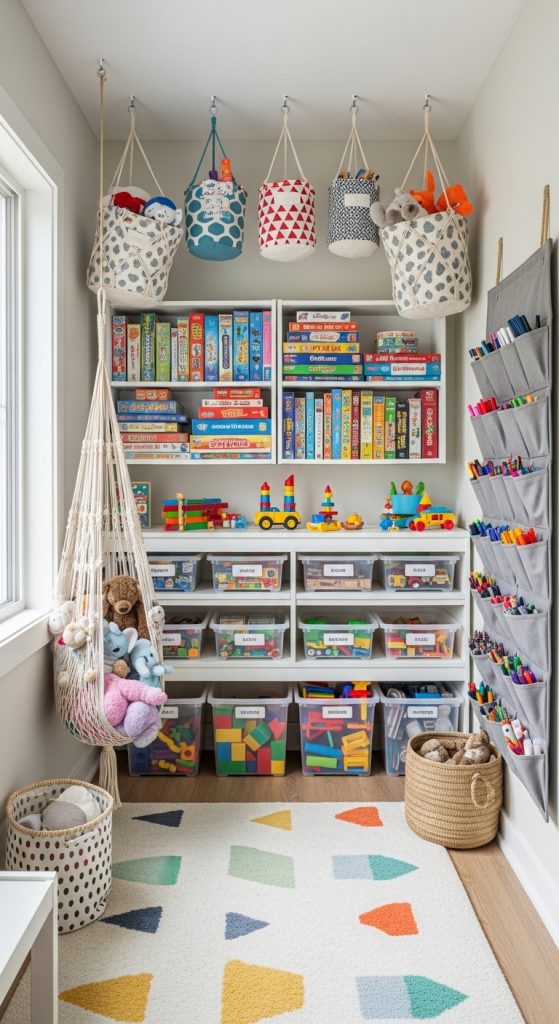
Materials needed include wall-mounted bins, hanging baskets, fabric organizers, and toy hammocks. Toy hammocks are particularly useful for storing stuffed animals without occupying shelves or boxes.
Transparent bins or labeled containers help children quickly find toys and encourage them to clean up after playing. Installing several small storage units rather than one large cabinet helps maintain an open and uncluttered appearance.
Wall-mounted storage systems also make it easier to categorize toys such as dolls, cars, puzzles, and art supplies. This improves organization and reduces the time spent searching for toys.
By keeping toys off the floor, the playroom becomes safer and easier to maintain. It also creates more open space for children to move and play freely.
5. Create a Reading Nook
A reading nook adds a calm and educational element to a small playroom. It encourages children to develop a love for books and provides a quiet area for relaxation.
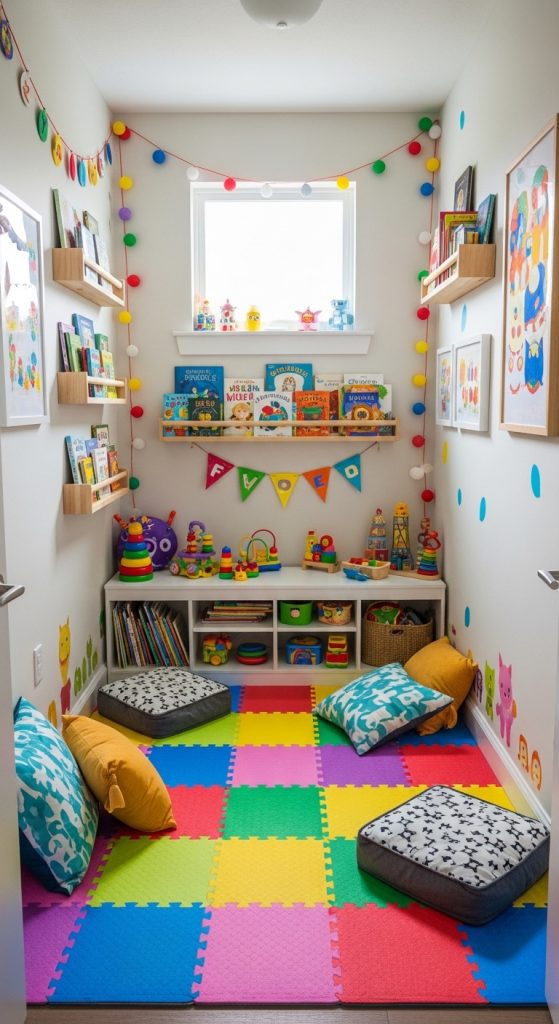
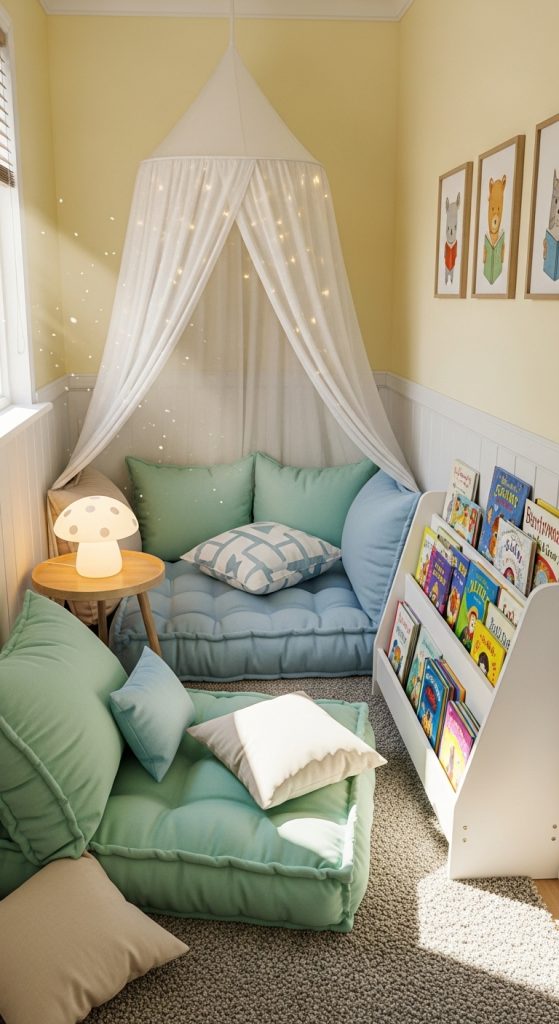
Preparation begins with selecting a cozy corner or small wall area. Soft lighting, comfortable seating, and easy access to books are essential elements for a successful reading nook.
Materials needed include a small bookshelf, floor cushions, a soft rug, and warm lighting such as a small lamp or wall light. A canopy or small tent can also be added to create a cozy environment.
Books should be displayed at a child-friendly height so that children can choose their own reading material. Front-facing bookshelves are ideal because children can easily see the book covers.
Decorating the reading nook with simple wall art, story-themed posters, or alphabet charts can make the space more engaging.
Even in a small playroom, a reading nook does not require much space. A simple rug, a few cushions, and a small shelf can transform a quiet corner into a comfortable reading area.
6. Use Under-Bed or Under-Bench Storage
Hidden storage areas are extremely useful in small playrooms. Utilizing the space under beds, benches, or tables can significantly increase storage capacity without adding extra furniture.
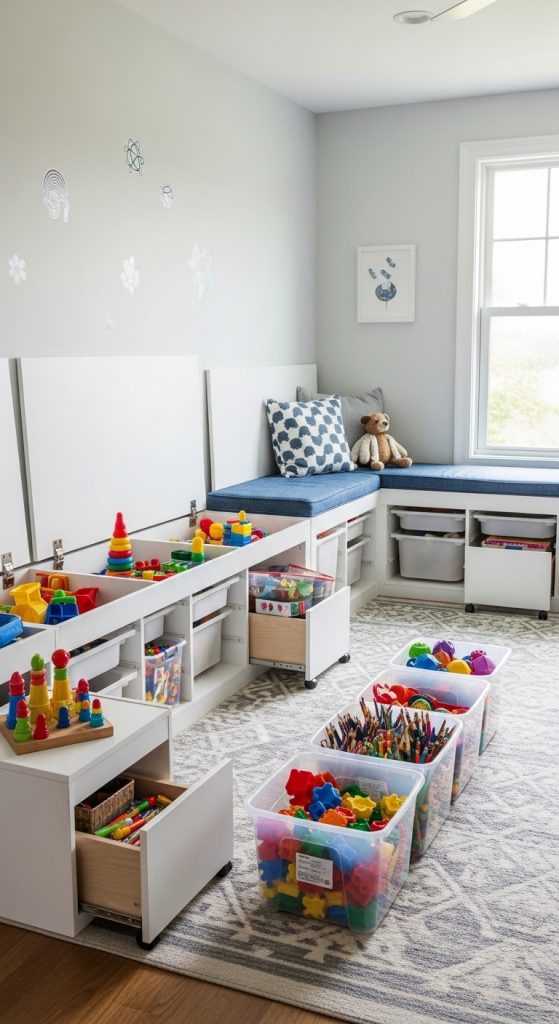
Preparation involves measuring the available under-furniture space and choosing storage containers that fit perfectly. Rolling storage bins or sliding drawers work best for this purpose.
Materials required include plastic storage bins, rolling drawers, fabric boxes, and labeled containers. These items allow toys to be stored neatly while remaining easily accessible.
Under-bench storage is particularly helpful in playrooms where seating is already available. Toys, board games, and craft materials can be stored beneath the bench and quickly retrieved when needed.
This type of storage helps keep the room tidy and reduces visible clutter. Children can also be taught to return toys to the storage bins after playtime.
Using hidden storage ensures that the playroom remains functional and organized even when space is limited.
7. Add a Creative Art Wall
A creative art wall encourages children to express themselves through drawing, painting, and crafting. It also prevents art activities from spreading across the entire house.
Preparation begins with choosing a wall that can be easily cleaned and accessed by children. Protective coverings such as washable paint or removable wall panels can help maintain cleanliness.
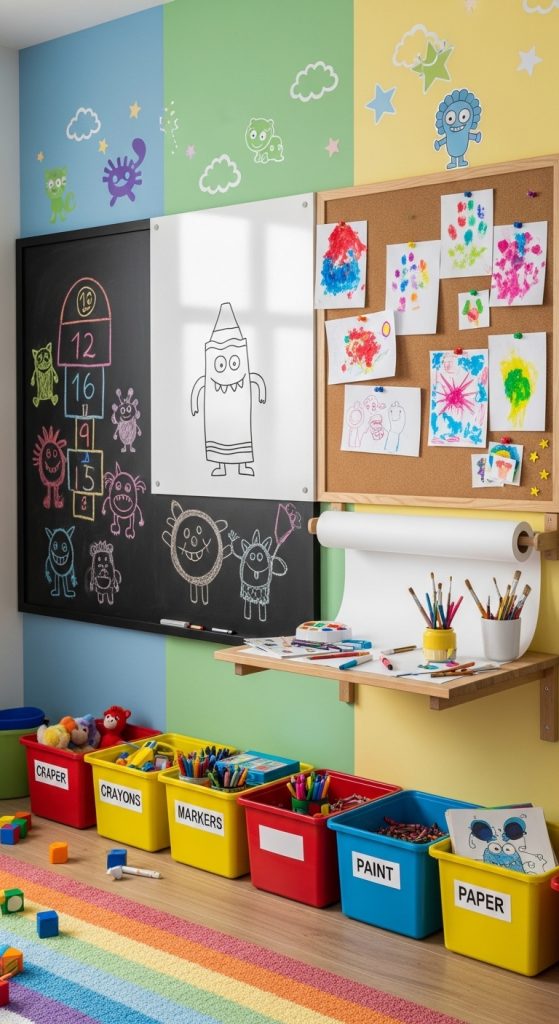
Materials needed include a chalkboard wall, whiteboard panels, cork boards, paper roll holders, and small wall shelves for art supplies. A small wall-mounted table can also be installed for drawing activities.
Children can display their artwork on cork boards or magnetic boards, which builds confidence and creativity. Rotating artwork regularly keeps the space fresh and exciting.
Keeping art supplies organized in labeled containers ensures that the area remains tidy and easy to maintain.
An art wall transforms a small playroom into a creative learning environment where children can experiment with colors, shapes, and ideas.
8. Use Foldable Play Equipment
Foldable play equipment is perfect for small spaces because it can be stored away when not in use. This allows children to enjoy active play without permanently occupying valuable space.
Preparation involves selecting equipment that is lightweight, safe, and easy to fold or store. The playroom layout should allow enough space for temporary setup.
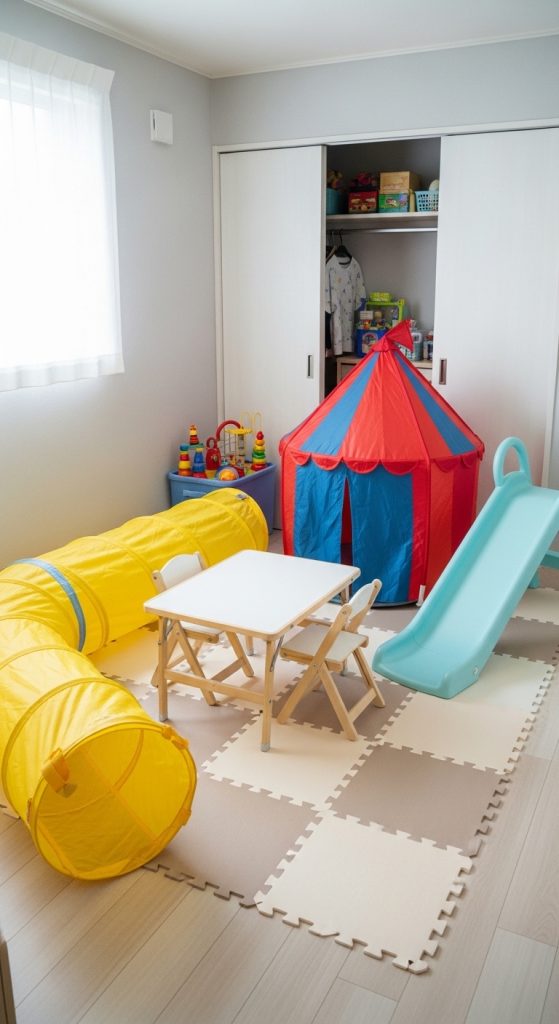
Materials may include foldable play tents, collapsible tunnels, portable slides, and foldable play tables. These items can be quickly assembled during playtime and stored in closets afterward.
Foldable equipment provides variety in play activities without making the room feel crowded. Children can enjoy imaginative adventures in tents or active play with tunnels and slides.
Parents can rotate different types of equipment each week to maintain excitement and prevent boredom.
This flexible approach helps maximize small spaces while still providing children with a wide range of fun activities.
9. Keep the Design Bright and Minimal
In small playrooms, design plays a crucial role in creating the feeling of space. Bright colors, simple layouts, and minimal clutter help the room appear larger and more inviting.
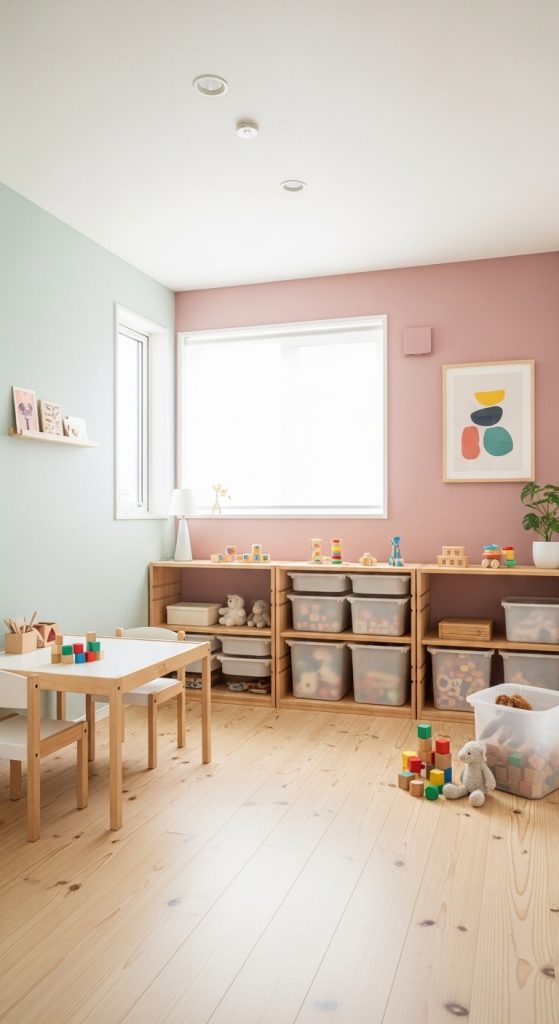
Preparation begins by selecting a light color palette for walls and furniture. Neutral colors such as white, light gray, or soft pastel tones make the room feel open and airy.
Materials needed include light-colored furniture, simple storage bins, minimal wall decorations, and bright lighting. Avoid overcrowding the room with too many toys or decorations.
Mirrors can also be used to reflect light and make the space appear larger. Transparent storage boxes help reduce visual clutter and maintain a clean appearance.
Keeping the design minimal ensures that children have enough open space for movement and play. It also makes the playroom easier to clean and maintain.
A bright and simple design allows the playroom to remain functional and comfortable even when space is limited.
10. Create a Rotating Toy System
A rotating toy system is an effective strategy for managing toys in a small playroom. Instead of keeping all toys in the room at once, only a selected group of toys is available while others are stored away.
Preparation involves sorting toys into different categories such as puzzles, building blocks, dolls, and creative toys. Storage boxes or containers should be used to organize each category.
Materials needed include storage bins, labeled boxes, shelves, and a storage area outside the playroom such as a closet.
Every few weeks, parents can rotate toys by replacing the current set with a different group. This keeps the playroom organized and prevents overcrowding.
Toy rotation also keeps children interested because previously stored toys feel new and exciting when reintroduced.
This method not only saves space but also encourages children to focus on fewer toys at a time, leading to deeper and more creative play experiences.