
A well-organized kitchen makes cooking easier, faster, and more enjoyable. However, modern kitchens often contain many appliances such as blenders, toasters, mixers, air fryers, and food processors. When these appliances are not stored properly, they can take up valuable counter space and make the kitchen look cluttered. Smart storage solutions help keep appliances accessible while maintaining a clean and organized kitchen environment.

Good kitchen appliance storage is not just about hiding items away. It is about creating a system that keeps your tools safe, easy to reach, and protected from damage. Proper storage can also extend the life of appliances by preventing dust buildup, moisture exposure, and accidental falls. In addition, organized storage helps improve kitchen workflow because you always know where each appliance is located.
Whether you have a small kitchen or a large one, creative storage ideas can make a big difference. With the right planning, materials, and preparation, you can design storage spaces that suit your cooking habits and kitchen layout. This article explores ten practical kitchen appliance storage ideas. Each idea explains how to prepare the space, the materials needed, and how to use the storage effectively. These solutions are simple, affordable, and suitable for most kitchens.
1. Appliance Garage Cabinets
Appliance garage cabinets are one of the most popular ways to store kitchen appliances while keeping countertops clean. An appliance garage is a cabinet space with a roll-up, lift-up, or sliding door that hides appliances when they are not in use.
Preparation begins with identifying the appliances you use most often, such as a toaster, blender, or coffee maker. Measure their height and width so the cabinet space can accommodate them comfortably. Choose a section of the countertop corner or a cabinet area where the appliance garage can be installed without blocking other kitchen functions.
The materials required typically include plywood or MDF boards, cabinet hinges or sliding door systems, wood screws, and finishing materials such as paint or laminate. Some homeowners also install electrical outlets inside the appliance garage so appliances can remain plugged in.
Once installed, place frequently used appliances inside the cabinet. The door can be closed when the appliances are not in use, which keeps the kitchen looking tidy. When needed, simply open the door and pull the appliance forward slightly.
This storage solution works best for appliances that are used daily. It prevents constant lifting and moving while protecting appliances from dust and spills. It also creates a neat and organized kitchen appearance.

2. Pull-Out Appliance Shelves
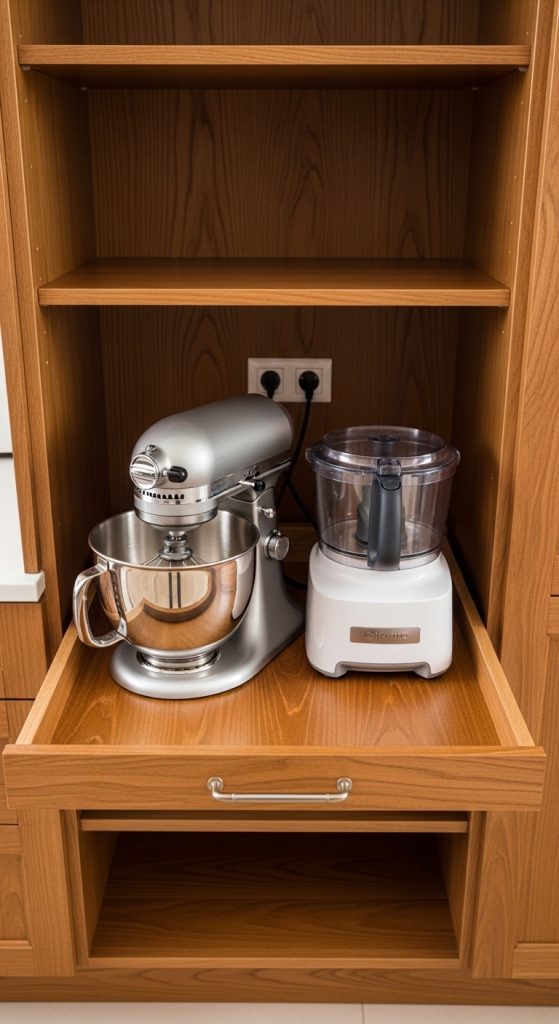
Pull-out shelves are a practical storage solution for heavier kitchen appliances. Many appliances like stand mixers, food processors, and air fryers can be bulky and difficult to lift from deep cabinets. Pull-out shelves make accessing these appliances easier.
The preparation process begins by selecting a base cabinet that can be converted into a pull-out shelf system. Measure the cabinet depth, width, and height to ensure the sliding mechanism fits properly. It is also important to consider the weight capacity of the shelf because some appliances can be heavy.
Materials needed include sturdy plywood for the shelf base, heavy-duty drawer slides, screws, brackets, and optional anti-slip mats. Drawer slides with full extension are recommended because they allow the shelf to come out completely.
Installation involves attaching the drawer slides to both the cabinet interior and the shelf base. Once installed, the appliance can sit securely on the shelf. When needed, the shelf can be pulled forward, allowing the appliance to be used without removing it from the cabinet.
Pull-out shelves improve kitchen safety by reducing the need to lift heavy appliances. They also make cabinets more functional because appliances can be accessed quickly. This solution is especially useful for older adults or anyone who prefers a more ergonomic kitchen setup.
3. Dedicated Appliance Pantry
A dedicated appliance pantry is an excellent storage option for kitchens with multiple appliances. Instead of spreading appliances throughout different cabinets, a pantry area can store them in one organized location.
Preparation involves choosing a tall cabinet, pantry closet, or unused storage space. The goal is to create a central location for appliances such as slow cookers, rice cookers, waffle makers, and blenders. Measure the height and depth of each appliance so shelves can be adjusted accordingly.
The materials required include adjustable shelving systems, wooden or metal shelves, shelf brackets, and labeling materials. Adjustable shelves are particularly useful because appliances come in different sizes.
During setup, place heavier appliances on lower shelves to prevent accidents. Lighter appliances can be stored on higher shelves. Some people also install power outlets inside the pantry to create a small appliance station.
This storage system makes the kitchen easier to organize because all appliances are stored together. It also prevents overcrowding in regular cabinets. With proper labeling and arrangement, it becomes simple to find the appliance you need without searching through multiple cupboards.

4. Wall-Mounted Appliance Shelves
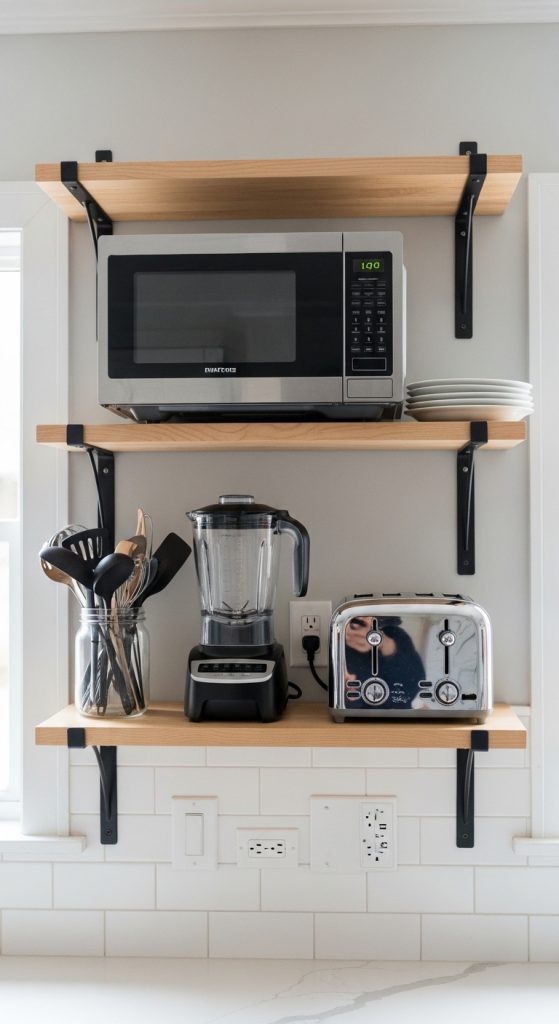
Wall-mounted shelves can provide extra storage space for kitchen appliances without using valuable cabinet space. This solution works especially well in small kitchens where storage options are limited.
The preparation stage involves identifying a strong wall area that can support the weight of appliances. It is important to locate wall studs to ensure the shelves are securely mounted. Consider the height of the shelves so appliances remain easy to reach.
Materials required include solid wood or metal shelves, heavy-duty wall brackets, screws, anchors, and a drill. Strong brackets are necessary because kitchen appliances can be heavy.
Once installed, appliances such as microwaves, blenders, and toaster ovens can be placed on the shelves. The shelves should be spaced properly so appliances fit comfortably without overcrowding.
Wall-mounted shelves keep appliances visible and accessible. This reduces the need to open cabinets and search for items. They can also become part of the kitchen design when styled properly with matching materials and finishes.
However, it is important not to overload the shelves. Proper installation and weight distribution will ensure the shelves remain safe and durable for long-term use.
5. Corner Appliance Storage Units
Kitchen corners are often underutilized spaces. Installing a corner appliance storage unit allows homeowners to take advantage of this unused area.
Preparation begins with evaluating the corner cabinet space. Many kitchens have deep corner cabinets that are difficult to access. By adding rotating shelves or lazy Susan systems, this space can be transformed into useful appliance storage.
The materials needed include rotating shelf systems, circular trays, metal support poles, and installation hardware. Lazy Susan mechanisms are commonly used because they allow shelves to rotate smoothly.
During installation, the rotating shelves are secured to the cabinet interior. Appliances are then placed on the trays. When an appliance is needed, the shelf can simply be rotated to bring the item forward.
This storage solution works well for medium-sized appliances like mixers, blenders, and juicers. It helps eliminate wasted space and improves accessibility.
Corner storage units also help maintain kitchen organization because appliances remain neatly arranged instead of being stacked randomly in cabinets.

6. Under-Counter Appliance Drawers
Under-counter appliance drawers are a modern storage solution designed to keep appliances hidden while still accessible. These drawers are typically installed in lower cabinets.
Preparation involves selecting a cabinet space that can be converted into a deep drawer. Measure the appliance dimensions to ensure the drawer height is sufficient. It is also helpful to consider ventilation if appliances generate heat.
The materials required include drawer boxes, heavy-duty drawer slides, cabinet fronts, screws, and anti-slip liners. Some drawers also include built-in electrical outlets.
Installation requires attaching the drawer slides to the cabinet frame and securing the drawer box in place. Appliances can then be stored inside the drawer and pulled out when needed.
This storage system is especially useful for appliances used occasionally. It keeps countertops free from clutter and protects appliances from dust.
Under-counter drawers also improve kitchen aesthetics because appliances remain out of sight. At the same time, they remain easily accessible whenever needed.

7. Overhead Hanging Appliance Racks
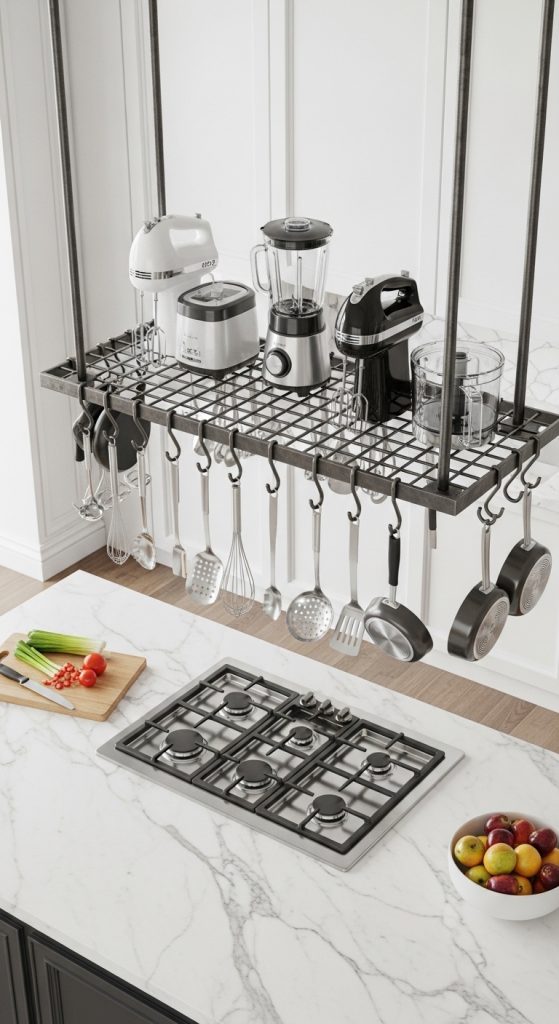
Overhead hanging racks can create additional storage space for certain kitchen appliances and accessories. These racks are commonly installed above kitchen islands or countertops.
Preparation involves selecting a ceiling location that can support the weight of the rack and appliances. Ceiling joists should be identified to ensure secure installation.
Materials needed include a strong metal or wooden rack, ceiling hooks, chains, mounting brackets, and installation hardware. Some racks also include adjustable hanging hooks.
Once installed, smaller appliances such as hand mixers or lightweight kitchen tools can be hung from the rack. Some people also use these racks for pots and pans.
This storage idea frees up cabinet space and keeps frequently used items within reach. It also adds a decorative element to the kitchen when designed properly.
However, it is important to avoid hanging very heavy appliances. The rack should only be used for lightweight items to ensure safety.
8. Appliance Storage Carts
Storage carts provide flexible appliance storage that can be moved around the kitchen as needed. This solution is ideal for kitchens with limited cabinet space.
Preparation begins with choosing a cart that matches the kitchen size and storage needs. Measure available floor space to ensure the cart fits comfortably without blocking movement.
Materials for a storage cart typically include wood or metal frames, wheels for mobility, shelves, and optional drawers. Some carts also include power strips for appliance use.
Appliances such as blenders, coffee makers, and air fryers can be placed on the cart shelves. The cart can then be rolled to different areas of the kitchen depending on where the appliance is needed.
This solution is highly versatile because it allows appliances to be stored and used in multiple locations. It is also useful for people who frequently rearrange their kitchen layout.
Storage carts can also serve as additional preparation stations during cooking.

9. Cabinet Door Appliance Storage
Cabinet doors are often overlooked as potential storage spaces. By installing racks or holders on the inside of cabinet doors, small appliances and accessories can be stored efficiently.
Preparation involves measuring the cabinet door interior and ensuring there is enough clearance when the door closes. Lightweight appliances or accessories work best for this type of storage.
Materials required include metal racks, adhesive hooks, screws, and mounting brackets. Adjustable racks are helpful because they can accommodate different items.
After installation, items such as hand mixers, immersion blenders, or small attachments can be stored on the racks. This keeps them organized and easy to access.
This storage method maximizes unused space and helps reduce clutter inside cabinets. It is particularly useful for small kitchens where every inch of space matters.
Proper weight distribution is important to prevent damage to cabinet doors.

10. Built-In Appliance Cabinets
Built-in appliance cabinets provide a permanent and highly organized storage solution. These cabinets are designed specifically to fit certain appliances.
Preparation begins with planning the kitchen layout. Appliances such as microwaves, ovens, and coffee machines can be integrated into custom cabinets. Accurate measurements are essential to ensure a proper fit.
Materials required include custom cabinet panels, shelving systems, ventilation panels, screws, and finishing materials that match the kitchen design.
Installation is usually done during kitchen renovation or remodeling. The cabinets are constructed to house appliances securely while providing adequate airflow.
Built-in cabinets improve kitchen functionality by creating dedicated spaces for each appliance. This prevents overcrowding and ensures appliances remain stable and protected.
In addition, built-in storage enhances the overall kitchen design by creating a seamless and modern appearance. Appliances appear integrated into the cabinetry rather than placed randomly on countertops.
This solution is ideal for homeowners planning a long-term kitchen upgrade with a focus on efficiency and organization.
