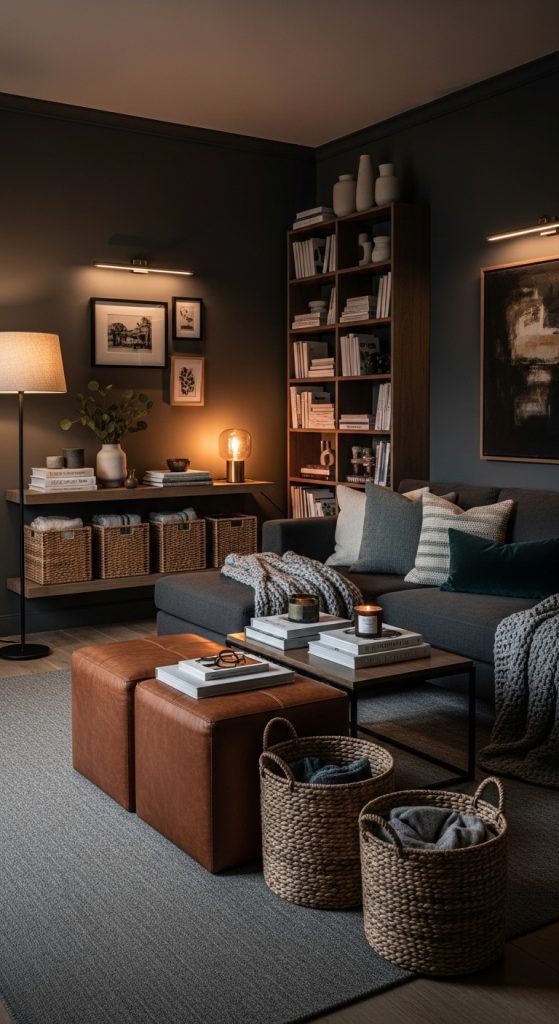
A moody cozy living room is more than just a design trend. It is a feeling. It is the comfort of soft lighting at the end of a long day, the warmth of layered textures, and the calm that comes from deep, rich colors. Many people think a living room must be bright and airy to feel welcoming. But a darker, moodier space can feel even more intimate and relaxing when designed with care. The key is balance. You combine deep tones with warm light, soft fabrics with natural materials, and thoughtful layout with personal touches.
Creating a moody cozy living room takes planning. You need to think about preparation, materials, color choices, lighting, furniture, and finishing details. Every element works together to build a space that feels safe, warm, and stylish. In this guide, you will find ten clearly explained steps to help you design your own moody cozy living room. Each point covers preparation, materials, and practical advice. The language is simple so you can follow each step with confidence. By the end, you will have a clear plan to transform your living room into a warm and inviting retreat.
1. Choose a Deep and Warm Color Palette
The foundation of a moody cozy living room begins with color. Dark and rich shades create depth and warmth. Popular choices include charcoal gray, deep navy, forest green, burgundy, chocolate brown, and muted plum. These colors absorb light instead of reflecting it, which creates a soft and intimate feeling in the room.
Before painting, prepare your walls properly. Clean them with a mild soap solution to remove dust and grease. Fill any cracks or holes with wall filler and sand the surface smooth. Use painter’s tape to protect trims, windows, and ceilings. A primer is important, especially when switching from light to dark colors. Primer helps the paint stick better and ensures even coverage.
Choose high quality matte or eggshell paint. Matte finishes hide wall imperfections and reduce glare, which supports the moody atmosphere. You may also consider painting the ceiling in a slightly lighter shade of the same color to create a cocoon effect without making the space feel too small.
If you are not ready to commit to fully dark walls, start with one accent wall. Another option is using dark wallpaper with subtle texture or pattern. Fabric wall panels can also add warmth and sound control. The goal is to create a rich background that makes furniture and lighting stand out while keeping the room calm and comfortable.
2. Focus on Soft and Layered Lighting
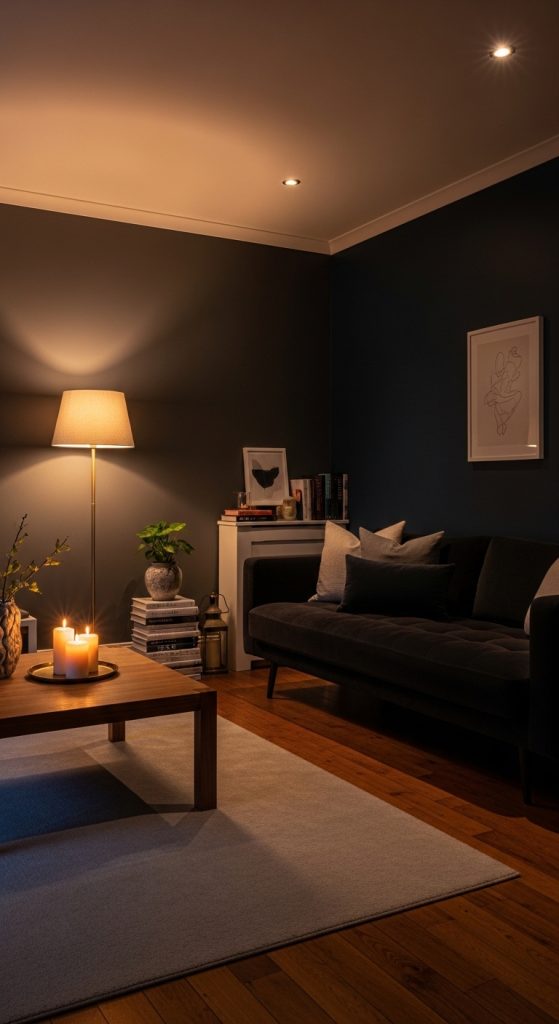
Lighting is the heart of a moody cozy living room. Even with dark walls, the space should never feel gloomy. Instead of relying on one bright ceiling light, use multiple light sources at different heights. This creates warmth and depth.
Start with warm white light bulbs. Look for bulbs labeled 2700K to 3000K. These give off a soft yellow glow that feels relaxing. Avoid cool white or blue toned bulbs because they can make dark colors look harsh.
Use table lamps, floor lamps, and wall sconces. Place a floor lamp next to a reading chair. Add table lamps on side tables. If possible, install dimmer switches. Dimmers allow you to control the brightness depending on the time of day or mood you want to create.
Materials matter as well. Choose lamp shades made of linen or cotton to soften the light. Metal finishes like antique brass, matte black, or brushed gold work well in moody spaces. You can also add candles for extra warmth. Real candles create a natural flicker, but flameless LED candles are a safe alternative.
Before installing new lighting, check your electrical outlets and wiring. Make sure cords are hidden or neatly managed. Proper preparation ensures both safety and a clean look. When lighting is layered and warm, even the darkest room will feel welcoming and cozy.

3. Invest in Comfortable and Deep Seating
A cozy living room must feel comfortable the moment you sit down. Seating plays a major role in achieving this. Choose sofas and chairs with deep cushions and soft upholstery. Velvet, chenille, leather, and heavy cotton blends work very well in moody interiors.
Before buying furniture, measure your space carefully. Draw a simple floor plan to understand how much room you have. Leave enough walking space around the furniture so the room does not feel crowded. Preparation at this stage prevents costly mistakes.
Dark colored sofas in navy, charcoal, olive, or brown enhance the moody feel. If you prefer lighter seating, balance it with dark walls and heavy throws. Look for cushions filled with high density foam or feather blend for long lasting comfort.
Materials also affect the mood. Leather adds warmth and character, especially in deep brown shades. Velvet reflects light softly and adds luxury. If you have children or pets, consider stain resistant fabrics and treat upholstery with fabric protector spray.
Arrange seating to encourage conversation. Place chairs facing the sofa and keep the coffee table within easy reach. Add soft throw pillows in mixed textures such as knit, faux fur, and woven fabric. Comfortable seating invites people to relax, making the room feel truly cozy and intimate.
4. Layer Textures for Warmth and Depth
Texture is essential in a moody cozy living room. Dark colors alone can feel flat if not supported by varied materials. Mixing textures creates visual interest and warmth.
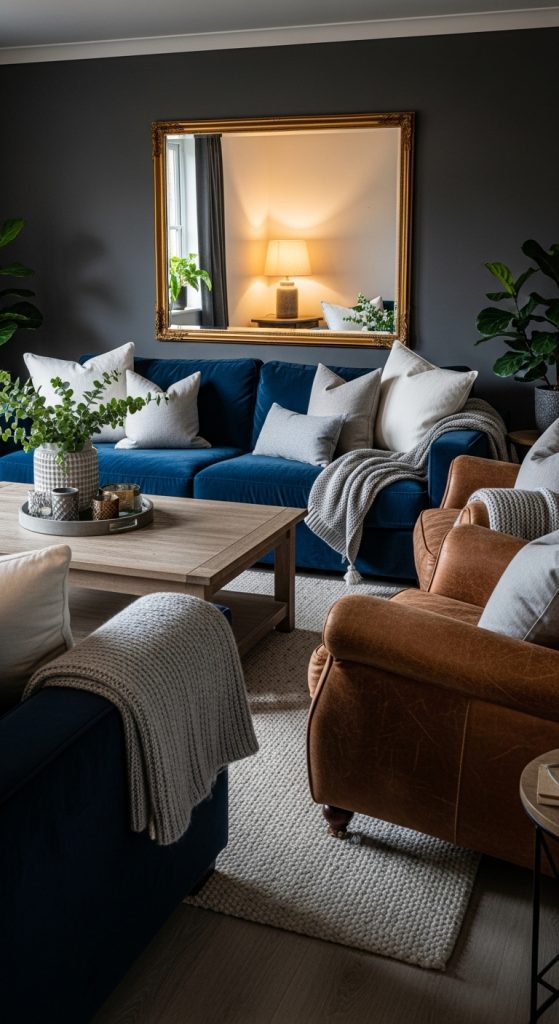
Start with a large area rug. Choose thick wool, shag, or layered natural fiber rugs. A dark patterned rug can anchor the room and hide everyday wear. Before placing the rug, clean the floor thoroughly. Use a rug pad underneath to prevent slipping and add extra cushioning.
Add soft throws over the sofa and chairs. Materials like wool, cashmere, fleece, and chunky knit fabrics create a warm and inviting look. Mix smooth fabrics like velvet with rougher materials such as linen or burlap for contrast.
Wood elements also add texture. Consider a reclaimed wood coffee table or wooden shelves. Stone, ceramic, and metal accents provide balance. For example, a matte black metal lamp next to a soft velvet chair creates an appealing contrast.
Curtains are another important layer. Choose heavy fabrics such as velvet or thick cotton to block light and add softness. Install curtain rods slightly higher than the window frame to make the room feel taller.
Before adding decorative pieces, step back and assess the balance. The goal is to make the room feel rich and layered without clutter. Thoughtful mixing of materials brings depth and comfort to the entire space.

5. Use Natural Materials for Authentic Warmth
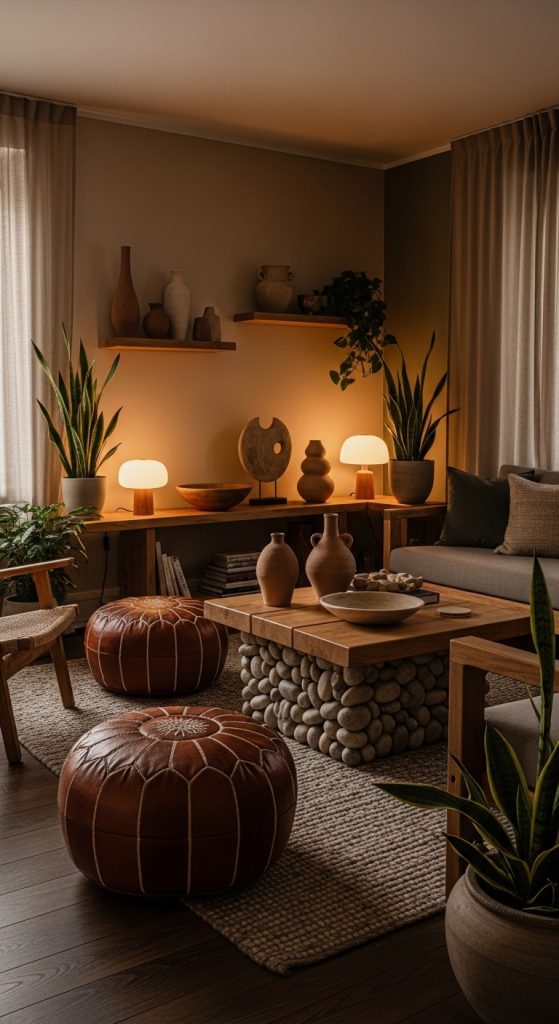
Natural materials bring life into a moody living room. They balance dark tones with organic warmth. Wood, leather, stone, cotton, wool, and rattan are excellent choices.
If you plan to update floors, hardwood in medium to dark finishes works beautifully. Before installation, ensure the subfloor is level and dry. If replacing flooring is not possible, add wooden furniture pieces such as side tables or bookshelves.
Stone elements like a marble coffee table or slate fireplace surround create contrast against soft textiles. Prepare stone surfaces by sealing them properly to prevent stains and damage. Regular maintenance keeps natural materials looking beautiful for years.
Plants are another natural element that adds freshness. Choose low light plants such as snake plants or pothos if your room is dark. Use ceramic or clay pots in muted tones to maintain the moody theme.
Leather accessories like poufs or armchairs add texture and durability. Wool blankets and cotton cushion covers provide softness. These materials not only look beautiful but also feel comfortable to touch.
Using natural materials ensures that the room feels grounded and authentic. Even with dark colors, the presence of organic elements keeps the space balanced and inviting rather than heavy or artificial.
6. Create a Strong Focal Point
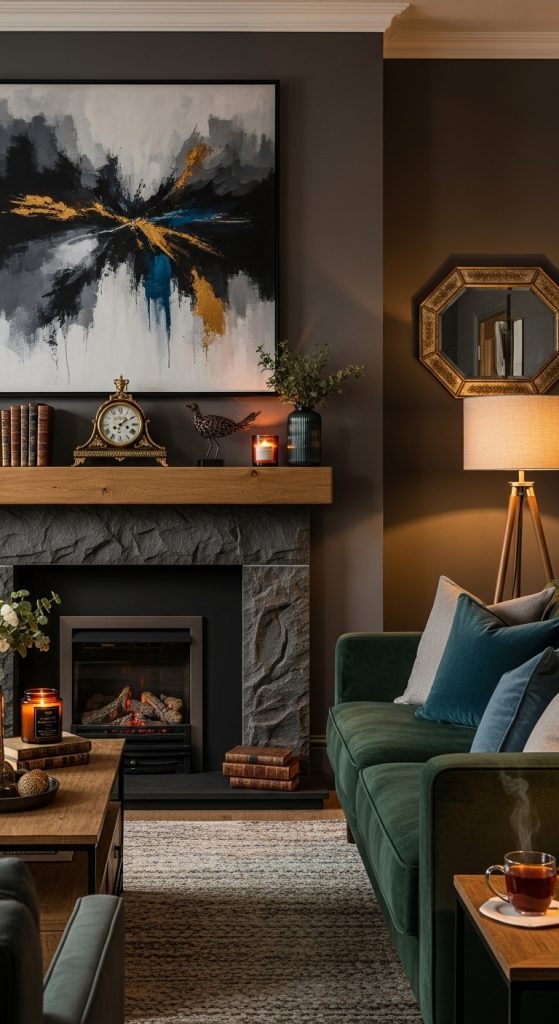
Every well designed living room needs a focal point. In a moody cozy space, this feature draws attention and adds character. It could be a fireplace, a large piece of art, a statement mirror, or a dramatic bookshelf.
If you have a fireplace, consider painting the surrounding wall in a darker shade to highlight it. You can also update the mantel with natural wood or stone. Clean and prepare the surface before painting or installing new materials to ensure durability.
A large artwork with deep colors can become the center of attention. Choose art that reflects your personality. Frame it in black, dark wood, or metallic finishes that match your lighting fixtures.
Built in shelves painted in the same color as the walls create a seamless and dramatic look. Before installing shelves, measure carefully and use sturdy wall anchors. Display books, ceramics, and personal items in a balanced way.
Mirrors can also serve as focal points while reflecting warm light around the room. Choose a frame that complements your style, such as antique gold or matte black.
A clear focal point gives direction to your design. It anchors the space and makes the room feel intentional. When guests enter, their eyes naturally settle on this feature, enhancing the overall mood and comfort of the living room.
7. Incorporate Personal and Meaningful Decor
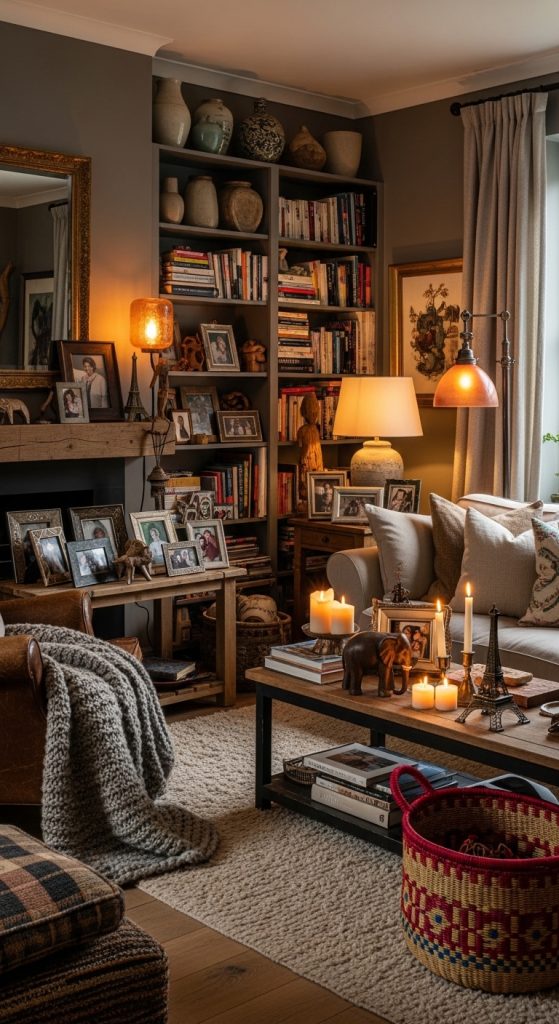
A cozy living room should tell your story. Personal decor adds warmth that cannot be bought from a store display. Family photos, travel souvenirs, favorite books, and handmade items all contribute to a meaningful atmosphere.
Start by sorting through your belongings. Choose items that truly matter to you. Avoid overcrowding surfaces. Preparation and editing are important to maintain a calm mood.
Display framed photos in dark or wooden frames to match the overall theme. Arrange them in small groups rather than spreading them randomly. Bookshelves can showcase novels, art books, or journals. Stack books horizontally and vertically to create visual interest.
Decorative trays made of wood or metal help organize candles, small plants, or collectibles on coffee tables. Ceramic vases in earthy tones add softness. When placing decor, think about balance in height, shape, and color.
Text based art or framed quotes can add personality, but keep the color palette consistent. Too many bright colors can break the moody effect.
Personal touches make the room feel lived in and genuine. Instead of copying a catalog image, you create a space that reflects your memories and values. This emotional connection is what makes a living room truly cozy.
8. Control Natural Light with Thoughtful Window Treatments
Natural light plays an important role in a moody living room. You want enough daylight to keep the space functional, but also the ability to soften and control it.
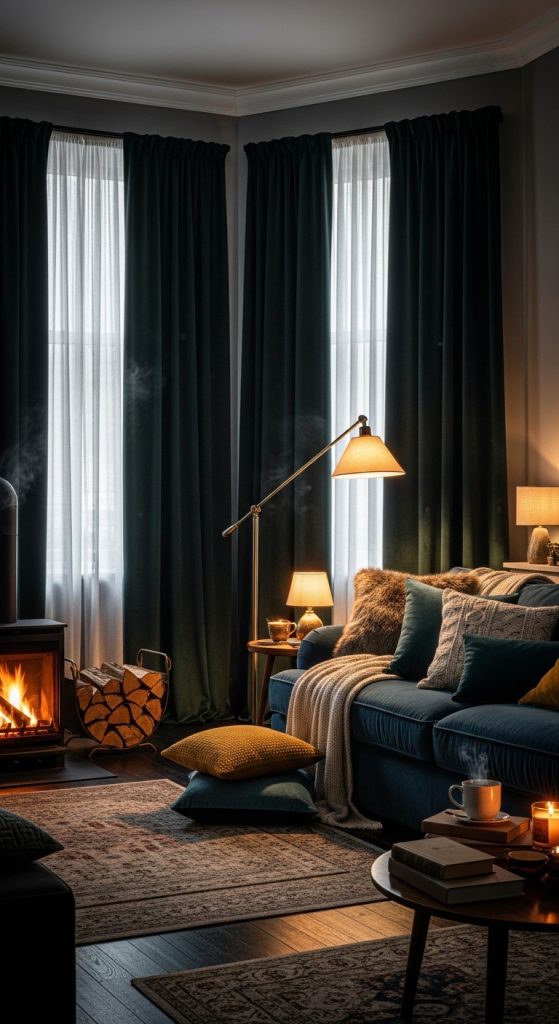
Heavy curtains are a great choice. Velvet, thick cotton, or lined linen curtains block harsh sunlight and add texture. Install curtain rods securely using wall anchors if needed. Hang curtains wide and high to create a dramatic effect and make windows appear larger.
Layering is also effective. Combine sheer curtains with heavier drapes. During the day, use sheers to filter light gently. In the evening, close the heavier curtains to create a cozy enclosed feeling.
Blinds or Roman shades provide additional control. Choose materials like woven wood or dark fabric. Make sure measurements are accurate before ordering custom window treatments.
If privacy is a concern, frosted window film is an affordable solution. Clean the glass thoroughly before applying film to avoid bubbles.
Controlling natural light allows you to adjust the mood throughout the day. Soft filtered light enhances dark walls and highlights textures. When managed properly, windows become part of the design rather than a distraction from the cozy atmosphere.
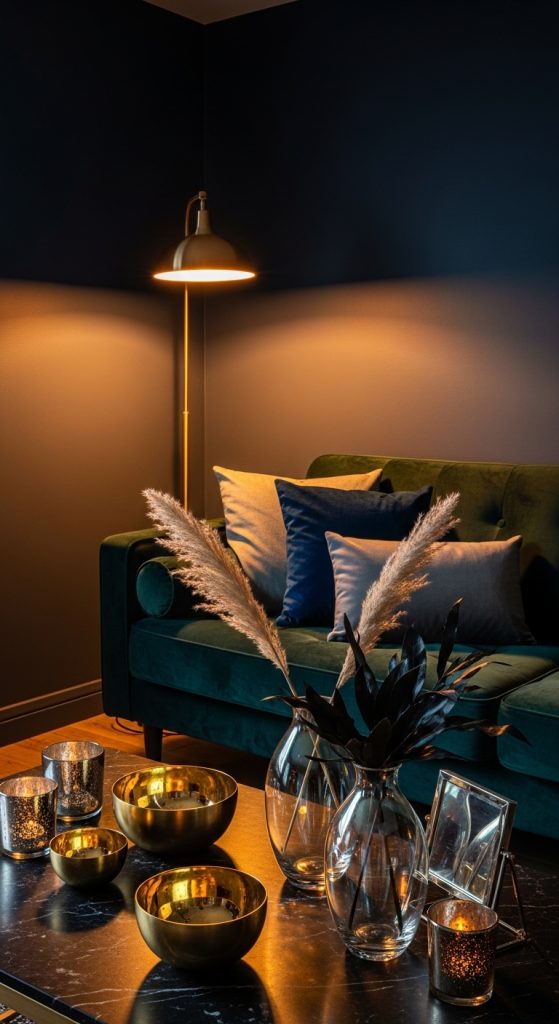
9. Add Subtle Metallic and Reflective Accents
In a dark room, small reflective elements prevent the space from feeling too heavy. Metallic accents add warmth and sophistication when used carefully.
Choose finishes like brushed brass, antique gold, copper, or matte black. These tones blend well with deep color palettes. Avoid overly shiny chrome because it can look too modern and cold in a cozy setting.
Incorporate metallic accents through light fixtures, mirror frames, table legs, or decorative bowls. Even small details like drawer handles can enhance the overall design.
Before installing hardware, measure carefully and use the correct tools. Tighten screws securely to prevent wobbling. Clean metal surfaces regularly with a soft cloth to maintain their appearance.
Glass accessories such as vases or lanterns also reflect light gently. Place them near lamps or candles to maximize their effect.
The key is moderation. Too many shiny objects can compete for attention. Use reflective materials as highlights rather than main features. These subtle touches catch light, brighten corners, and balance dark walls. The result is a room that feels warm and layered instead of flat and dull.
10. Maintain Organization and Comfort Over Time
A moody cozy living room should stay inviting long after the design is complete. Maintenance and organization are essential for lasting comfort.
Start by adding smart storage solutions. Use woven baskets, wooden boxes, or storage ottomans to hide blankets, remote controls, and magazines. This keeps surfaces clear and maintains a calm look.
Clean regularly to prevent dust from showing on dark surfaces. Use a microfiber cloth for furniture and vacuum rugs weekly. Treat spills on upholstery immediately to avoid stains. Follow care instructions for materials like leather or velvet.
Rotate decorative items seasonally to keep the room fresh. In colder months, add thicker throws and darker accents. In warmer seasons, switch to lighter fabrics while maintaining the overall mood.
Check lighting fixtures and replace bulbs when needed. Dust lamp shades to maintain soft light quality. Tighten loose hardware and repair minor damage promptly.
Comfort also evolves with your lifestyle. Rearrange seating if your needs change. Add extra cushions or adjust the layout for better conversation flow.
By maintaining organization and caring for materials, your moody cozy living room will remain a peaceful retreat. Thoughtful upkeep ensures that the warmth, beauty, and comfort you created continue to enrich your daily life for many years.