Summer is a wonderful time for children to explore creativity through hands-on crafts. Longer days, warm weather, and school holidays give kids the perfect opportunity to spend time making fun projects while learning new skills. One of the most exciting craft themes for children is animals. Animal crafts allow kids to imagine wildlife, farm animals, ocean creatures, and insects while using simple craft materials found at home or in classrooms.

Summer animal crafts are especially useful for parents, teachers, and activity coordinators who want engaging indoor or outdoor projects. These crafts help children develop fine motor skills, creativity, patience, and problem-solving abilities. They also encourage learning about different animals and their habitats in a fun way. Many of these projects use recycled materials such as paper plates, cardboard tubes, and plastic bottles, which also helps teach children about environmental responsibility.
Another advantage of animal crafts is that they can be adapted for different age groups. Younger children can enjoy simple cutting, gluing, and coloring activities, while older kids can add more details and decorations to make their crafts unique. These activities are also great for summer camps, family craft days, and classroom art sessions.
In this blog post, you will find ten summer animal craft ideas that are simple, affordable, and enjoyable for children. Each craft includes preparation steps, materials needed, and instructions so that anyone can easily organize the activity.
1. Paper Plate Lion Craft
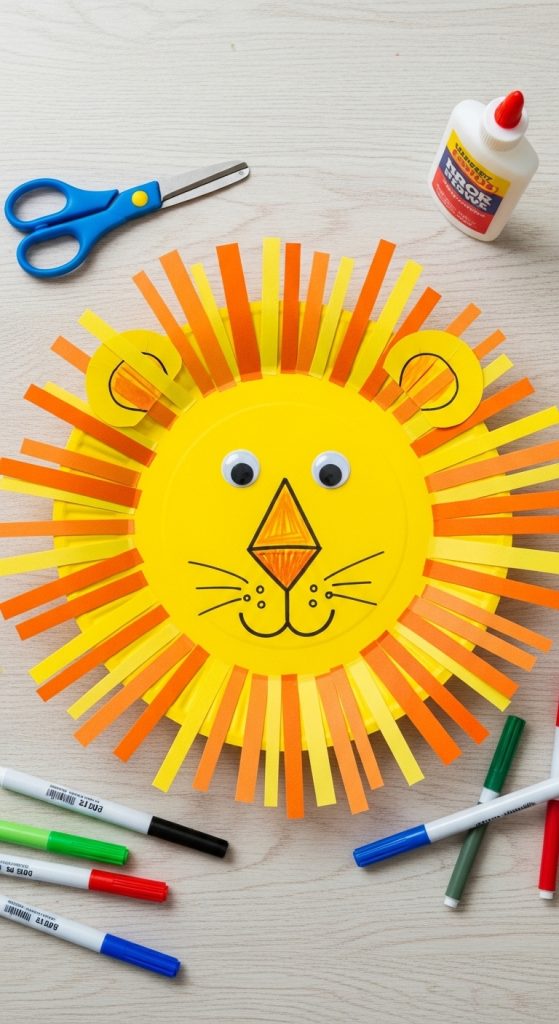
The paper plate lion craft is a bright and cheerful summer activity that helps children learn about wild animals. This craft is simple to prepare and works well for younger children because it mainly involves coloring, cutting, and gluing.
Materials needed include paper plates, yellow and orange construction paper, glue, scissors, markers or crayons, and googly eyes. Before starting the activity, adults should help cut strips of orange paper that will form the lion’s mane. If working with very young children, it is helpful to prepare these strips in advance.
To begin the craft, children color the center of the paper plate yellow to create the lion’s face. Next, they glue the orange paper strips around the outer edge of the plate to form the mane. The strips can be curled slightly using a pencil to make the mane look fluffy.
After that, children attach googly eyes to the center of the plate and draw a nose and mouth using markers. Some children may also want to add whiskers using thin paper strips or draw them with a marker.
This craft encourages imagination and creativity. It can also lead to a short learning discussion about lions, their habitat in Africa, and their role as predators in the animal kingdom.
2. Cardboard Tube Butterfly Craft
Butterflies are colorful insects that are often seen during summer. A cardboard tube butterfly craft is a fun way for children to create bright decorations while learning about insects and pollination.
Materials required include empty toilet paper tubes, colored construction paper, glue, scissors, pipe cleaners, markers, and optional glitter or stickers. Adults may prepare wing shapes in advance if children are very young.
To start the craft, children wrap colored paper around the cardboard tube to create the butterfly’s body. They can decorate the tube with markers, stickers, or patterns to make it unique.
Next, children cut large butterfly wings from construction paper. The wings can be decorated with markers, paint, or glitter to create beautiful patterns. Once decorated, the wings are glued to the back of the cardboard tube.
For the antennae, pipe cleaners are folded and attached to the top of the tube. The ends can be curled to give a realistic butterfly look.
This craft helps children practice cutting and decorating while encouraging creativity. Teachers and parents can also use this activity to discuss how butterflies help flowers grow by carrying pollen from one plant to another.

3. Paper Bag Frog Puppet
A paper bag frog puppet is an interactive craft that children can use for storytelling and imaginative play. It is simple to create and perfect for summer activities related to ponds and wetlands.
Materials needed include a small paper lunch bag, green construction paper, glue, scissors, markers, and googly eyes. Optional materials include red paper for the tongue and stickers for decoration.
To prepare the craft, children first cover the paper bag with green paper or color it using green markers or crayons. This forms the frog’s body.
Next, children cut out two large circles from white paper and smaller black circles for the frog’s eyes. These are glued to the flap of the paper bag so they appear on top when the puppet opens.
A long red strip of paper can be added under the flap to create a frog tongue. Children can also draw a smiling mouth or add nostrils with a marker.
Once finished, children can place their hand inside the bag to operate the puppet. This allows them to open and close the frog’s mouth while telling stories.
This craft encourages imaginative play and helps children learn about frogs, their habitats, and their life cycle.

4. Egg Carton Turtle Craft
An egg carton turtle craft is a great recycling activity that teaches children how everyday materials can be turned into creative art projects. It is a perfect summer craft because turtles are often associated with beaches and ponds.
Materials include empty egg cartons, green paint, paintbrushes, glue, scissors, green construction paper, and markers.
To prepare the craft, adults cut individual sections from the egg carton. Each section will become the turtle’s shell. Children then paint the egg carton piece green or another turtle-like color and allow it to dry.
Next, children cut out a turtle head, four legs, and a tail from green construction paper. These pieces are glued around the egg carton shell.
Once the glue is dry, children can draw patterns on the shell using markers. Hexagon shapes can be drawn to represent the natural pattern found on real turtle shells.
This craft provides a good opportunity to talk about sea turtles and land turtles, where they live, and why protecting ocean habitats is important for their survival.

5. Handprint Crab Craft
The handprint crab craft is a fun summer art project that reminds children of beaches and ocean life. It is especially enjoyable for younger kids because it uses their own handprints.
Materials needed include red paint, white paper or cardstock, paintbrushes, markers, and googly eyes.
To begin, children paint their hand with red paint. They then press their hand onto the paper, leaving a handprint. The palm becomes the crab’s body and the fingers become the legs.
After the paint dries, children draw additional legs or claws with a marker if needed. They can also add details like a smiling face.
Next, googly eyes are glued above the handprint to complete the crab’s face. Children can decorate the background with drawings of sand, waves, or seashells.
This craft is easy to prepare and creates a memorable keepsake for parents. It also provides a chance to talk about ocean animals and the importance of protecting marine environments.

6. Pinecone Owl Craft
A pinecone owl craft is a nature-inspired activity that works well for outdoor summer craft sessions. Children can collect pinecones during a nature walk and then transform them into adorable owls.
Materials required include pinecones, brown and yellow construction paper, glue, scissors, and markers. Small feathers can also be used for decoration.
To start, children cut out large circles for the owl’s eyes and smaller circles for the pupils. These are glued to the top of the pinecone.
Next, children cut out a small triangle from yellow paper to create the owl’s beak and glue it between the eyes.
For wings, children can either glue small feathers to the sides of the pinecone or cut wing shapes from construction paper. Additional decorations can be added using markers.
This craft helps children connect with nature while learning about owls and their role as nocturnal hunters in many ecosystems.

7. Paper Plate Fish Craft
The paper plate fish craft is a colorful activity that helps children explore underwater animals and ocean habitats.
Materials needed include paper plates, paint or crayons, glue, scissors, construction paper, and glitter for decoration.
Children begin by cutting a triangle from the edge of the paper plate to create the fish’s mouth. The triangle piece can be glued to the opposite side of the plate to form the fish’s tail.
Next, children paint or color the fish in bright colors. Scales can be drawn using markers or added with glitter glue.
A small circle of paper is glued to the fish to create an eye. Additional fins can be cut from construction paper and attached to the body.
Children can also draw ocean backgrounds with seaweed, coral, and bubbles.
This craft introduces children to marine animals and encourages creative design.

8. Popsicle Stick Dragonfly
Dragonflies are fascinating insects commonly seen near water during summer. A popsicle stick dragonfly craft is a simple project that children can easily assemble.
Materials include popsicle sticks, paint, glue, clear plastic or colored paper, markers, and googly eyes.
First, children paint the popsicle stick to create the dragonfly’s body. Bright colors like blue, green, or purple work well.
Next, wings are cut from clear plastic sheets or colored paper. The wings are glued in an X shape behind the popsicle stick.
Googly eyes are attached near the top of the stick to complete the dragonfly’s face.
Children can decorate the wings with glitter or markers for extra detail.
This craft helps children learn about insects and encourages them to observe nature during summer outdoor activities.

9. Clothespin Caterpillar Craft
The clothespin caterpillar craft is a creative project that also introduces children to the life cycle of butterflies.
Materials needed include wooden clothespins, green paint, pom-poms, glue, pipe cleaners, and googly eyes.
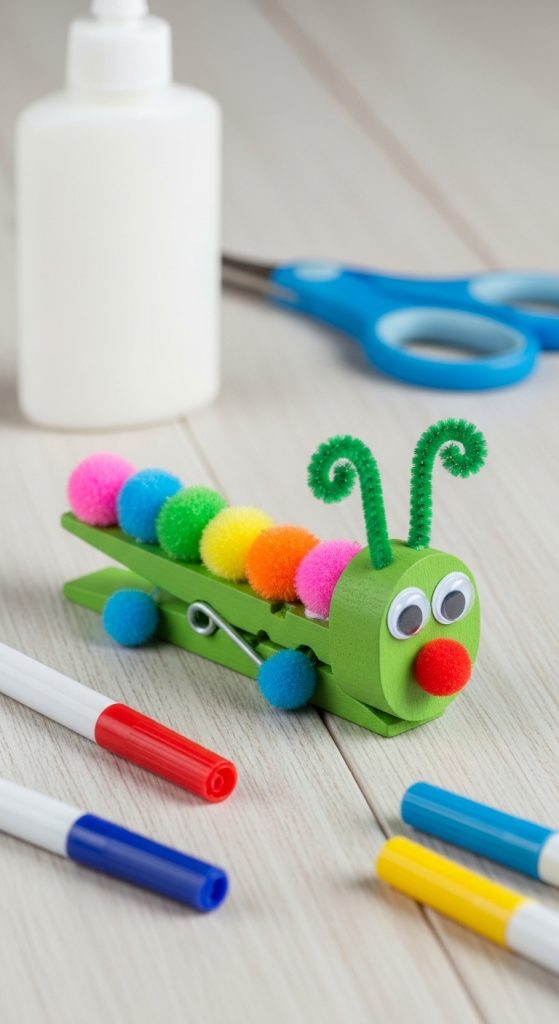
Children begin by painting the clothespin green and letting it dry. Next, colorful pom-poms are glued along the top of the clothespin to form the caterpillar’s body.
A small pom-pom is placed at the front to create the head. Googly eyes are attached, and short pieces of pipe cleaner can be used as antennae.
Once completed, children can use the clothespin to clip onto paper or branches, making the caterpillar appear to crawl.
This craft can be paired with a lesson about how caterpillars transform into butterflies through metamorphosis.
10. Plastic Bottle Penguin Craft
A plastic bottle penguin craft is a creative recycling project that transforms empty bottles into cute animal decorations.
Materials include small plastic bottles, black and white paint, orange construction paper, glue, scissors, and markers.
Children start by painting the bottle black while leaving an oval area white to create the penguin’s belly. Once the paint dries, they add facial features using markers.
Next, a small triangle of orange paper is glued on to create the penguin’s beak. Two small orange feet can also be cut and attached to the base.
Children can add scarves or hats made from fabric scraps to give the penguin personality.
This craft helps children understand recycling and encourages creative reuse of materials while learning about animals that live in cold environments.
