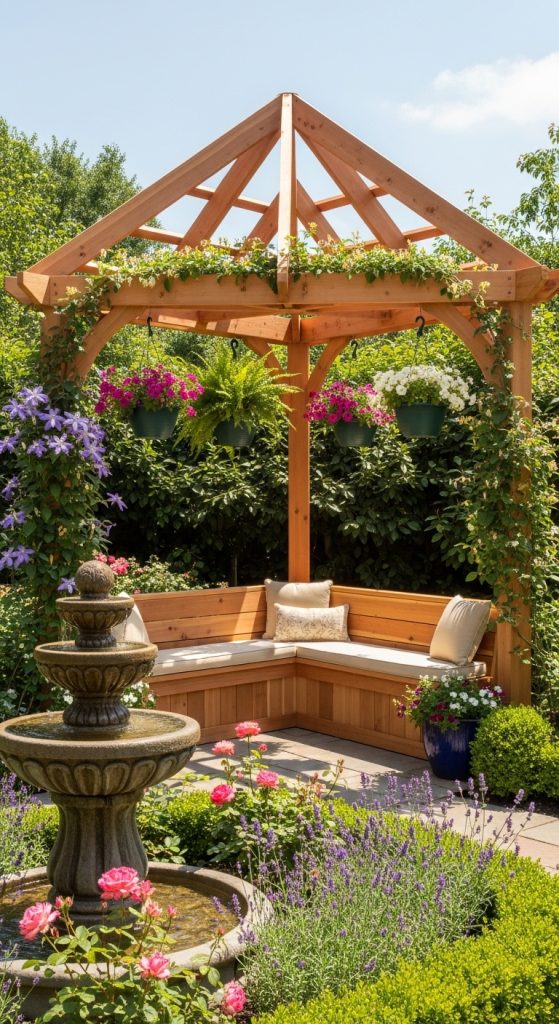
Pergolas are timeless structures that enhance gardens, patios, and outdoor spaces, providing shade, structure, and an elegant design feature. Among various pergola shapes, triangle pergolas stand out because of their unique geometry and visual appeal. Triangular pergolas can fit into corners, create cozy private areas, and serve as focal points in a garden. Unlike traditional rectangular pergolas, the triangular design adds a modern and artistic touch while remaining functional.
Building a triangle pergola requires careful planning, selection of materials, and understanding the intended purpose, whether it’s for relaxation, dining, or supporting climbing plants. You need to consider factors such as available space, sun orientation, wind exposure, and the style of your garden. Common materials include wood, metal, and composite materials, each offering different levels of durability and maintenance needs. This guide will cover ten creative triangle pergola ideas, including preparation steps, material recommendations, and practical tips. Each idea will help you visualize possibilities and inspire you to create a beautiful outdoor structure that complements your home and garden.
1. Corner Triangle Pergola
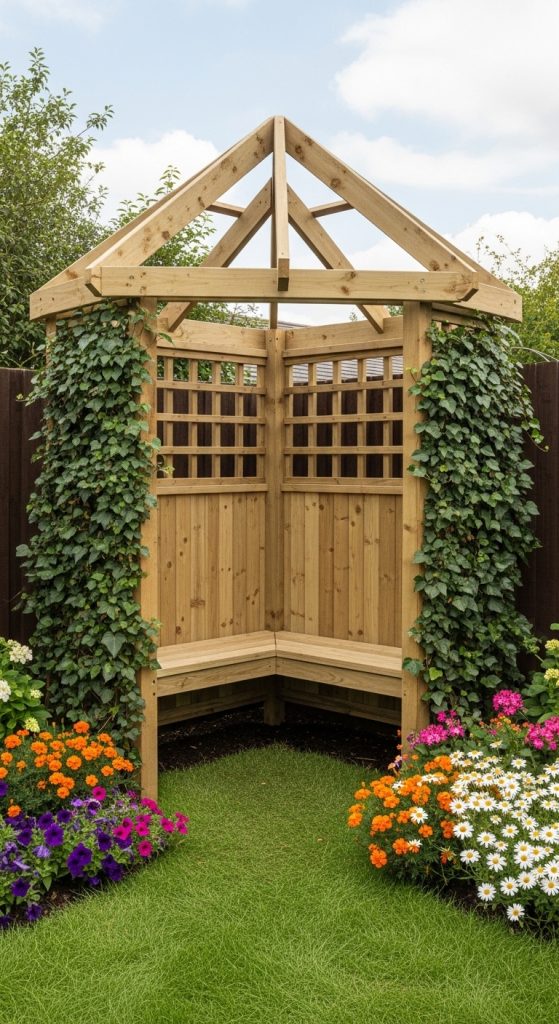
A corner triangle pergola is perfect for maximizing space in gardens or patios where a traditional rectangular pergola would not fit. It utilizes triangular geometry to fill corners efficiently while creating a private and intimate seating area. The triangular shape allows for three sides, which can be open or partially enclosed, providing flexibility in design.
Before building, measure the corner area carefully to determine the size of your pergola. Wood is a popular choice for corner triangle pergolas because it is easy to cut into angles and allows for customization. Pressure-treated lumber, cedar, or redwood are good options due to their weather resistance.
Consider adding climbing plants such as wisteria or ivy along the edges to enhance privacy and create a natural canopy. For seating, a triangular bench or a small table with chairs fits the space nicely. Lighting options like hanging lanterns or string lights can transform the area for evening use. Corner triangle pergolas are practical, visually appealing, and provide a cozy retreat in any outdoor space.
2. Minimalist Modern Triangle Pergola
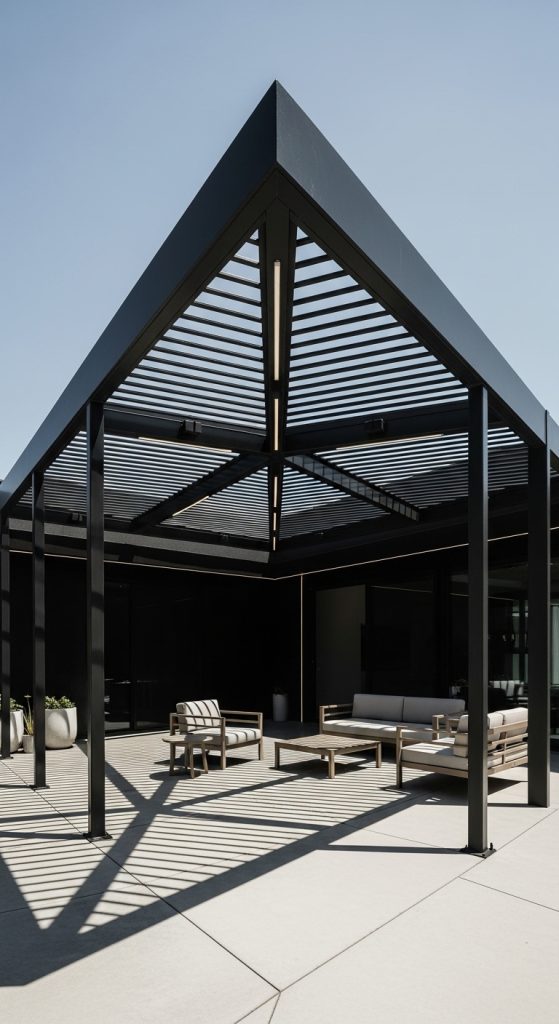
For contemporary gardens, a minimalist modern triangle pergola provides clean lines and a simple structure that blends with modern architecture. The design usually features slim posts, geometric shapes, and a lack of ornate detailing. This type of pergola works well with metal or composite materials for durability and low maintenance.
Preparation starts with designing a triangular layout that complements the surroundings. Consider using powder-coated steel or aluminum for a sleek finish that resists rust and requires little upkeep. Minimalist pergolas often have open roofs with simple beams to allow sunlight to filter through.
Furniture should match the modern aesthetic: think simple benches or chairs in neutral colors. Adding subtle lighting under beams or along posts enhances the atmosphere without disrupting the minimalist design. A modern triangle pergola is perfect for those who value style, function, and low-maintenance outdoor structures.
3. Floating Triangle Pergola
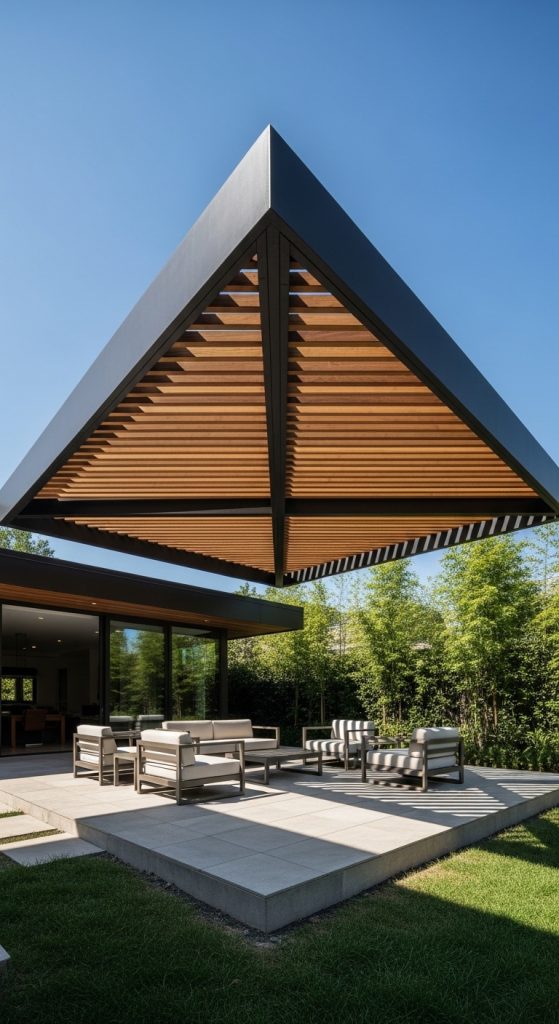
A floating triangle pergola is a design where the structure appears to hover above the ground, often supported by hidden posts or cantilevered beams. This creates a striking architectural statement and adds a sense of openness to your outdoor space.
When preparing to build, ensure the supporting beams are strong enough to hold the structure securely. Materials like steel or reinforced wood are ideal for floating pergolas. The triangular design can cover a seating area, hot tub, or garden corner.
Floating pergolas benefit from elevated design features such as under-lighting or hanging planters to emphasize the “floating” effect. This style works particularly well in contemporary gardens or backyard patios that aim for a dramatic visual impact. Proper anchoring and structural integrity are critical, so consult construction guidelines or a professional if attempting large-scale installations.
4. Pergola with Retractable Canopy
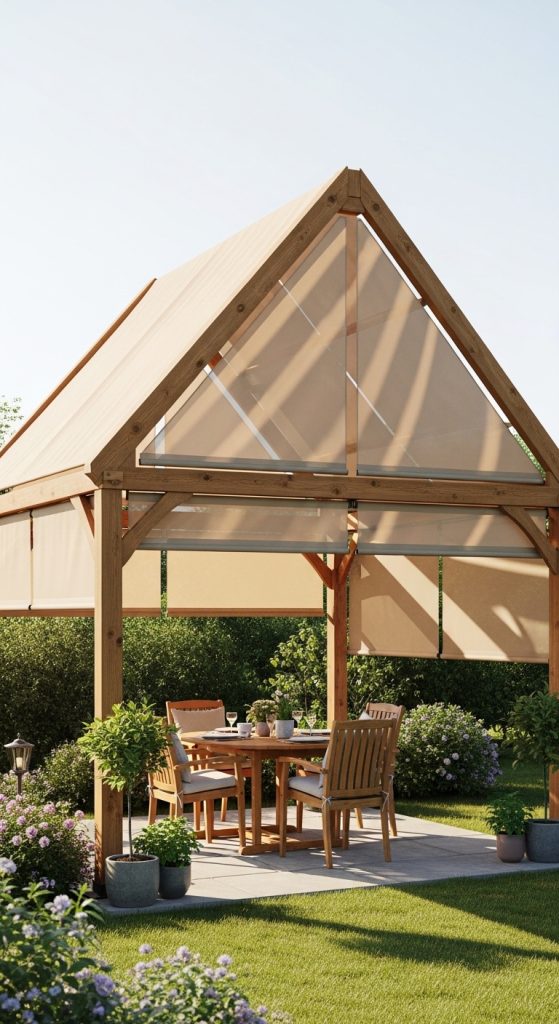
A triangle pergola with a retractable canopy combines style and functionality. The triangular frame provides a strong structure, while a retractable canopy allows control over sunlight and shade. It is ideal for areas that experience varying sun exposure throughout the day.
The preparation involves measuring the area and ensuring posts are properly aligned for smooth operation of the canopy. Canopy materials typically include weather-resistant fabrics like polyester or acrylic. Install tracks or guide ropes that allow the canopy to slide open or closed.
This pergola is ideal for outdoor dining areas or relaxation spots, offering protection from sun and light rain. Integrating a retractable canopy allows flexibility in creating shade without compromising the modern triangular design. It is a versatile option for homeowners seeking both beauty and practicality.
5. Garden Triangle Pergola for Climbing Plants
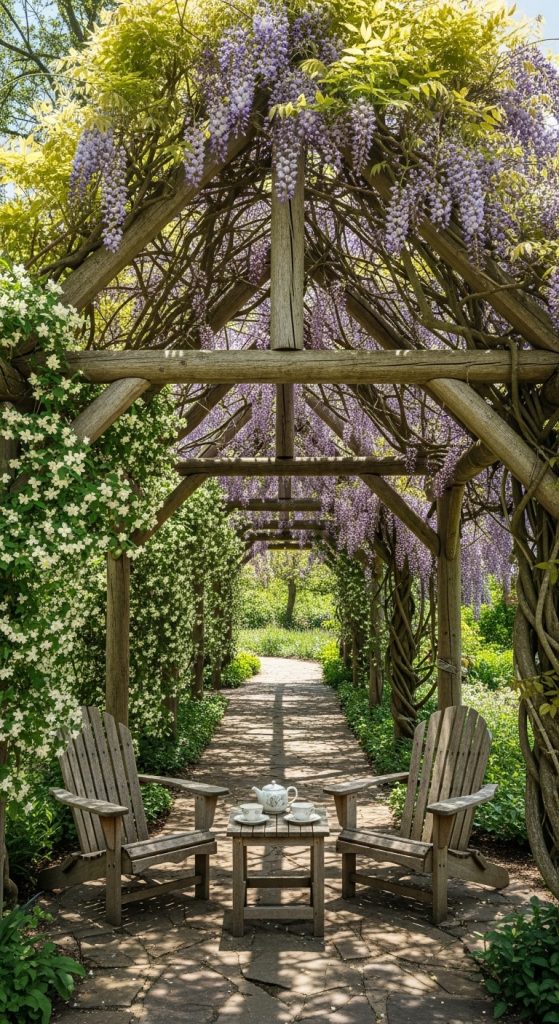
Triangle pergolas are excellent for supporting climbing plants, turning them into living structures. Wisteria, jasmine, or grapevines can grow along the beams, creating a shaded and fragrant retreat. The triangular shape offers multiple planes for plants to climb, making it visually interesting from every angle.
Preparation includes selecting durable materials that can support plant weight over time, such as cedar, treated pine, or metal. Ensure posts are deeply anchored to withstand seasonal wind and plant growth.
For aesthetic appeal, choose flowering plants with staggered bloom cycles, so your pergola looks vibrant throughout the year. Adding small benches or a garden swing underneath enhances functionality. A triangle garden pergola provides beauty, shade, and a natural connection to the outdoors, making it a favorite for garden enthusiasts.
6. Triangle Pergola with Outdoor Dining Space
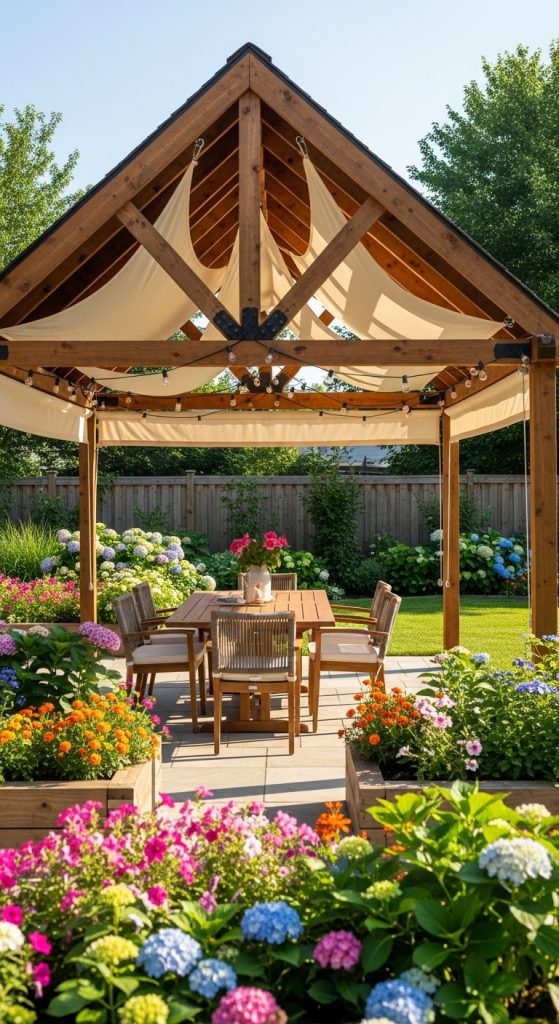
If you enjoy entertaining, a triangle pergola designed for outdoor dining can be a stunning centerpiece. The triangular layout allows a dining table and chairs to fit comfortably while creating a sense of intimacy. The three sides can be partially enclosed with trellises, curtains, or lattice for privacy.
Preparation starts with selecting a location with level ground. Wood is common for dining pergolas, but metal options work for a more modern look. The roof can be partially covered with slats, lattice, or transparent panels to balance sun and shade.
Consider adding ambient lighting such as string lights, lanterns, or LED strips. Incorporate weather-resistant furniture and cushions for comfort. Triangle dining pergolas are versatile for summer gatherings, barbecues, or quiet meals while enjoying the garden view. Proper planning ensures enough space for chairs and circulation around the table.
7. Small Space Triangle Pergola
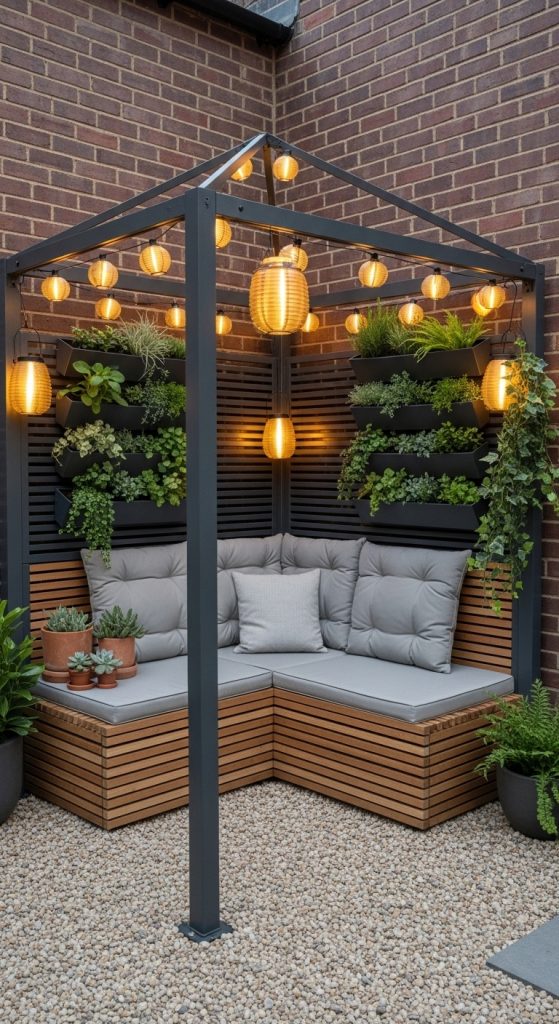
For urban gardens or small patios, a compact triangle pergola maximizes space without overwhelming the area. Its geometry allows it to fit into corners or irregularly shaped plots, creating a private nook for relaxation.
Preparation includes precise measurements and choosing lightweight yet durable materials. Composite wood, aluminum, or PVC options are ideal for small structures. Seating can be minimal, such as a bench, floor cushions, or a small table.
Adding vertical planters or trellises along the sides enhances greenery without taking up floor space. Lighting, such as solar lanterns, can make the pergola usable at night. A small triangle pergola proves that even limited spaces can benefit from stylish and functional outdoor structures.
8. Pergola with Multi-Level Triangle Design
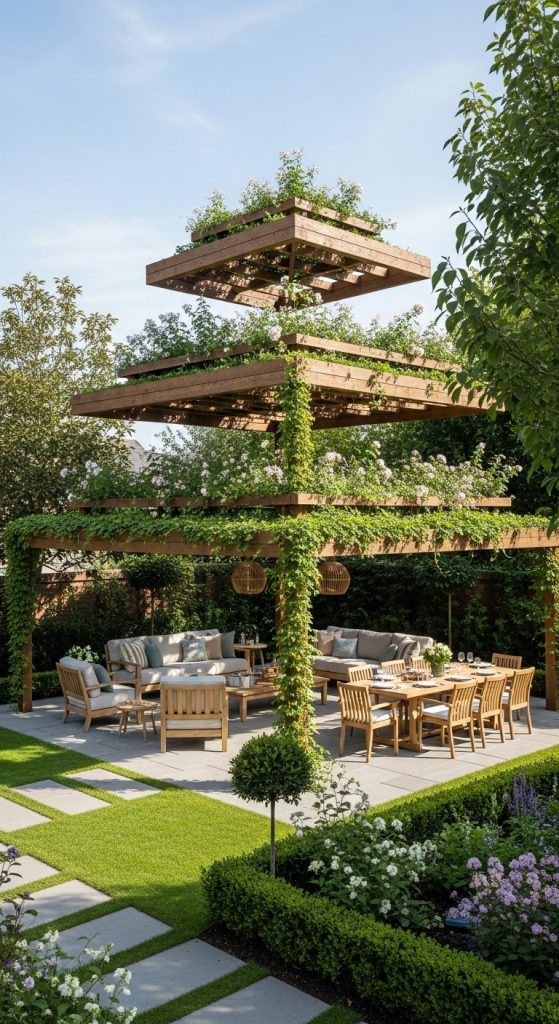
A multi-level triangle pergola adds dimension and architectural interest to larger gardens. It features stacked or tiered triangular frames, which can provide partial shade or create separate zones under the same structure.
Preparation is key because structural stability becomes more complex with multiple levels. Use strong posts and crossbeams, preferably steel or reinforced wood. Each level can have a different purpose, such as seating, plants, or hanging decorations.
Lighting can be integrated into upper beams, and climbing plants can grow on the tiers. Multi-level triangle pergolas are ideal for spacious gardens or patios where a dramatic and functional statement is desired. They can become a central feature for social gatherings or quiet retreats.
9. Triangle Pergola with Integrated Seating
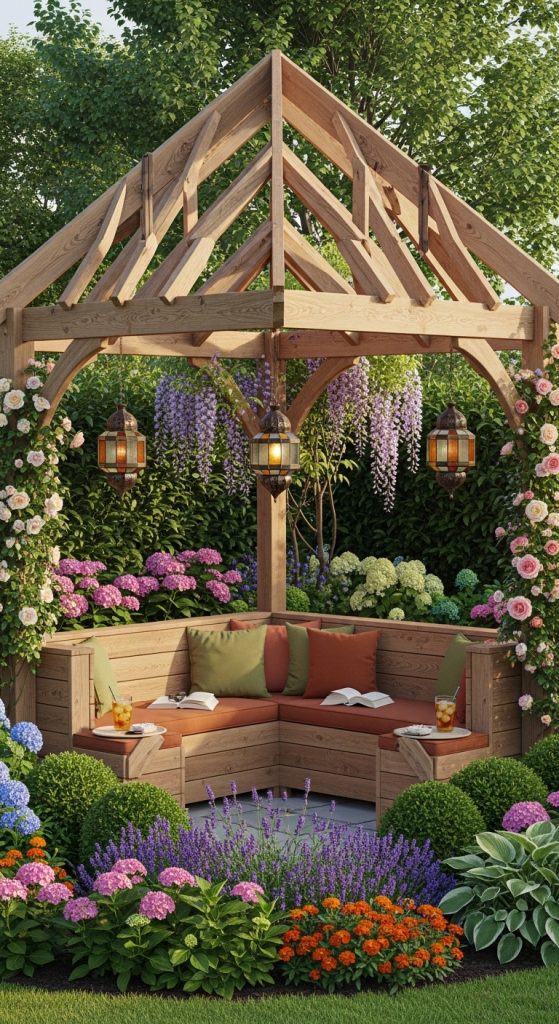
Integrating seating into the triangle pergola design enhances functionality and saves space. Benches or corner seating can be built along the perimeter of the structure, making it a comfortable area for reading, relaxing, or socializing.
Preparation involves measuring the triangle’s base accurately to ensure proper fit for the seating. Materials should match or complement the pergola’s structure. Wood is ideal because it is easy to shape, stain, or paint. Cushions and weather-resistant fabrics improve comfort.
You can add small tables or side surfaces for drinks and snacks. Lighting and decorative accents such as hanging plants or lanterns make the space more inviting. A triangle pergola with integrated seating efficiently combines aesthetics and function, creating a cozy corner in any garden or patio.
10. Freestanding Triangle Pergola for Backyard Focal Point
A freestanding triangle pergola can serve as a backyard focal point, creating a destination within your outdoor space. Its triangular shape naturally draws attention, making it perfect for garden parties, photo opportunities, or highlighting a specific area like a fountain or sculpture.
Preparation involves selecting a central location and ensuring stable foundations for the posts. Materials like cedar or metal provide strength and weather resistance. You can leave the sides open or add partial trellises for aesthetic effect.
Decorate with climbing plants, string lights, or hanging planters to enhance the visual impact. Freestanding triangle pergolas are versatile and can accommodate seating, swings, or a small dining set. They combine style and function, becoming a signature element in your backyard landscape.