

A kids playroom is a wonderful space where children can explore their creativity, learn new skills, and enjoy playtime. However, without proper organization, it can quickly become messy and overwhelming. Toys, books, art supplies, puzzles, and games often pile up, making it difficult for children to find what they want and even harder to clean up afterward. This is why smart storage solutions are essential for any kids playroom.
Good storage ideas do more than just keep the room tidy. They help children learn responsibility, encourage independence, and make playtime more enjoyable. When toys and materials are organized in a clear and simple way, kids can easily see what they have and where everything belongs. This also reduces stress for parents because cleaning and organizing becomes faster and easier.
The key to effective playroom storage is choosing solutions that are practical, safe, and child friendly. Storage should be easy for kids to access so they can take toys out and put them away without help. It should also be durable and adaptable as children grow and their interests change.
In this blog post, you will discover ten practical kids playroom storage ideas. Each idea focuses on simple materials, preparation steps, and useful tips that help create an organized, functional, and enjoyable play space for children.
1. Toy Storage Bins and Baskets
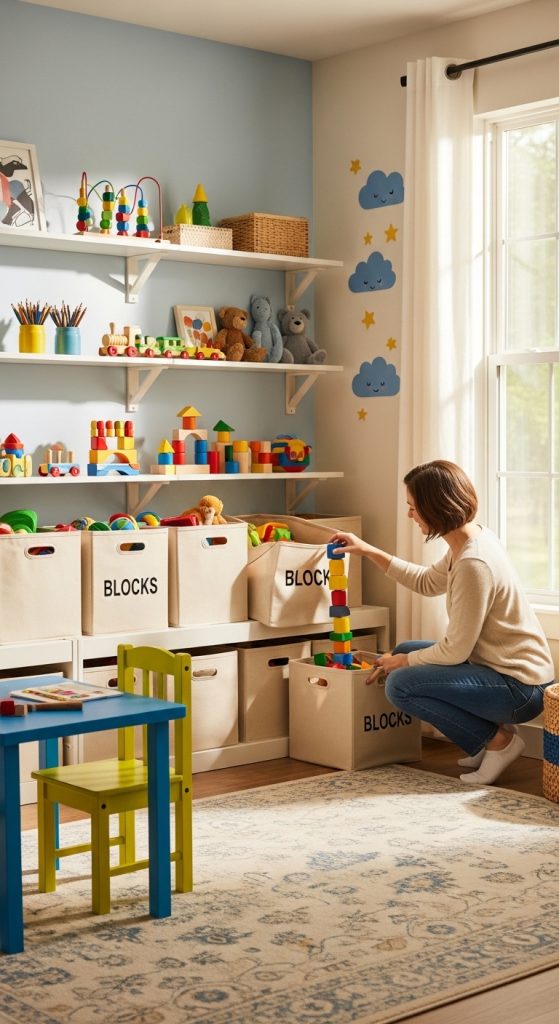
Toy storage bins and baskets are one of the easiest and most effective ways to organize a kids playroom. They help group similar toys together and make cleanup simple for both children and parents.
To prepare this storage system, start by sorting toys into categories. For example, place building blocks in one group, dolls in another, puzzles in another, and art supplies in a separate category. This makes it easier to decide how many bins or baskets you need.
The materials required are plastic bins, fabric baskets, or woven baskets. Clear plastic bins are useful because children can easily see what is inside. Fabric baskets are softer and often more visually appealing for a playroom. Labels can also be added to each container to help children identify where toys belong.
Place the bins on the floor, inside shelves, or on low storage racks that children can reach easily. Avoid stacking them too high so kids can safely access them.
To make the system more effective, choose bins with handles so children can move them around if needed. Lightweight baskets are especially helpful for younger kids who may struggle with heavier containers.
This storage method keeps toys organized, encourages children to clean up after playing, and helps maintain a tidy playroom.

2. Cube Storage Shelving Units
Cube storage shelving units are extremely popular for kids playrooms because they are versatile and easy to organize. These units usually contain square compartments that can hold bins, baskets, books, or toys.
Preparation begins by selecting a sturdy shelving unit that fits the size of your playroom. Many cube shelves come with four, six, or nine compartments. Choose one that provides enough storage without taking up too much space.
The materials required include the cube shelf itself, storage bins that fit the compartments, and labels if desired. Some compartments can remain open for items like books, puzzles, or board games.
When setting up the shelves, place heavier items in the lower cubes to prevent tipping. If possible, secure the shelving unit to the wall for safety.
This system allows you to create different sections for different types of toys. For example, one cube can hold building toys, another can hold stuffed animals, and another can store craft supplies.
Cube shelves are also useful because they grow with your child. As kids get older, the same shelves can store school supplies, books, or hobby materials.
Overall, cube storage shelves provide a structured and visually organized solution for keeping a kids playroom neat and functional.

3. Wall Mounted Shelves
Wall mounted shelves are an excellent way to add storage without taking up valuable floor space. They help keep the playroom organized while allowing children to display their favorite toys or books.
The first step in preparation is identifying an empty wall area where shelves can be installed. Choose a height that children can safely reach if the shelves will hold items they use regularly.
The materials required include wooden or metal wall shelves, wall anchors, screws, a drill, and a level for proper installation. It is important to install shelves securely so they can safely hold the weight of books or toys.
Wall shelves are ideal for storing books, art supplies, puzzles, or decorative items. They can also be used to display special toys or crafts that children want to keep visible.
To improve organization, consider using small baskets or containers on the shelves. This keeps smaller items from getting scattered.
One advantage of wall shelves is that they make the playroom feel more open and less cluttered. Instead of piling toys on the floor, items are stored vertically on the walls.
Wall mounted shelves also help teach children how to organize and care for their belongings by giving each item a designated place.

4. Under Table Storage
Under table storage is a creative way to use space that often goes unused in a playroom. Many playrooms include a small table where children draw, build, or do crafts, and the area underneath can provide valuable storage.
Preparation begins by measuring the space under the table. This helps determine what type of containers will fit comfortably without blocking legroom.
Materials for this storage solution include shallow plastic bins, rolling drawers, or storage trays. Rolling containers are particularly useful because children can easily pull them out and push them back under the table.
Under table storage works well for items that children use frequently, such as coloring books, crayons, building blocks, or puzzles. Keeping these materials nearby makes activities more convenient.
To make the system even more effective, label each container with pictures or words. This helps children remember where items belong when cleaning up.
One benefit of under table storage is that it keeps frequently used toys within easy reach while maintaining a clean and organized appearance. It also helps maximize space in smaller playrooms.
Using the space under tables is a simple but highly effective way to improve storage without adding extra furniture.

5. Toy Rotation Storage System
A toy rotation storage system helps reduce clutter and keep children interested in their toys. Instead of keeping every toy available all the time, only a portion of toys is displayed while the rest are stored away.
Preparation begins by sorting all toys into several groups. Choose a selection that will remain in the playroom for a few weeks while the other toys are stored in a separate area such as a closet or storage room.
Materials required include large storage bins with lids, labels, and shelving for the stored toys. Clear bins are useful because you can easily see what is inside.
Every few weeks, rotate the toys by replacing the current set with a different group from storage. This makes old toys feel new again and keeps children excited about playtime.
Toy rotation also prevents the playroom from becoming overcrowded. Fewer toys on display means the room stays organized and children are less overwhelmed when choosing what to play with.
Another benefit is that toys stay in better condition because they are not constantly used or scattered around.
This method encourages thoughtful play and helps maintain a tidy playroom environment.
6. Pegboard Wall Organizer
A pegboard wall organizer is a flexible and creative storage solution that works especially well for art supplies and small toys.
Preparation begins by selecting a suitable wall space in the playroom. Pegboards can be mounted at child friendly heights so kids can access their materials easily.
Materials needed include a pegboard panel, wall mounting hardware, hooks, small baskets, and containers designed for pegboards.
Once installed, hooks and baskets can be arranged in different ways to hold various items such as scissors, markers, craft tools, toy cars, or small building pieces.
One of the biggest advantages of pegboard storage is flexibility. Hooks and containers can be moved around whenever storage needs change.
This type of organizer also keeps items visible. When children can see their supplies clearly, they are more likely to use them and put them back after playing.
Pegboards also add a creative and colorful element to the playroom, especially when painted or decorated.
Overall, pegboard wall organizers provide a practical and customizable storage solution for keeping small items organized.

7. Rolling Toy Carts
Rolling toy carts are highly practical for playrooms because they allow toys and supplies to be moved easily from one area to another.
Preparation involves choosing a sturdy cart with multiple tiers or shelves. Three tier rolling carts are particularly useful because they offer several levels of storage while remaining compact.
The materials needed include the rolling cart itself, small containers or trays, and labels if desired.
Each tier of the cart can be assigned a different purpose. For example, the top shelf can hold art supplies, the middle shelf can store puzzles or board games, and the bottom shelf can hold building toys.
One advantage of rolling carts is mobility. Children can move the cart to a table when doing crafts or bring it closer to the floor when playing with toys.
This system also makes cleanup easier because everything has a specific place on the cart.
Rolling carts are especially helpful in playrooms that serve multiple functions. When playtime is finished, the cart can simply be rolled into a corner or closet.
Because they are flexible and easy to move, rolling toy carts are an excellent storage solution for active play spaces.

8. Book Display Racks
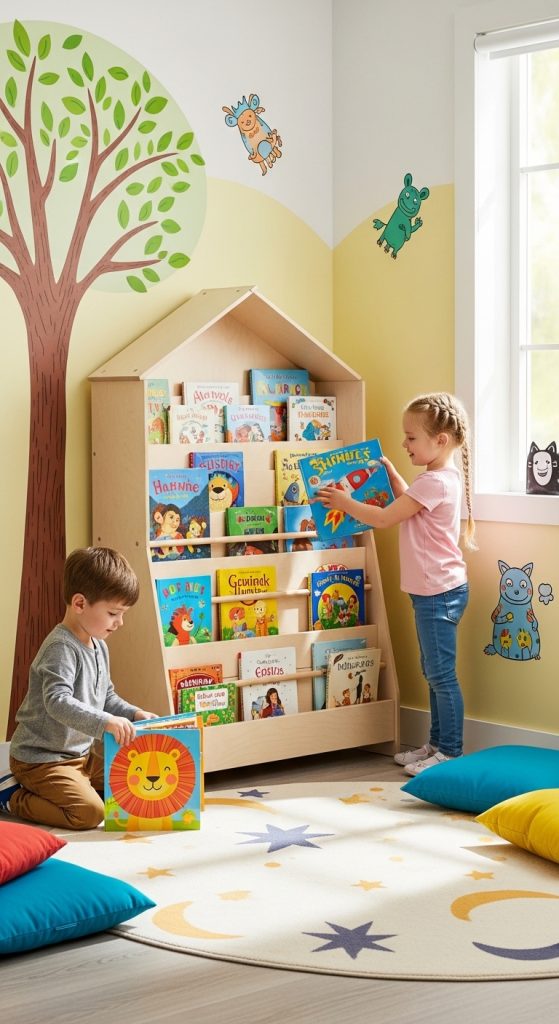
Books are an important part of any children’s playroom, but they often become messy when stacked on traditional shelves. Book display racks provide a better way to organize and display children’s books.
Preparation begins by selecting a display rack that allows books to face forward. This type of design lets children easily see book covers and choose what they want to read.
Materials needed include the book rack itself, wall anchors if it will be mounted, and optional labels for organizing categories.
Books can be arranged by theme, reading level, or favorite stories. Keeping the most frequently used books at the front makes them easy for children to reach.
Display racks also encourage reading because colorful covers attract children’s attention. When books are easy to see and access, kids are more likely to explore them during playtime.
Another advantage is that these racks prevent books from falling over or becoming damaged.
By keeping books neatly displayed and accessible, book display racks help create a reading friendly environment within the playroom.
9. Storage Benches with Hidden Compartments
Storage benches are a smart combination of seating and storage. They provide a comfortable place for children to sit while also hiding toys inside.
Preparation involves selecting a sturdy bench that includes a lift up lid or pull out storage compartment. The bench should be strong enough to support children safely.
Materials needed include the storage bench, soft cushions for seating comfort, and optional bins to organize the inside compartment.
Inside the bench, toys such as stuffed animals, blankets, or larger play items can be stored. Using smaller bins inside the compartment helps keep everything organized.
Storage benches are particularly useful in playrooms where space is limited. Instead of adding separate seating and storage furniture, one piece serves both purposes.
This solution also keeps the room looking tidy because toys are hidden inside the bench rather than scattered across the floor.
Additionally, the bench can create a cozy reading corner when paired with bookshelves and soft pillows.
Storage benches are both functional and visually appealing, making them an excellent addition to any kids playroom.

10. Closet Organization for Playrooms
If the playroom includes a closet, it can become one of the most valuable storage areas when organized properly.
Preparation begins by emptying the closet and sorting all items into categories. Decide which toys should remain in the playroom and which can be stored inside the closet.
Materials required include adjustable shelves, hanging organizers, storage bins, and labels. Closet rods can also be used to hang dress up costumes or play clothes.
Shelves allow you to stack bins filled with toys, craft supplies, or games. Clear containers help you quickly identify what is stored inside.
Hanging organizers are useful for small toys, puzzles, or art materials. They maximize vertical space and keep items neatly separated.
A well organized closet also works well for the toy rotation system mentioned earlier. Extra toys can be stored neatly until it is time to switch them into the playroom.
By using shelves, bins, and hanging organizers, the closet becomes a powerful storage solution that keeps the main playroom area clean and uncluttered.
