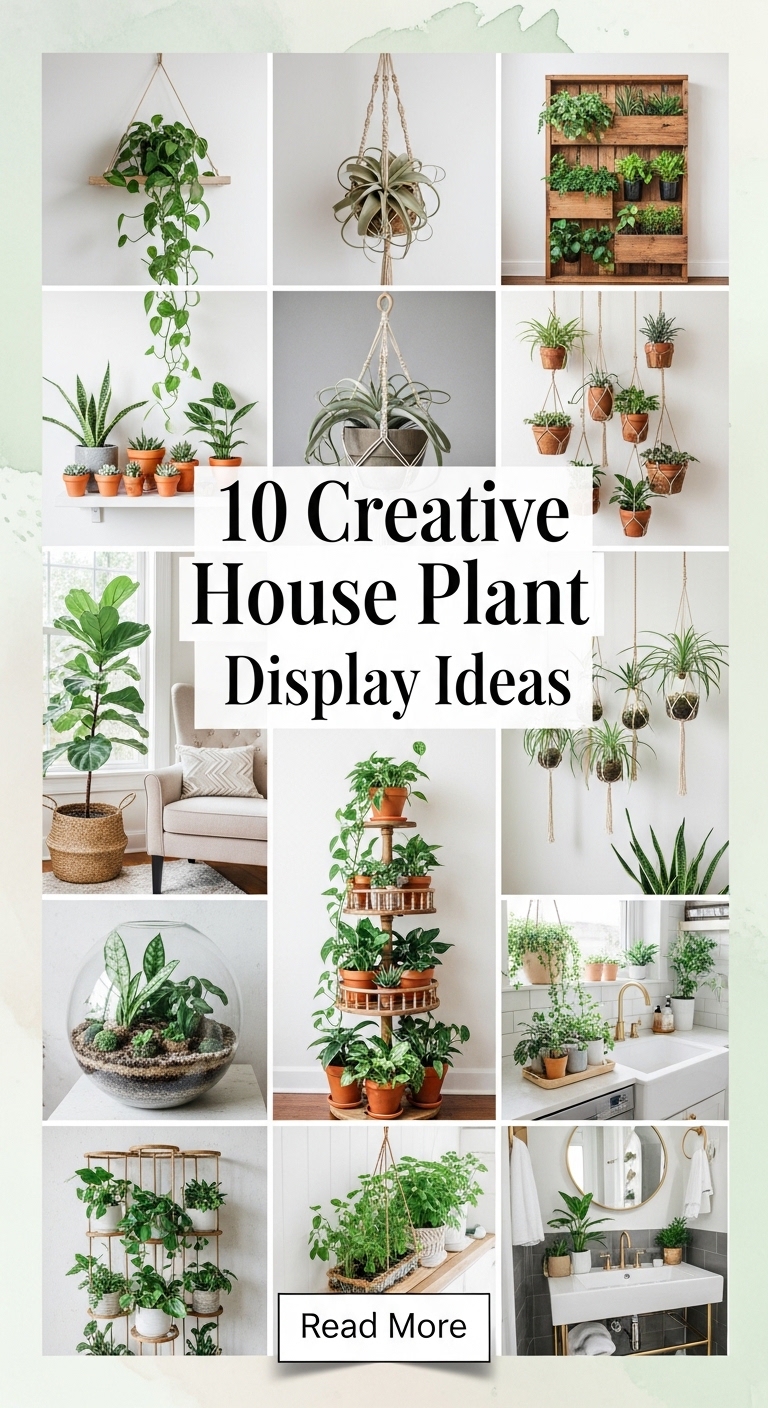
House plants bring natural beauty, fresh air, and a calm feeling into any home. They make rooms look more lively and welcoming. Many people enjoy keeping plants indoors because they improve mood and add color to simple spaces. However, placing plants randomly around the house may not create the best visual effect. A creative plant display can completely transform your interior design and make your home feel more organized and stylish.
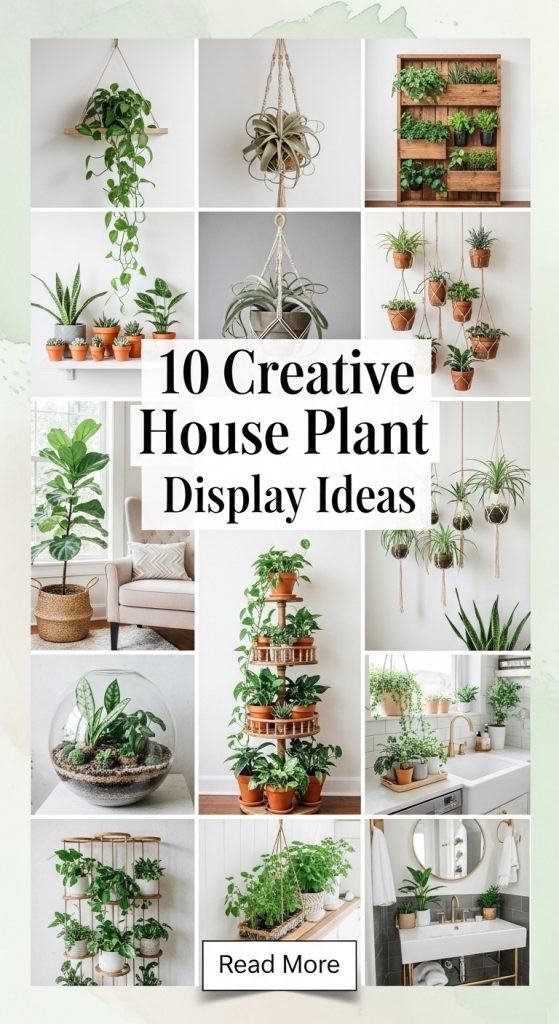
Before creating any plant display, proper preparation is important. First, study the lighting conditions in your home. Some plants require bright direct sunlight, while others grow well in low light. Choose plants that match the light in your chosen area. Second, always consider watering needs and drainage. Use pots with drainage holes and trays to protect your floors and furniture. Third, measure your space carefully to avoid overcrowding. Finally, select plants that fit your lifestyle. If you are busy, choose low maintenance varieties.
In this blog post, you will discover ten creative house plant display ideas. Each idea includes preparation steps, materials needed, and helpful information to guide you in building beautiful and practical plant arrangements for your home.
- Vertical Wall Garden Display
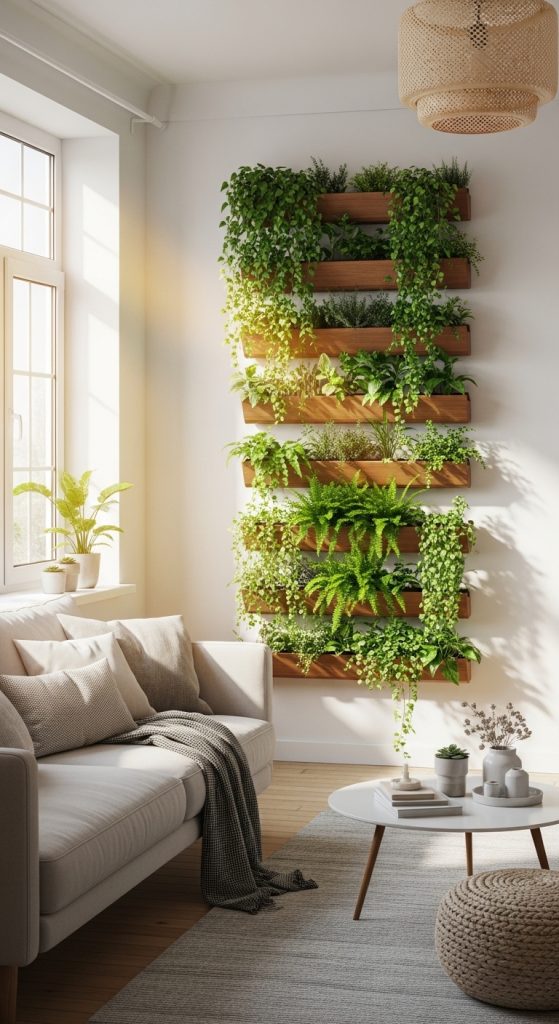
A vertical wall garden is a stunning way to display house plants while saving floor space. This idea works well in living rooms, balconies, and even kitchens. It turns an empty wall into a green feature.
Start by choosing a strong wall that can handle weight. Measure the area and decide how many plants you want to display. Make sure the wall receives suitable light for your plant selection.
Materials needed include wall mounted planters or pocket planters, screws, wall anchors, a drill machine, measuring tape, and a level tool. You may also use wooden panels or metal grids to attach plant pots.
Select lightweight plants to reduce strain on the wall. Arrange them evenly for a balanced look. Keep enough space between pots for proper air circulation. Always place trays inside or beneath planters to prevent water damage.
A vertical wall garden creates a modern and refreshing appearance. It keeps your plants organized while turning your wall into a beautiful natural display.
- Decorative Plant Ladder Shelf
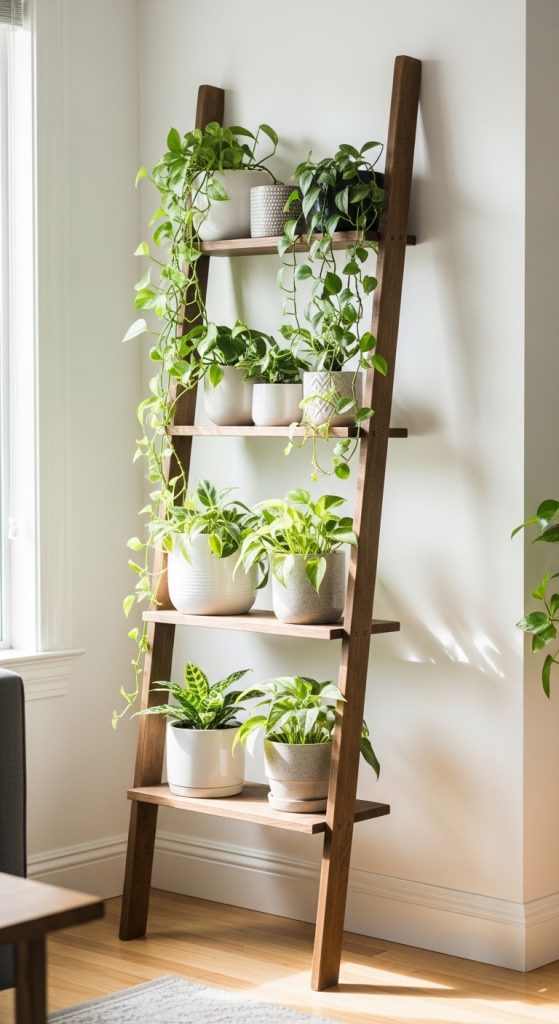
A ladder shelf is both functional and stylish. It provides multiple levels for displaying plants and adds height to your room design.
Begin by selecting a ladder shelf that matches your home style. You can buy one or reuse an old ladder. If using an old ladder, sand it smoothly and apply paint or wood polish.
Materials required include a ladder shelf, paint or polish if needed, small trays, plant pots, and a measuring tape to ensure proper placement.
Place larger plants on the bottom shelves for stability. Smaller pots can go on higher levels. Trailing plants look beautiful on top shelves as they hang down naturally.
Make sure the ladder stands firmly against the wall. Avoid placing very heavy pots on the top level. Clean shelves regularly to remove dust and water spills.
A ladder shelf display is easy to rearrange and maintain. It works well in living rooms, bedrooms, and home offices.
- Hanging Plant Corner Arrangement
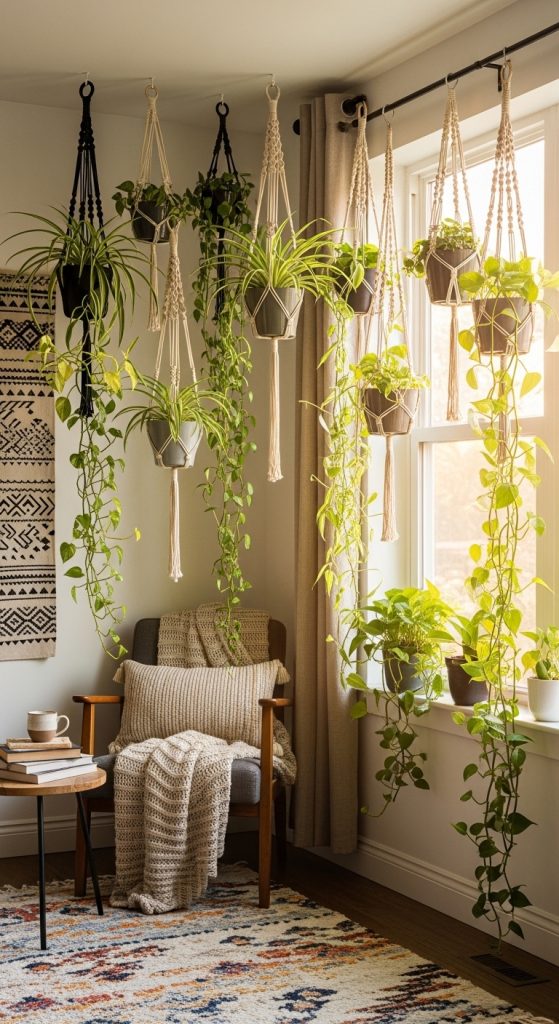
Hanging plants add movement and softness to a room. They are perfect for small homes because they use vertical space instead of floor space.
First, choose a corner near a window where plants can receive enough light. Use a stud finder to locate strong ceiling support before installing hooks.
Materials needed include ceiling hooks, wall anchors, a drill, macrame hangers or metal hanging baskets, lightweight plant pots, and trays to catch water.
Select plants that grow well in hanging positions. Make sure the height allows easy watering without blocking walking areas. Space them evenly for a neat appearance.
This arrangement creates a cozy and airy feeling. It also makes ceilings appear higher. With proper installation and plant choice, hanging plant displays add elegance and charm to any room.
- Window Sill Plant Garden
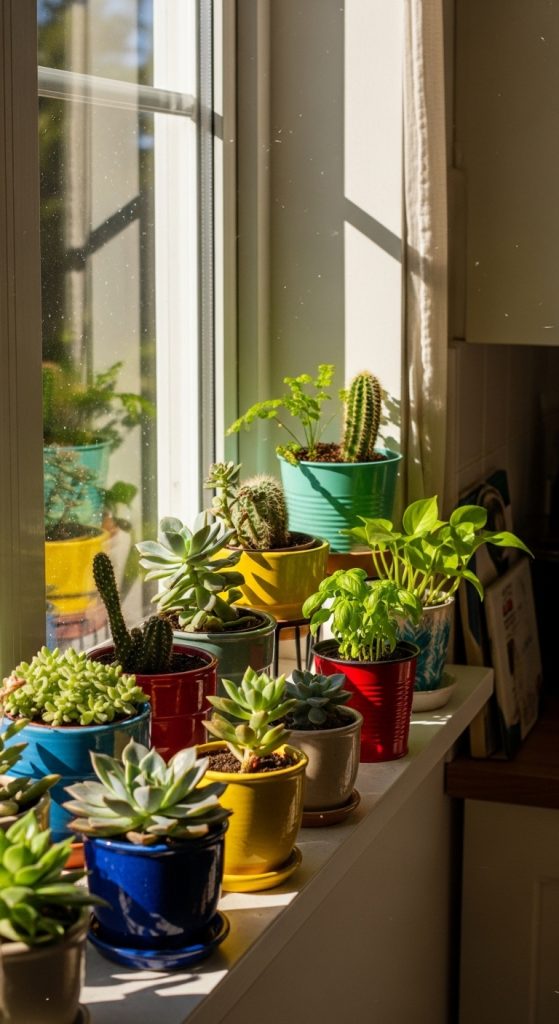
A window sill garden is simple yet beautiful. It uses natural sunlight and brightens up your windows instantly.
Start by checking how much sunlight your window receives daily. South facing windows provide strong light, while east and west facing windows offer moderate light.
Materials required include small pots with drainage holes, trays, potting soil, and plants suited to your light conditions. You may also use decorative ceramic pots for added style.
Arrange plants in different heights for visual interest. Keep taller plants at the back and shorter ones at the front. Make sure leaves do not block too much sunlight from each other.
Water carefully to avoid spills on the window frame. Wipe the area regularly to prevent moisture damage.
A window sill garden creates a cheerful atmosphere and makes good use of natural light in your home.
- Plant Display Cabinet
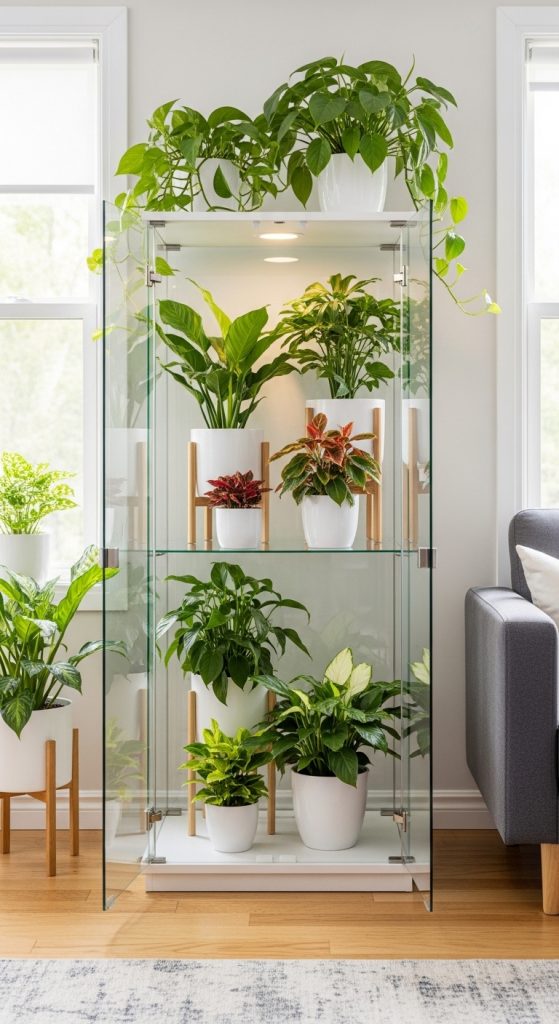
A plant display cabinet is perfect for people who want a neat and organized look. It protects plants while showcasing them beautifully.
Choose a cabinet with glass doors so light can enter. Place it near a window or in a well lit room. Ensure there is proper ventilation.
Materials needed include a glass cabinet, grow lights if natural light is limited, small trays, and decorative pots.
Arrange plants based on light needs. Plants requiring more light should be placed on higher shelves. Add small decorative items between plants for variety.
Install grow lights if needed to maintain healthy growth. Clean glass panels regularly to keep the display clear and attractive.
A plant cabinet creates a mini indoor greenhouse effect and adds elegance to your living space.
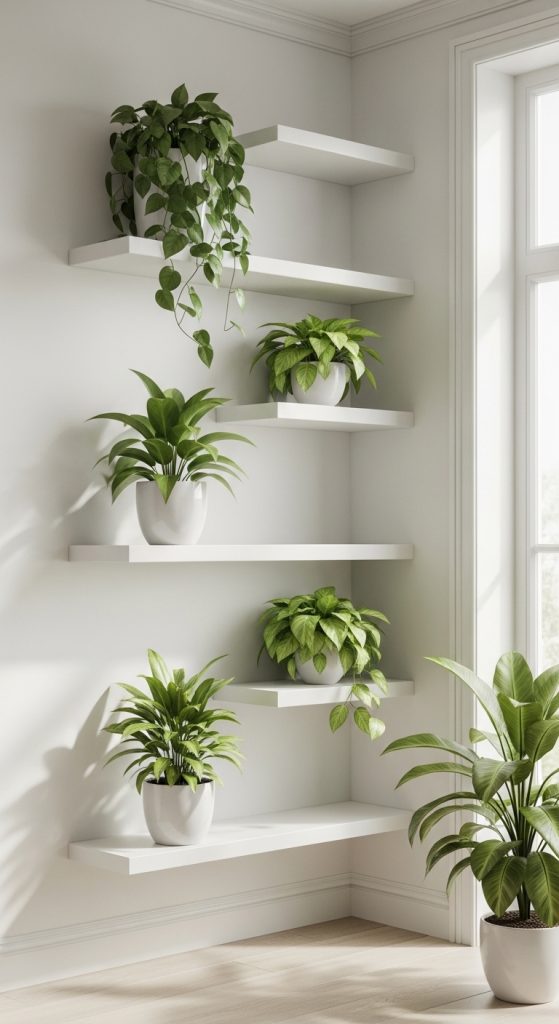
- Floating Corner Shelves for Plants
Floating corner shelves are ideal for small spaces. They use empty corners efficiently and add depth to the room.
Measure the corner area carefully before installation. Ensure the wall can support weight.
Materials required include floating shelves, screws, wall anchors, drill machine, level tool, and plant trays.
Install shelves evenly spaced from bottom to top. Place heavier pots on lower shelves and lighter ones above. Choose plants with different leaf shapes to create contrast.
This display keeps plants organized while adding style to unused corners. It is both practical and decorative.
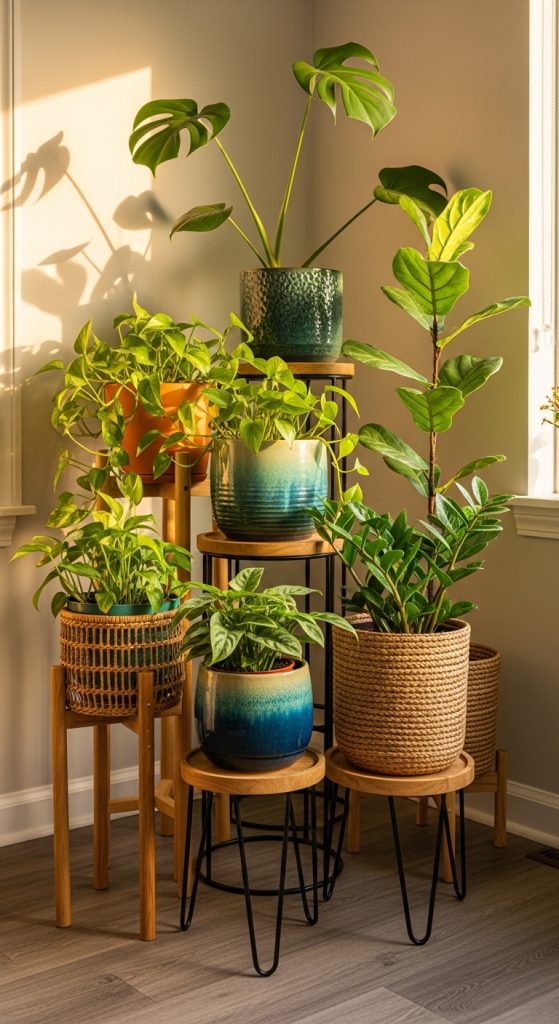
- Plant Stand Cluster Arrangement
Using different plant stands together creates a layered and artistic look. It adds dimension and makes your display more interesting.
Choose plant stands of varying heights. Measure the available space to avoid overcrowding.
Materials needed include metal or wooden plant stands, plant pots, trays, and a floor mat to protect surfaces.
Arrange stands in groups of three or five for balance. Place the tallest plant at the back and shorter ones in front. Mix leaf textures and colors for variety.
A plant stand cluster works well in living rooms or near entryways. It creates a strong focal point and makes plants easy to maintain.
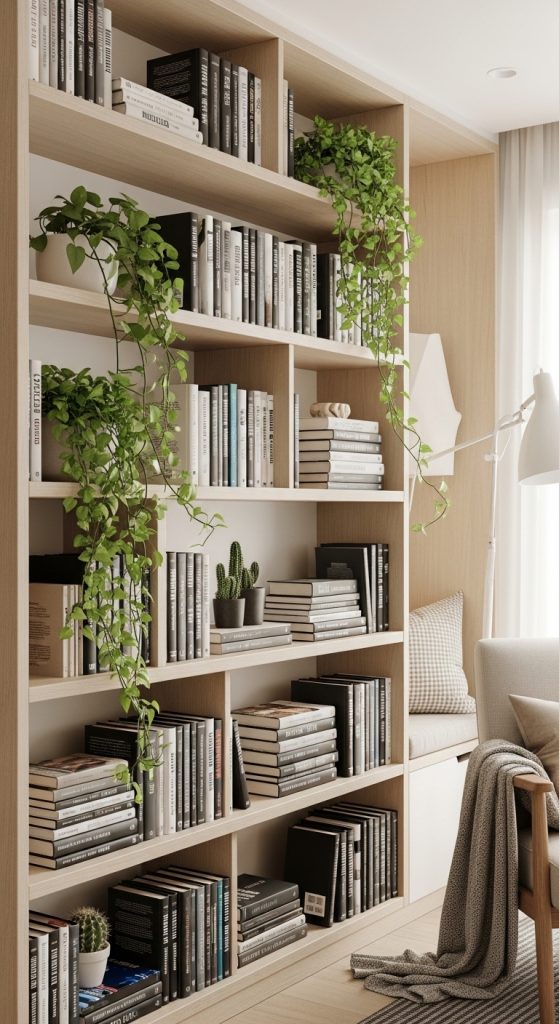
- Bookshelf Plant Integration
Adding plants to bookshelves brings life to your reading area. It softens the look of hard furniture and creates balance.
Choose a bookshelf with enough open space. Ensure it receives indirect light.
Materials required include small plant pots, trays, and optional grow lights.
Place plants between books rather than grouping them all together. Use trailing plants to hang slightly over shelf edges. Avoid overcrowding to keep shelves organized.
Water carefully to protect books from moisture. Clean leaves regularly to prevent dust.
This idea blends nature with decor and creates a cozy atmosphere in your home.
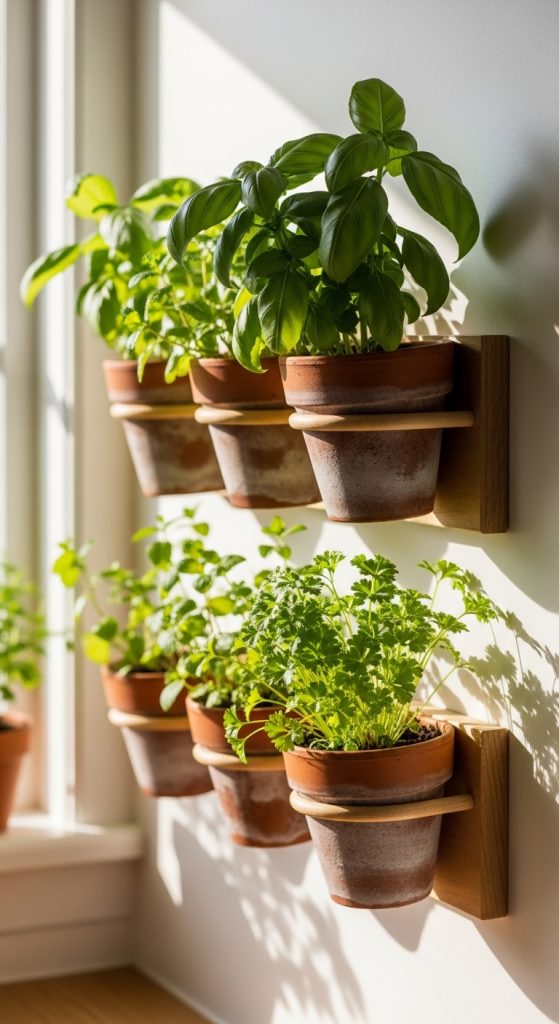
- Kitchen Herb Display Rack
A kitchen herb display is both decorative and useful. Fresh herbs add fragrance and convenience while cooking.
Select a sunny kitchen window or wall space. Measure carefully before installation.
Materials needed include small herb pots, wall rack or hanging rail, hooks, potting soil, and herb seeds or plants.
Install the rack securely. Choose herbs like basil, mint, or parsley that grow well indoors. Ensure proper drainage to protect kitchen surfaces.
Regular trimming encourages healthy growth. This display keeps fresh ingredients within reach and adds greenery to your kitchen.
- Statement Floor Plant Corner
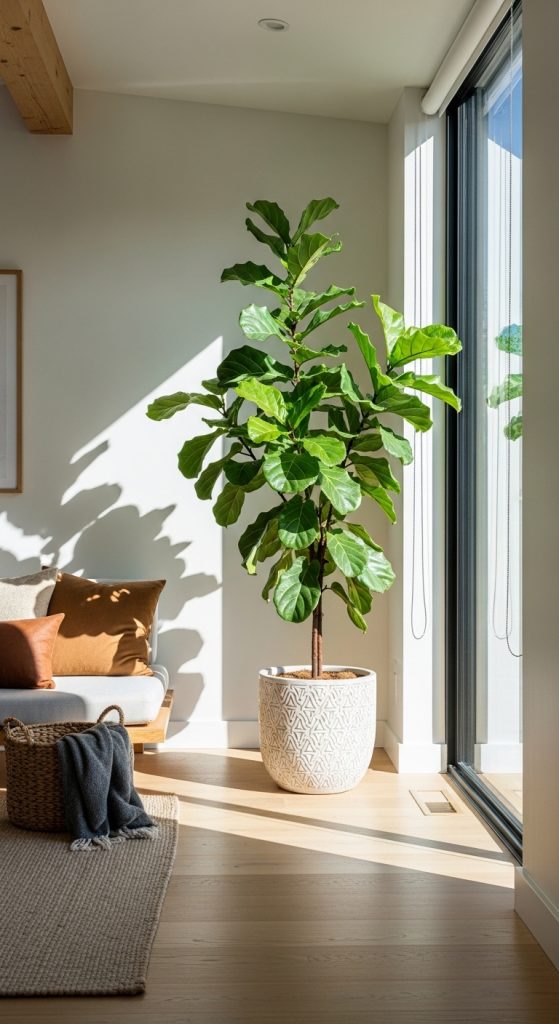
Large floor plants make bold statements in any room. They fill empty corners and add dramatic beauty.
Choose a bright corner with enough space. Measure to ensure the plant fits comfortably.
Materials required include a large decorative pot, drainage tray, quality potting soil, and a suitable plant.
Place the plant in a stable position where it will not be knocked over. Rotate it occasionally for even growth. Clean leaves to maintain shine.
A statement floor plant creates impact and makes your space feel fresh and complete.