
Vintage earthy wall art has become a popular choice for homeowners and designers who want to create a warm, calm, and natural atmosphere. This style blends the charm of the past with the soothing colors and textures of the earth. It often features muted tones like brown, beige, rust, olive green, and soft gray. The materials are usually natural, such as wood, linen, cotton, clay, and aged metal. These elements work together to bring comfort and character into a space.
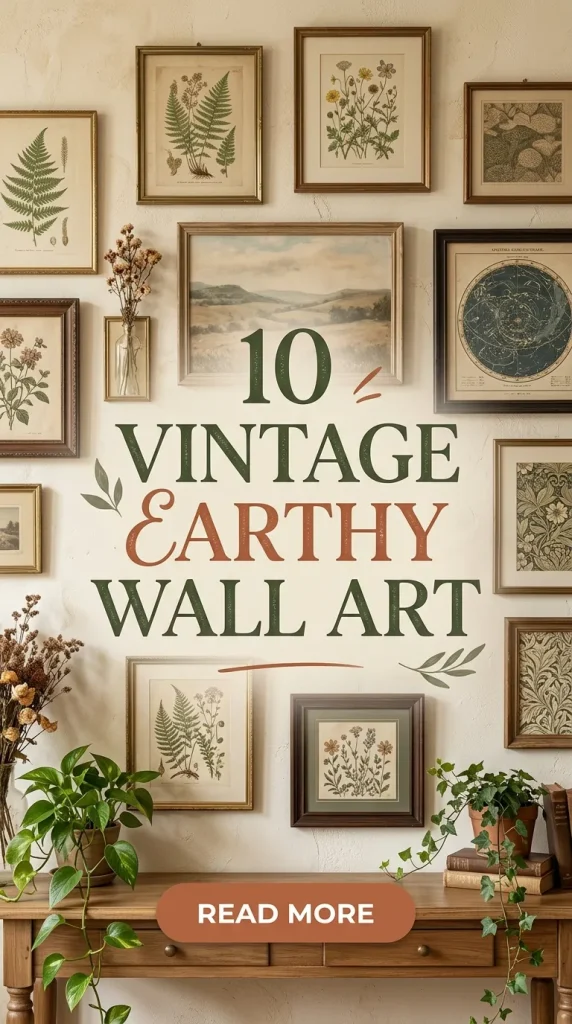
Vintage earthy wall art is not only about decoration. It is about storytelling. Each piece can reflect history, culture, craftsmanship, and a connection to nature. Whether you live in a modern apartment or a country home, this style can fit beautifully into your space. The key is to choose the right materials, prepare your walls carefully, and understand how each artwork can enhance your interior design.
In this detailed guide, you will discover ten vintage earthy wall art ideas. For each one, you will learn about preparation, materials, placement, and practical tips. This will help you create a timeless and natural look in your home.
1. Antique Botanical Prints
Antique botanical prints are one of the most classic forms of vintage earthy wall art. These artworks usually feature detailed drawings of plants, flowers, herbs, or trees. The colors are often soft and faded, which gives them an aged and natural feel. They work especially well in living rooms, bedrooms, and even kitchens.
Preparation starts with selecting the right wall. Choose a space with neutral paint colors like cream, warm white, or light beige. This will allow the botanical prints to stand out without looking too bold. Make sure the wall is clean and smooth before hanging the frames. If the wall has holes or cracks, repair them and apply a fresh coat of paint if needed.
For materials, look for prints on textured paper. Frames made of reclaimed wood or distressed wood add to the vintage effect. Glass with a matte finish can reduce glare and maintain a soft appearance. If you prefer a more rustic look, you can use simple wooden clips and hang the prints with twine.
When arranging botanical prints, consider symmetry or a neat grid layout. You can also create a gallery wall by mixing different plant illustrations. Keep the spacing even for a balanced appearance. Antique botanical prints bring nature indoors and create a calm, grounded atmosphere.

2. Rustic Wooden Wall Panels
Rustic wooden wall panels add warmth and depth to any room. They are perfect for creating a vintage earthy look because wood naturally carries texture, grain patterns, and imperfections that tell a story. Reclaimed wood is especially popular, as it has weathered marks and a soft, aged tone.
Before installing wooden panels, prepare the wall by cleaning it thoroughly. Remove dust, dirt, and any loose paint. Measure the wall carefully to ensure the panels fit properly. If the wall is uneven, you may need to install a thin backing board to create a flat surface.
The best materials for this type of wall art are reclaimed barn wood, old fence boards, or salvaged timber. Make sure the wood is treated for pests and properly dried. You can lightly sand the surface to remove splinters, but avoid over-sanding because you want to keep the aged character. Applying a clear matte sealant will protect the wood while maintaining its natural look.
Installation can be done with nails, screws, or construction adhesive, depending on the weight of the panels. Arrange the planks horizontally for a traditional feel or vertically to make the room look taller. Rustic wooden panels create a cozy and welcoming environment that reflects nature and history.

3. Vintage Landscape Paintings
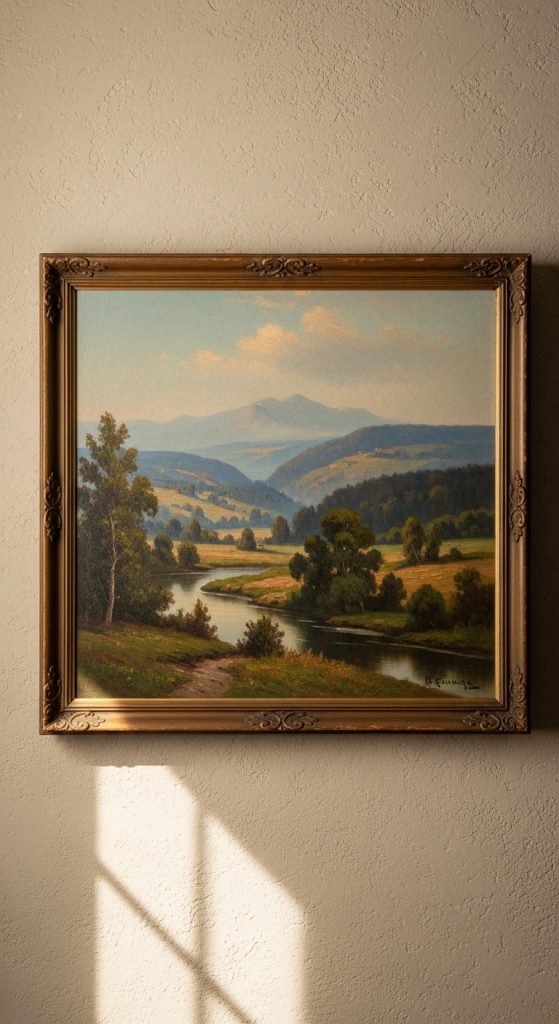
Vintage landscape paintings capture scenes of nature such as mountains, forests, rivers, and countryside views. These artworks often use earthy colors like brown, green, soft blue, and muted gold. They help bring the beauty of the outdoors into your home.
To prepare for hanging a landscape painting, first consider the lighting. Natural light enhances the soft tones of vintage art. Avoid placing the painting in direct sunlight, as this can fade the colors over time. Ensure the wall is clean and stable enough to support the frame.
Materials play a key role in achieving an authentic look. Choose paintings on canvas with visible brush strokes. Frames made from aged wood or antique-style gold frames work well. If you are using a reproduction print, consider having it printed on textured canvas to create a more realistic effect.
Placement is important. Hang the painting at eye level, usually about 57 to 60 inches from the floor to the center of the artwork. Large landscape paintings work well above sofas or beds. Smaller ones can be grouped together. Vintage landscape paintings add depth and a sense of escape, making your room feel peaceful and connected to nature.
4. Woven Wall Hangings
Woven wall hangings are a soft and textured option for vintage earthy decor. They are often made from natural fibers such as cotton, wool, jute, or linen. The colors usually include cream, beige, brown, and soft gray. These pieces add warmth and a handmade feel to your space.
Before hanging a woven piece, check the wall surface. Make sure it is clean and free from moisture. Use a strong wall hook or wooden rod to support the hanging. If the piece is large, you may need two hooks for stability.
When selecting materials, choose natural fibers for a true earthy look. Handwoven pieces with visible knots and patterns add character. You can also create your own woven art if you enjoy crafts. A simple wooden dowel and quality yarn can be used to make a custom piece.
Woven wall hangings look beautiful above beds, in entryways, or in cozy reading corners. They also help soften rooms with hard surfaces like concrete or tile. The texture adds visual interest without overwhelming the space. This type of art brings comfort and a gentle vintage charm to your home.

5. Clay and Ceramic Wall Plates
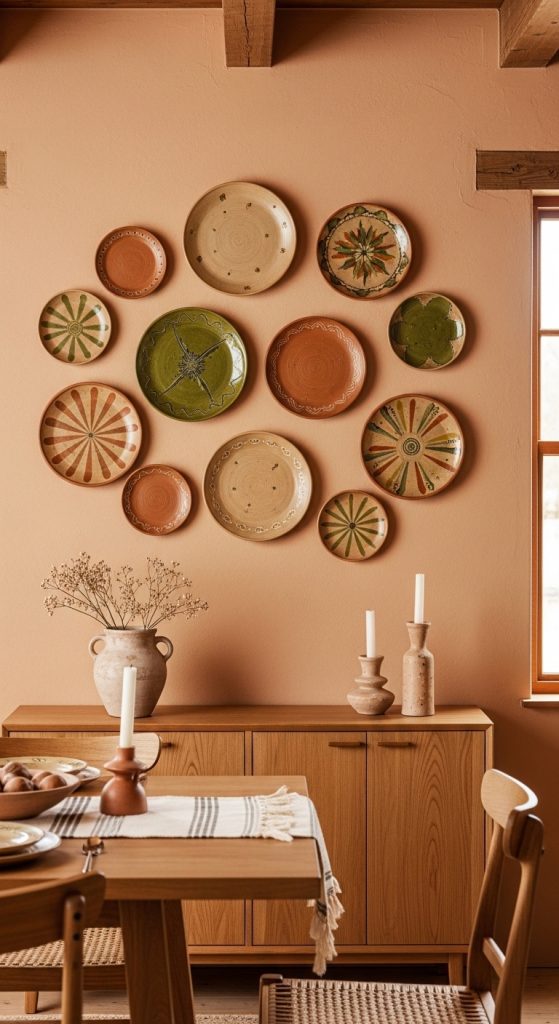
Clay and ceramic wall plates offer a unique way to decorate with earthy tones. These plates often feature hand-painted designs, natural textures, and warm colors such as terracotta, sand, and olive green. They reflect traditional craftsmanship and cultural heritage.
To prepare your wall, plan the arrangement before making any holes. Lay the plates on the floor and experiment with different layouts. Once you are satisfied, measure and mark the wall lightly with a pencil. Ensure the wall anchors are strong enough to hold the weight of ceramic pieces.
Materials should include high-quality clay or ceramic plates with secure hanging attachments on the back. Handmade pieces add authenticity and slight imperfections that enhance the vintage feel. You can also mix plain plates with patterned ones for variety.
When installing, use plate hangers or strong hooks. Keep the spacing consistent for a balanced look. Clay and ceramic wall plates work well in dining rooms, kitchens, and hallways. They add depth and texture while celebrating traditional art forms. This style creates a warm and inviting atmosphere rooted in history.
6. Vintage Maps in Earth Tones
Vintage maps are both decorative and educational. They often feature faded ink, soft brown lines, and aged paper backgrounds. These maps can represent cities, countries, or entire continents, making them meaningful and personal.
Start by choosing a map that has a warm, muted color palette. Avoid bright modern prints. For preparation, ensure the wall is clean and dry. If the map is large, consider framing it to protect the paper. Use acid-free backing to prevent damage over time.
Materials should include high-quality paper or canvas. Frames made from dark wood or distressed wood enhance the vintage look. Glass with UV protection is helpful if the map is exposed to sunlight.
Placement depends on size. A large map can be a focal point in a living room or office. Smaller maps can be grouped together in a gallery wall. Vintage maps bring a sense of adventure and history to your space while maintaining earthy tones. They connect your home to stories of travel and exploration.

7. Pressed Flower Art
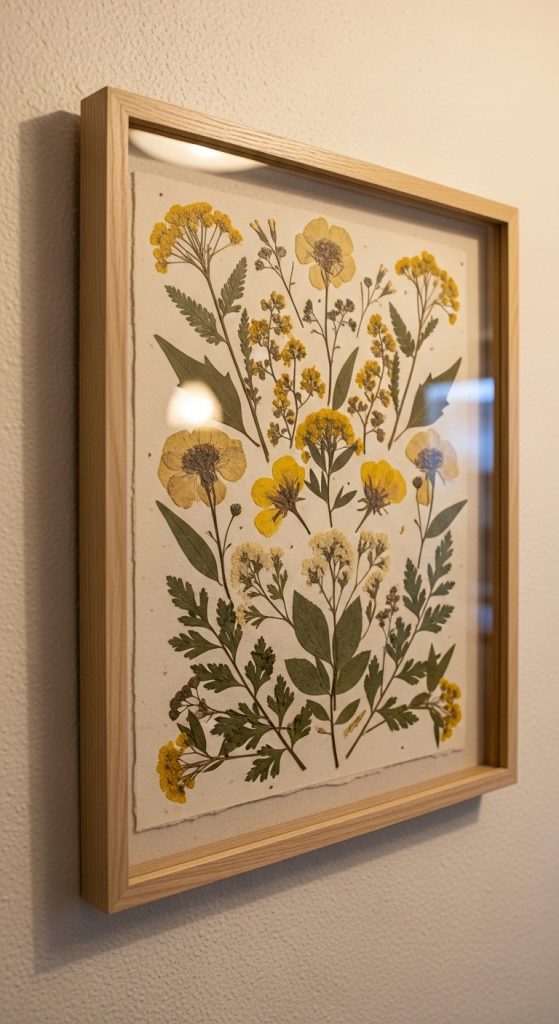
Pressed flower art is delicate and natural. Real flowers and leaves are dried and arranged on paper, then framed. The result is soft, organic, and timeless. The colors are usually muted due to the drying process, which fits perfectly with an earthy vintage theme.
Preparation involves selecting a dry wall away from humidity. Moisture can damage both the flowers and the frame. Choose a location with indirect light to preserve the colors.
Materials include dried flowers, heavy paper, and strong adhesive. If you are making your own, press flowers between books for several weeks. Use tweezers to arrange them carefully. Frame the finished piece with glass to protect it from dust.
Pressed flower art works beautifully in bedrooms, bathrooms, and small spaces. It adds a gentle touch of nature and feels personal and handmade. This type of wall art celebrates the beauty of plants in a simple and elegant way.
8. Earthy Abstract Canvas Art
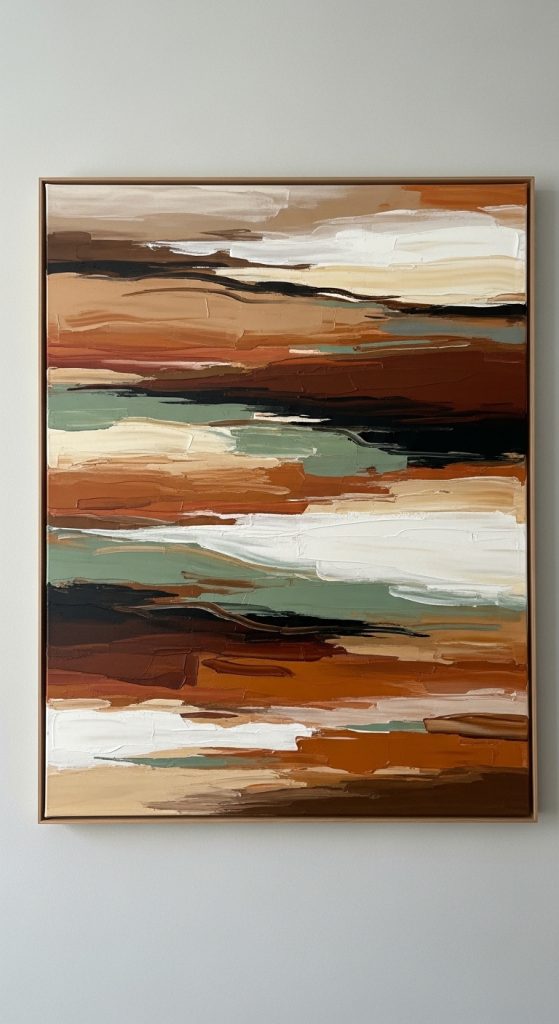
Earthy abstract canvas art combines modern expression with natural colors. It often features brush strokes in shades of brown, beige, rust, cream, and soft green. The design may be simple, with layered textures and subtle movement.
Before hanging abstract art, consider the size of your wall. Large canvases create a bold statement, while smaller pieces can be grouped. Prepare the wall by ensuring it is smooth and painted in a complementary neutral shade.
Materials include stretched canvas, acrylic or oil paints, and palette knives for texture. If you enjoy painting, you can create your own piece using earthy tones. Apply layers slowly and allow each layer to dry fully. A matte varnish can protect the surface without adding shine.
Abstract earthy art works well in living rooms, dining areas, and offices. It provides visual interest without being too busy. The natural color palette keeps the space calm and grounded while still feeling creative and artistic.
9. Vintage Fabric Wall Panels
Vintage fabric wall panels are a soft and elegant option. These panels can be made from old linen, burlap, or patterned cotton fabrics in muted tones. They add texture and warmth while reducing echo in larger rooms.
Preparation begins with measuring the wall and deciding how many panels you need. Clean the wall surface and repair any imperfections. If you plan to mount the fabric on wooden frames, prepare the frames in advance.
Materials include sturdy fabric, wooden stretcher bars or thin plywood, and a staple gun. Stretch the fabric tightly over the frame and secure it at the back. Choose patterns that are subtle and earthy, such as faded florals or simple stripes.
Hang the panels evenly, keeping consistent spacing. Fabric panels are ideal for bedrooms and sitting areas. They create a cozy, layered look that feels vintage and welcoming. This style also allows you to introduce pattern without overwhelming the room.

10. Metal Wall Art with Patina Finish
Metal wall art with a patina finish brings an industrial yet earthy feel. Patina is the natural aging process that creates green, brown, or rust-colored surfaces on metal. This effect adds character and depth.
Before installation, ensure the wall can support the weight of metal pieces. Use strong anchors and screws. Clean the wall and mark the placement carefully.
Materials include iron, copper, or brass with a treated or natural patina finish. Some pieces are handmade and feature nature-inspired designs like leaves or branches. You can also create a patina effect using special solutions that react with metal surfaces.
Metal wall art works well in entryways, living rooms, and outdoor covered spaces. The aged surface complements wooden furniture and neutral fabrics. It adds contrast while staying within the earthy theme. This type of art blends strength and beauty, completing a vintage earthy interior with balance and style.
