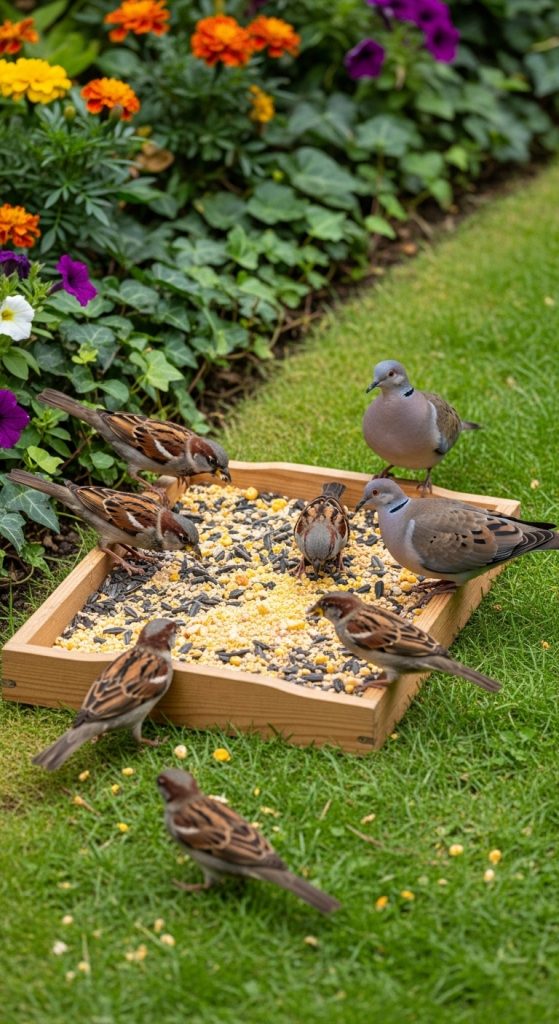
Bird feeders are a wonderful way to attract feathered friends to your garden while providing them with essential nutrition. They also offer hours of enjoyment for birdwatchers, from beginners to experts. While there are many types of bird feeders, tray feeders are especially versatile. They provide an open, accessible surface where birds can perch, feed, and socialize. Unlike tube feeders or hanging feeders, tray feeders can accommodate a wide variety of bird species at once, making them ideal for attracting a diverse range of birds.
In this guide, we will explore ten creative and practical bird feeder tray ideas. For each, we will discuss preparation, materials, setup, and tips to make your feeder safe, durable, and appealing to birds. Whether you are looking for something simple to make at home or a more elaborate design, these ideas will give you inspiration and practical advice. By the end of this post, you will have everything you need to create bird feeder trays that bring your garden to life.

1. Wooden Platform Tray Feeder
A wooden platform tray is one of the simplest and most effective bird feeder designs. It can be made from a variety of wood types, including cedar, pine, or reclaimed wood. To prepare, cut a flat wooden board to the desired size, usually around 12 inches square. Add small side rails about an inch high to prevent seed from spilling over the edges.
Use untreated wood to avoid exposing birds to harmful chemicals. Sand the edges to prevent splinters and apply a natural weatherproof sealant to increase durability. Place the feeder on a pole or hang it from a sturdy branch. This feeder is ideal for a variety of seeds, including sunflower seeds, millet, and mixed bird feed. Clean the tray weekly to prevent mold and bacteria, and refill it regularly to keep birds coming back. Adding a shallow water dish nearby can make the platform even more attractive.

2. Hanging Mesh Tray Feeder
A hanging mesh tray feeder is perfect for small to medium birds. Use a fine metal or plastic mesh tray with a solid frame to hold seeds securely. Mesh allows water to drain, keeping seeds dry and fresh. Prepare by attaching strong hooks or chains to the corners of the tray for hanging.
Place the feeder in a shaded area to reduce spoilage, and fill it with mixed seeds or peanut pieces. Birds like chickadees, finches, and sparrows are frequent visitors. Regular cleaning is essential, as leftover seeds can accumulate in the mesh and attract pests. The lightweight design makes it easy to move or refill. To increase safety, ensure the feeder hangs away from predators like cats and maintain at least five feet above the ground. This feeder is also excellent for use in small yards or balconies.

3. DIY Bottle Cap Tray Feeder
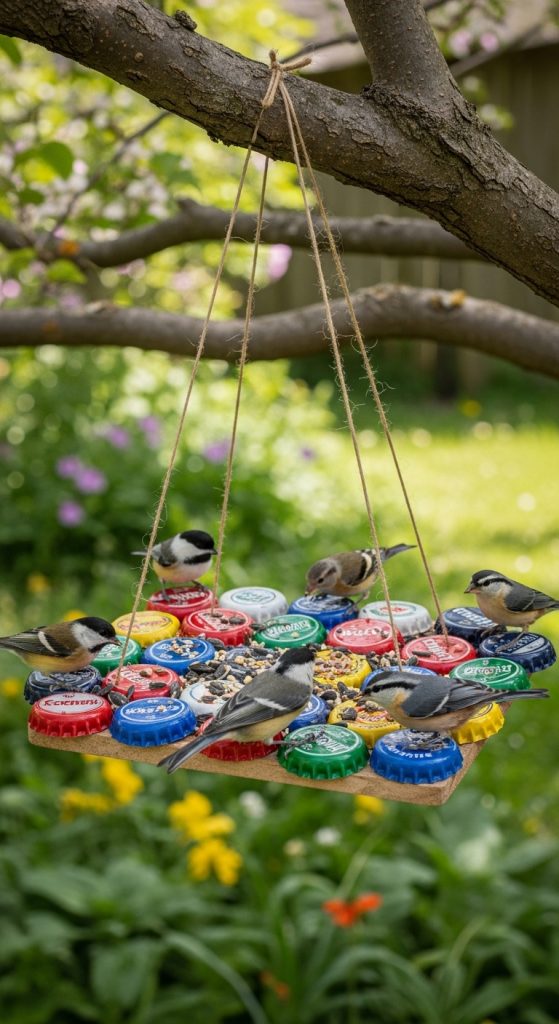
A creative and eco-friendly option is the bottle cap tray feeder. Collect large, sturdy bottle caps or jar lids and connect them using small wooden planks or metal wire to form a shallow tray. Seal the edges to prevent leaks and make the surface safe for birds to land.
Prepare by cleaning and disinfecting the caps to remove any residue. Attach the tray to a post, fence, or hang from a branch using strong string or wire. Fill with seeds, grains, or even small fruits like chopped apples or berries. This design is lightweight, portable, and can easily be customized in shape and size. Regular cleaning is important to prevent mold. The bottle cap tray is ideal for attracting smaller birds like wrens, sparrows, and goldfinches.
4. Recycled Plastic Tray Feeder
Plastic trays from old storage containers can be repurposed into bird feeders. Choose a sturdy container with shallow sides, about one to two inches deep, to prevent seed spillage. Drill small drainage holes in the bottom to avoid water buildup.
Clean the tray thoroughly, then attach hooks or rope for hanging, or place it on a stable surface. Fill the tray with seeds, fruit pieces, or suet. Plastic is weather-resistant, making this feeder low maintenance. However, check periodically for cracks or sharp edges that could harm birds. This design is cost-effective and ideal for beginners or those with limited DIY skills. Regular refilling and cleaning will ensure a steady flow of visiting birds.

5. Bamboo Tray Feeder
Bamboo is a natural and lightweight material perfect for bird feeders. Use a thick bamboo section cut lengthwise or join multiple bamboo pieces to create a tray. Seal the edges and smooth the surface to prevent splinters. Bamboo trays are visually appealing and blend well into garden settings.
To prepare, drill holes for drainage and attach cords or hooks for hanging. Fill the tray with mixed seeds or fresh fruits. Bamboo is durable but should be treated naturally to withstand outdoor weather conditions. This feeder attracts birds like doves, robins, and finches, who enjoy perching on the bamboo surface. Cleaning and occasional resealing will extend the life of the feeder. Its rustic look makes it a charming addition to any backyard.

6. Roofed Tray Feeder
A roofed tray feeder protects seeds from rain and snow while giving birds a sheltered feeding spot. Use a flat wooden tray with a small, angled roof made of wood, metal, or waterproof material. The roof should extend beyond the tray edges to prevent water from soaking the seeds.
Prepare by ensuring the tray is smooth and safe for birds, and attach a pole or hang from a strong branch. Fill with seeds, nuts, or dried fruits. This feeder is ideal for areas with frequent rain or snow, as it reduces spoilage. Cleaning is essential to prevent mold under the roof. Roofed tray feeders attract a wide range of birds, including cardinals, sparrows, and jays. They also allow you to watch birds comfortably from a distance, as the shelter encourages them to linger longer.

7. Tiered Tray Feeder
A tiered tray feeder allows you to feed multiple bird species simultaneously while saving space. Use several small trays stacked vertically with posts or chains separating each tier. Ensure each tray has drainage holes and is securely attached to prevent tipping.
Prepare by sanding and sealing trays, then attach them to a central pole or hang them in a shaded area. Fill each tray with different types of food, such as seeds, suet, or mealworms. This feeder attracts small, medium, and even larger birds, creating a lively garden scene. Cleaning is easier when each tray is removable. A tiered feeder is perfect for small yards or patios where space is limited but bird diversity is desired.

8. Window Tray Feeder
Window tray feeders attach directly to glass using suction cups, providing a close-up view of visiting birds. Use a lightweight plastic or wooden tray with raised edges to prevent seed spillage. Suction cups should be strong enough to hold the tray and withstand wind.
Prepare by cleaning the tray and window surface. Fill the feeder with small seeds, like sunflower hearts or millet. Birds such as finches, chickadees, and nuthatches are commonly attracted. Monitor the tray to ensure the suction remains secure and clean regularly to prevent mold. Window feeders are ideal for apartment dwellers or anyone who wants to enjoy birds up close. Position in a shaded area to avoid overheating seeds in direct sunlight.

9. Hanging Fruit Tray Feeder
Many birds enjoy fruit as part of their diet. A hanging fruit tray feeder combines a shallow tray with suspended fruit pieces. Use a metal or wooden tray and attach hooks or wire for hanging. Place skewers or small pegs to hold larger fruit like oranges or apples.
Prepare by washing fruits and cutting them into bird-friendly sizes. Hang the feeder in a safe location, away from predators. Fill the tray with berries, grapes, chopped apples, or melon pieces. Birds like orioles, tanagers, and thrushes are especially attracted to fruit feeders. Clean the tray daily in hot weather to prevent fermentation or mold. This feeder encourages colorful birds to visit and provides an alternative to seed-only trays.

10. Garden Ground Tray Feeder
A ground tray feeder is placed directly on the soil or lawn, attracting ground-feeding birds. Use a shallow wooden or plastic tray and ensure it has drainage holes. Place it in a quiet corner with some natural cover nearby for safety.
Prepare by leveling the tray on the ground and filling it with seeds, grains, or cracked corn. Birds such as sparrows, doves, and juncos prefer ground feeding. To deter pests, place the tray on a flat stone or use a predator guard. Cleaning is essential to remove wet or moldy seeds. Ground feeders create a natural feeding environment and are easy to maintain. Adding a shallow water dish nearby can enhance the area for wildlife.