Fairy-inspired kitchen design has become one of the most saved Pinterest ideas for people who want a softer, more magical atmosphere inside the home. A fairy kitchen combines natural textures, warm lighting, handmade decoration, vintage details, botanical elements, and whimsical organization methods to create a space that feels peaceful and visually layered. Unlike traditional modern kitchens that focus mainly on clean surfaces and sharp lines, fairy kitchens use storytelling through design. Wooden accents, glowing lights, floral details, earthy materials, and aesthetic storage all work together to transform an ordinary cooking space into a cozy creative project. This design style works especially well in apartments, cottages, small homes, and DIY renovation projects because many elements can be created gradually without major remodeling.
This article explains 10 fairy kitchen ideas in a practical and beginner friendly format. Readers will learn how to create decorative zones, organize kitchen materials, use lighting effectively, style shelves, and introduce natural textures into daily kitchen spaces. Each section includes step by step guidance that focuses on realistic planning and execution rather than abstract inspiration. The goal is to help readers create a kitchen environment that feels functional, organized, creative, and visually calming while maintaining usability for everyday cooking and storage needs.
Why This Idea Is Trending or Useful
Fairy kitchen concepts continue to trend because they combine comfort, creativity, and functionality in a way that feels highly personal. Pinterest users often search for aesthetic interiors that create emotional warmth rather than purely minimal decoration. Fairy kitchens achieve this by using layered textures, natural materials, handmade details, and soft lighting to produce a welcoming atmosphere. This design approach also supports smaller living spaces because decorative elements can be added gradually without requiring large construction projects. Many of the ideas rely on simple DIY methods, making them accessible to beginners who want visible design improvements on a realistic budget.
Another reason fairy kitchens remain popular is their flexibility across different home styles. Rustic interiors, cottage-inspired homes, vintage apartments, and even minimalist kitchens can all incorporate fairy-inspired decoration through lighting, shelving, herbs, or organizational styling. The design style encourages creativity while still maintaining practical storage and cooking functionality. Open shelving, hanging plants, glass jars, textured fabrics, and natural wood surfaces help create visual softness while improving kitchen organization. The combination of practical value and aesthetic inspiration makes fairy kitchen projects highly suitable for modern Pinterest trends, especially for people looking for budget ideas that still feel visually detailed and carefully planned.
Materials and Preparation
Before creating a fairy kitchen, proper planning helps maintain visual consistency and prevents clutter. The primary materials often include wooden shelves, woven baskets, glass jars, ceramic containers, soft lighting fixtures, fabric curtains, dried flowers, hanging herbs, vintage-inspired handles, and neutral-colored textiles. Additional decorative materials may include candles, small potted plants, lace runners, wooden trays, and handmade wall decorations. These elements help establish a layered and natural atmosphere while still supporting kitchen functionality. Basic tools such as measuring tape, wall hooks, adhesive strips, drills, scissors, and storage organizers are also useful during setup.
Preparation begins with evaluating the current kitchen layout and identifying empty or underused areas. Wall space, open shelves, windowsills, and corners can all become decorative zones. It is important to maintain organization during the process because fairy-inspired design relies on intentional arrangement rather than random decoration. Planning color consistency also improves the final aesthetic. Soft greens, cream tones, warm browns, muted florals, and earthy neutrals work well together. Before installing decorative pieces, cleaning and simplifying visible surfaces creates a more balanced result. This preparation phase helps transform the kitchen gradually while keeping the project beginner friendly, manageable, and visually cohesive.
Idea 1: Woodland Shelf Styling with Natural Textures
How to Create
A woodland-inspired shelf arrangement creates one of the strongest fairy kitchen aesthetics because it combines practical storage with layered natural decoration. This concept focuses on using wood, greenery, ceramic containers, and earthy textures to create warmth throughout the kitchen. Open shelving works especially well because it allows decorative materials and daily kitchen tools to become part of the visual design. Instead of hiding dishes and containers behind cabinets, this setup transforms storage into decoration. The overall goal is to create shelves that feel collected, soft, and connected to nature without appearing crowded. Neutral tones, handmade pottery, woven baskets, and glass jars contribute to the fairy-inspired atmosphere while maintaining organization.
To create this look, begin by clearing existing shelves and sorting visible kitchen materials by color and texture. Install wooden shelves if possible, since natural wood immediately softens the space. Arrange larger objects first, including bowls, jars, and baskets, then layer smaller decorative elements such as candles, dried flowers, or trailing plants around them. Avoid placing identical objects in perfectly symmetrical patterns because fairy aesthetics rely on natural variation. Leave empty areas between items to maintain visual balance. Warm string lighting under shelves can also add soft illumination during evenings. This setup method combines organization and decoration in a practical way while creating a cozy woodland-inspired kitchen atmosphere suitable for daily use.
Idea 2: Hanging Herb Corners with Cottage Atmosphere
Step-by-Step Guide
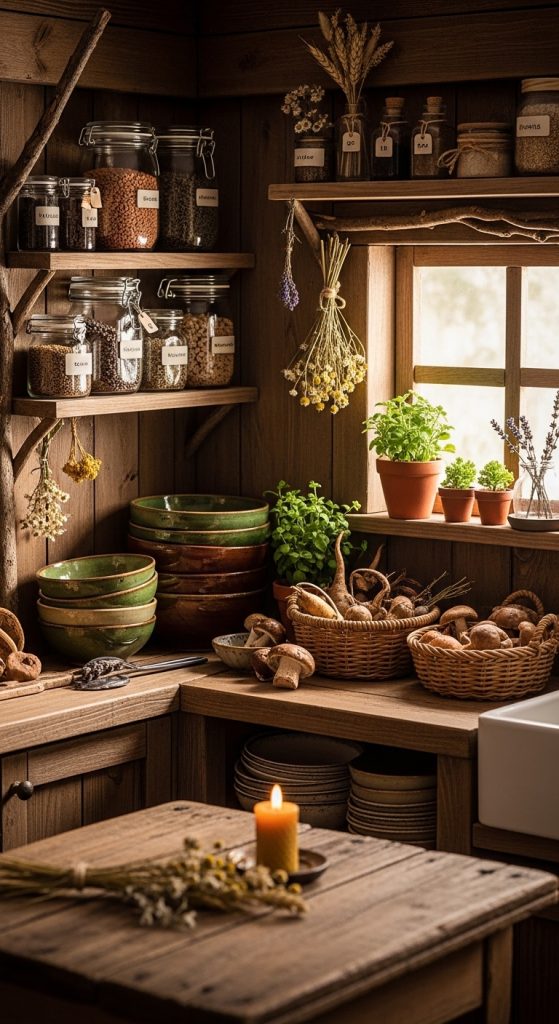
Hanging herb displays are one of the most practical and visually effective fairy kitchen ideas because they combine decoration with real kitchen functionality. Fresh herbs bring texture, greenery, and movement into the room while also supporting cooking routines. This style reflects cottage-inspired Pinterest ideas where kitchens feel connected to gardens and natural materials. Herbs such as rosemary, mint, thyme, lavender, and basil work especially well because they provide varied leaf shapes and pleasant natural fragrance. Hanging arrangements also improve vertical organization by using overhead space instead of crowded countertops.
Start by selecting a well-lit kitchen area near a window or open wall. Install hooks, rods, or hanging rails that can safely support lightweight pots or drying bundles. Choose neutral containers such as ceramic pots, woven holders, or aged metal baskets for consistency. Arrange herbs at slightly different heights to create a more organic appearance. Dried herbs can also be tied with twine and suspended upside down for additional texture and handmade decoration. To maintain the aesthetic, keep surrounding surfaces simple and uncluttered. Small wooden stools, linen cloths, or botanical wall art nearby can strengthen the cottage atmosphere. This easy project works particularly well in small kitchens because it adds decoration without reducing workspace or storage efficiency.

Idea 3: Soft Golden Lighting for Fairy Glow
How to Make
Lighting plays a major role in fairy kitchen design because it shapes the emotional atmosphere of the space. Harsh overhead lighting often creates a cold and overly functional appearance, while warm layered lighting introduces softness and depth. Fairy-inspired kitchens rely heavily on gentle illumination that reflects across wood textures, glass jars, and natural fabrics. Small lighting additions can completely transform the visual feeling of the kitchen during evening hours. Warm lighting also supports minimalist style interiors because it creates visual comfort without requiring excessive decoration.
To create this lighting setup, begin by identifying darker corners and underused visual areas. Install warm-toned string lights beneath shelves, around windows, or along cabinet edges. Battery-operated candles can also be placed safely on trays or shelves for additional glow. Avoid bright white bulbs because they reduce the soft aesthetic effect. Small pendant lights with warm bulbs work well over dining corners or kitchen islands. If possible, use layered lighting instead of relying on one central fixture. Combining multiple small light sources creates dimension and enhances decorative textures. Reflective materials such as glass jars or metallic accents also help spread the glow throughout the room. This beginner friendly tutorial creates an immediate visual transformation while requiring relatively simple materials and minimal installation effort.

Idea 4: Vintage Tea Station with Fairy Details
Execution Process
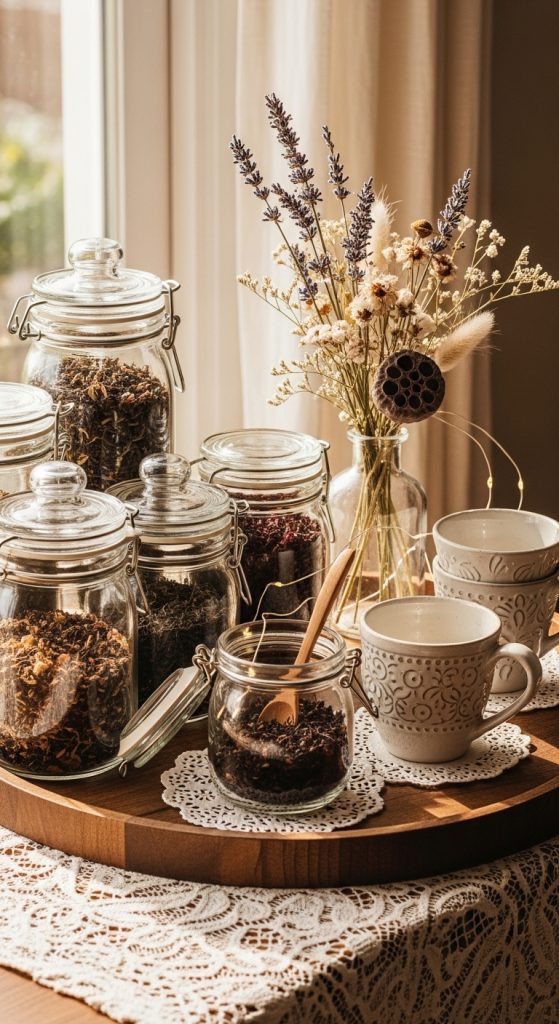
A dedicated tea station creates both organization and decorative charm inside a fairy kitchen. This setup transforms an ordinary beverage corner into a carefully styled focal area using layered textures, soft colors, and vintage-inspired storage. Tea stations work especially well in Pinterest-inspired kitchens because they encourage intentional arrangement of cups, jars, trays, and handmade accessories. The overall design should feel calm and inviting while remaining practical for everyday use. Natural wood, ceramic mugs, lace details, and floral accents contribute strongly to this aesthetic.
Begin by selecting a small counter corner, floating shelf, or narrow cabinet section. Use a wooden tray as the foundation for organizing tea containers, sweeteners, spoons, and cups. Store tea inside labeled glass jars or ceramic containers to create consistency. Add small decorative details such as dried flowers, candles, or botanical prints above the station. Soft fabric runners or vintage cloth napkins can also improve the layered appearance. Maintain organization by limiting visible items to essentials rather than overcrowding the area. Warm lighting nearby helps highlight textures and creates a relaxing atmosphere during evening use. This creative project combines functionality and decoration while adding personality to the kitchen without requiring major renovation or expensive materials.
Idea 5: Moss and Botanical Window Displays
Setup Method
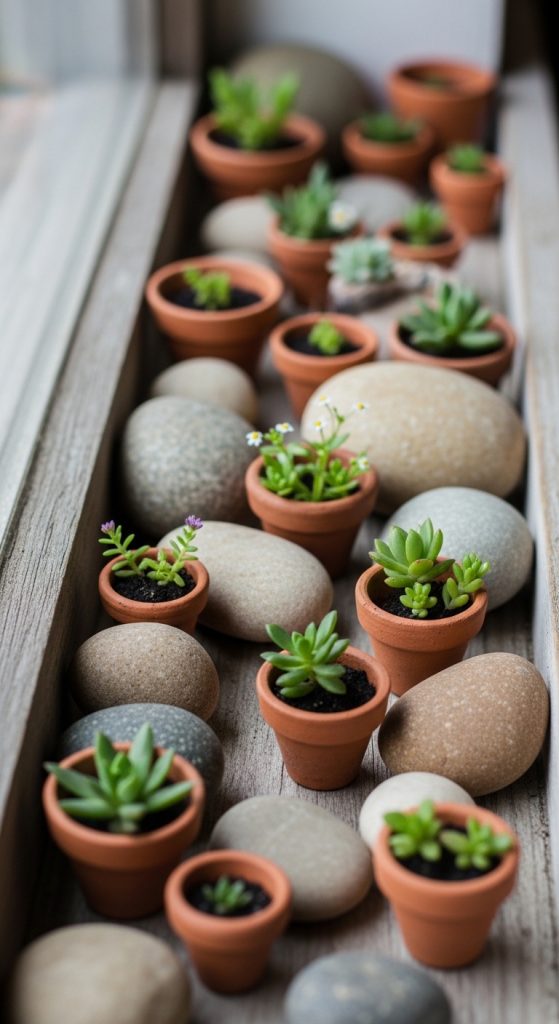
Window areas provide excellent opportunities for fairy kitchen decoration because they naturally connect indoor spaces with outdoor elements. Botanical displays using moss, plants, vines, and small natural decorations help create a soft woodland atmosphere while improving visual freshness. These displays are especially useful for kitchens with limited wall space because windowsills can function as decorative platforms without interfering with storage or cooking areas. The use of greenery also strengthens the handmade and organic feeling associated with fairy-inspired interiors.
To create this display, begin by cleaning and simplifying the windowsill area. Select small plants with varied textures, including trailing vines, herbs, moss arrangements, or compact leafy plants. Use neutral containers such as clay pots, ceramic holders, or aged glass jars for consistency. Layer heights carefully by placing taller plants toward the edges and smaller textures near the center. Decorative stones, wooden mushrooms, or dried floral pieces can also be added for subtle fantasy-inspired detail. Lightweight lace curtains help soften incoming light and improve the aesthetic effect. Keep plant care manageable by choosing low-maintenance varieties suited to kitchen humidity and sunlight conditions. This setup method creates a visually calming focal point while maintaining practicality and beginner friendly maintenance requirements.
Idea 6: Fairy-Inspired Open Pantry Organization
How to Create
An open pantry styled with fairy-inspired organization transforms food storage into part of the kitchen decoration. Instead of hiding ingredients behind solid cabinet doors, this approach uses visible organization to create texture, warmth, and visual harmony. Glass jars filled with grains, spices, tea, and dried ingredients add layered detail while improving accessibility during cooking. Open pantry styling also supports minimalist organization because every visible item must remain intentional and coordinated.
Start by sorting pantry materials into categories and removing unnecessary packaging. Transfer dry ingredients into glass jars, ceramic containers, or woven baskets for a cleaner visual appearance. Label containers using handwritten tags, wooden labels, or neutral stickers to maintain consistency. Arrange heavier items on lower shelves and decorative materials higher up for balance. Dried herbs, candles, and small plants can be placed between storage containers to soften the organizational structure. Maintain a consistent color palette using earthy neutrals and muted tones. Good spacing between objects prevents the pantry from appearing crowded. This step by step organization method improves both kitchen efficiency and decorative appeal while supporting practical daily use in smaller or larger homes.

Idea 7: Rustic Wooden Furniture Accents
How to Make
Wooden furniture elements play a major role in fairy kitchen aesthetics because they introduce warmth, texture, and visual softness. Rustic stools, narrow benches, wooden carts, or vintage side tables can transform an otherwise modern kitchen into a more layered and welcoming environment. Natural wood surfaces also complement plants, textiles, and ceramic materials commonly used in fairy-inspired decoration. The goal is not to create a perfectly polished appearance but rather a balanced and lived-in atmosphere with natural variation.
To create this effect, begin by identifying empty or underused areas inside the kitchen. A small wooden stool beside a shelf or a rolling wooden cart near a dining area can immediately add texture and practicality. Choose furniture with visible grain, matte finishes, or slightly aged surfaces rather than glossy modern materials. Layer decorative objects carefully using folded linen cloths, baskets, or pottery. If space is limited, narrow furniture pieces work best because they maintain movement throughout the room. Avoid overcrowding by selecting only one or two statement wooden elements. This setup method supports both storage and decoration while helping the kitchen feel more connected to nature and handmade design inspiration.

Idea 8: Fairy Lantern Corners with Layered Decor
Step-by-Step Guide
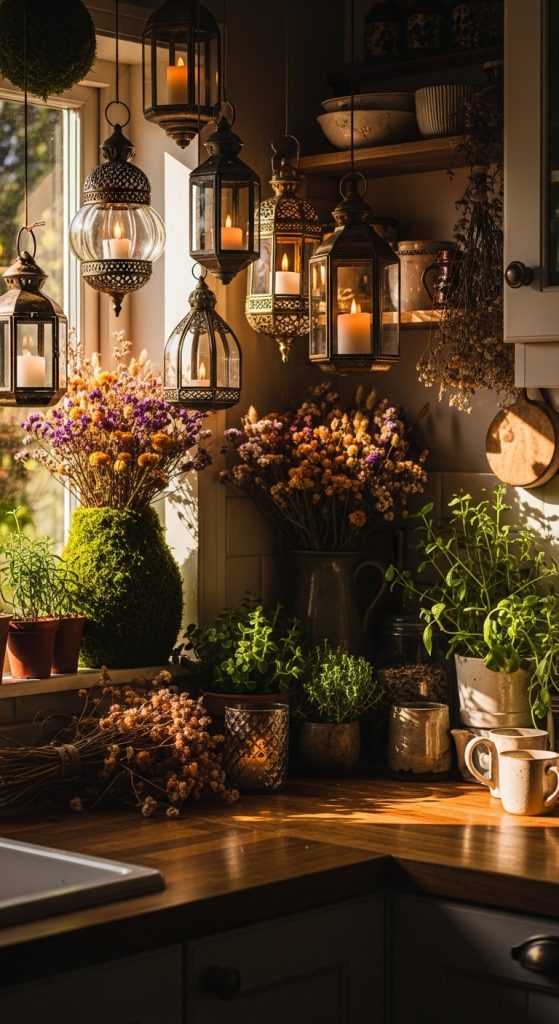
Lantern styling creates one of the strongest visual connections to fairy-inspired interiors because it introduces glowing focal points and layered decoration. Lanterns can function as lighting elements, decorative objects, or seasonal accents depending on placement and design. They work especially well in corners, shelves, or dining areas where additional warmth and texture are needed. The combination of soft light and natural materials creates a calm atmosphere that aligns strongly with Pinterest aesthetic trends.
Begin by selecting lanterns made from wood, metal, or aged glass for a more natural appearance. Position them in groups of varying heights to create visual layering. Battery-operated candles inside lanterns provide safer long-term illumination for kitchen environments. Surround lanterns with dried flowers, moss, trailing vines, or small ceramic decorations to strengthen the fairy-inspired atmosphere. Corners with limited visual interest can become decorative focal areas through this arrangement method. Warm lighting nearby further enhances the glowing effect during evening hours. Maintain simplicity by limiting the number of decorative elements within each cluster. This beginner friendly project provides strong visual transformation while using relatively inexpensive materials and minimal installation effort.
Idea 9: Floral Fabric and Soft Textile Styling
Execution Process
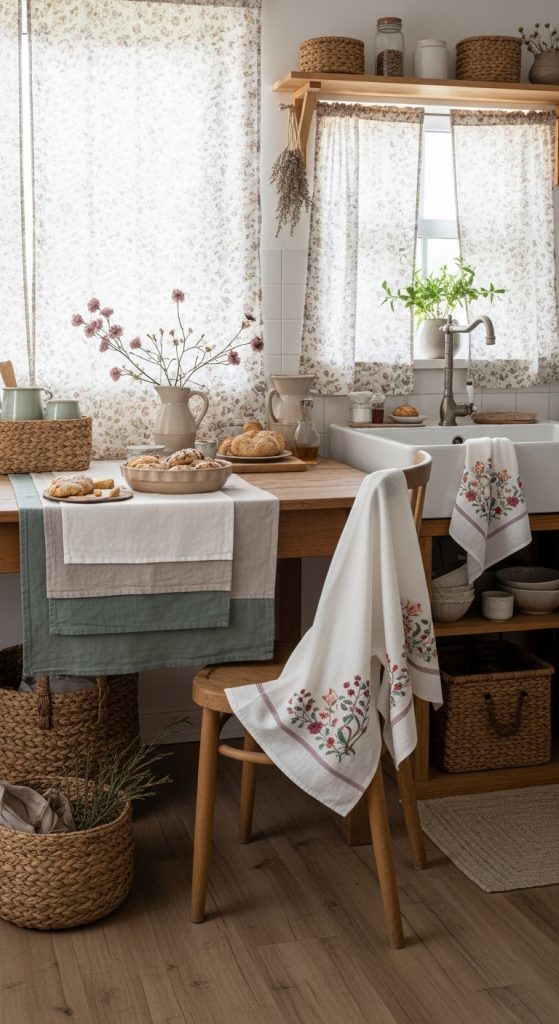
Textiles help soften hard kitchen surfaces and contribute significantly to fairy-inspired decoration. Floral curtains, linen table runners, embroidered towels, and layered fabrics introduce movement, texture, and warmth into the space. Soft textiles also improve the overall balance between functional kitchen materials and decorative elements. This approach works particularly well in kitchens dominated by metal, tile, or plain cabinetry because fabric adds visual comfort and detail.
To create this setup, begin by choosing a limited fabric color palette that complements existing kitchen tones. Muted florals, cream shades, sage green, and earthy neutrals work well together. Replace plain curtains or towels with textured fabrics that include subtle patterns or handmade details. Layer table runners or cloths on dining surfaces and shelves to soften edges. Woven placemats and fabric storage baskets can also improve organization while maintaining the aesthetic. Keep fabric styling practical by selecting washable materials suitable for kitchen environments. Avoid excessive layering that interferes with workspace functionality. This creative project improves comfort and decoration simultaneously while remaining beginner friendly and adaptable to different kitchen sizes.
Idea 10: Enchanted Cottage Dining Nook
How to Create
A small dining nook designed with fairy-inspired details can become the visual centerpiece of the kitchen. This area focuses on comfort, layered decoration, soft lighting, and natural textures to create a welcoming atmosphere for meals, reading, or quiet daily routines. Even compact kitchens can include a fairy-style nook using simple furniture and intentional styling choices. The combination of soft seating, botanical details, and warm lighting creates a balanced aesthetic that feels calm and inviting.
Start by selecting a corner near natural light if possible. Use a small wooden table paired with simple chairs or a narrow bench with cushions. Add layered textiles such as linen cushions, soft throws, or floral seat covers to improve comfort and texture. Hang warm string lights nearby and include small plants or dried flowers on the table. Open shelves above the nook can display ceramic dishes, candles, or books for additional personality. Maintain organization by limiting decorative clutter and keeping surfaces functional for meals or daily activities. This setup method transforms underused kitchen corners into highly aesthetic spaces while maintaining practicality and comfort for everyday use.

Common Beginner Mistakes and How to Avoid Them
One of the most common mistakes in fairy kitchen design is adding too many decorative elements without maintaining organization. Overcrowded shelves, excessive plants, or random textures can make the kitchen feel cluttered instead of calming. Another frequent issue is mixing too many color palettes, which disrupts visual consistency. Beginners also sometimes focus entirely on decoration while ignoring practical kitchen functionality. Storage access, lighting usability, and cleaning convenience should remain priorities throughout the design process.
To avoid these problems, begin with a clear planning approach before purchasing materials or rearranging furniture. Choose a limited palette of textures and colors that work together naturally. Focus on layering slowly instead of decorating every surface at once. Use decorative elements that also serve practical purposes, such as baskets, jars, or herb storage. Maintain open space between objects to improve balance and visual breathing room. Lighting should remain soft but functional enough for cooking tasks. Regularly reassessing the arrangement during setup helps prevent visual overload. A fairy kitchen works best when decoration and organization support each other equally rather than competing for attention.
Practical Tips for Better Results
Successful fairy kitchen styling depends heavily on texture balance and intentional organization. Combining smooth ceramics, woven materials, soft fabrics, wood surfaces, and greenery creates a layered appearance without requiring expensive renovation. Working gradually also improves results because it allows decorative additions to feel collected rather than artificially staged. Small changes such as replacing plastic containers with glass jars or adding warm lighting can immediately improve the atmosphere.
Using vertical space effectively is another important strategy. Hanging herbs, floating shelves, and wall hooks free up counters while adding decorative depth. Neutral backgrounds also help fairy-inspired details stand out more clearly. If the kitchen already contains bold cabinets or patterned flooring, keep decorative additions softer and simpler for balance. Regular decluttering is essential because fairy aesthetics rely on controlled layering instead of excessive decoration. Maintaining visual consistency across materials and colors helps the kitchen feel calm and cohesive. These practical adjustments improve both the functionality and aesthetic quality of the space while keeping the project beginner friendly and manageable over time.
Styling, Presentation, or Organization Ideas
Presentation plays a major role in fairy kitchen aesthetics because visible organization becomes part of the decoration itself. Open shelves should display coordinated containers, textured ceramics, folded fabrics, and layered natural materials in a balanced arrangement. Grouping similar objects together creates cleaner visual structure while maintaining softness. Wooden trays can organize frequently used kitchen items while preventing surfaces from appearing scattered.
Seasonal styling also works well in fairy kitchens because natural decorative materials can change throughout the year. Dried flowers, herbs, branches, or seasonal fruits can refresh the kitchen without requiring complete redesign. Small decorative corners with candles, books, or plants create visual focal areas that improve the overall atmosphere. Fabric layers such as table runners or curtains should remain light and textured rather than heavily patterned. Maintaining practical organization is essential because the kitchen still functions as a workspace. Decorative presentation works best when it supports accessibility and cleanliness rather than interfering with daily cooking routines or storage efficiency.
Budget or Time Planning
Creating a fairy kitchen does not require expensive renovation or large-scale remodeling. Many decorative improvements can be completed gradually using affordable materials and secondhand items. Glass jars, wooden trays, woven baskets, and fabric runners are often inexpensive while still creating significant visual impact. DIY decoration methods such as drying herbs, repurposing containers, or creating handmade wall decor also help reduce costs while adding authenticity to the design.
Time planning is equally important for maintaining organization during the project. Instead of redesigning the entire kitchen at once, focus on one section at a time. Shelves, lighting, pantry organization, or dining corners can each become separate weekend projects. This gradual process prevents overwhelm and allows decorative decisions to remain intentional. Prioritize foundational elements first, including lighting, storage, and visible organization. Decorative layering can then be added slowly over time. This method keeps the project manageable, beginner friendly, and financially realistic while still producing strong aesthetic transformation throughout the kitchen space.
Creative Expansion and Advanced Inspiration
Fairy kitchen design can expand beyond basic decoration into more advanced creative projects involving architectural details, handcrafted materials, and seasonal styling systems. Advanced inspiration may include painted botanical murals, vintage-inspired cabinet refinishing, textured ceiling beams, or custom shelving installations using reclaimed wood. Some kitchens also incorporate stained glass details, hanging drying racks, or hidden storage areas that contribute to the enchanted cottage atmosphere while improving functionality.
Seasonal transformation is another effective expansion strategy. Autumn-inspired herbs, winter candle arrangements, spring florals, or summer botanical displays allow the kitchen to evolve throughout the year without losing visual consistency. Advanced organization ideas may include labeled apothecary-style storage systems, layered pantry styling, or coordinated handmade ceramics. Mixing subtle fantasy-inspired details with realistic kitchen functionality creates stronger long-term results than relying only on decorative objects. The most successful fairy kitchens balance aesthetic storytelling with practical everyday use, allowing the space to remain comfortable, organized, and visually inspiring throughout daily routines.