
Designing a narrow living room can be challenging, especially when you want the space to feel comfortable, functional, and visually appealing at the same time. Many homes and apartments have living rooms that are long and narrow rather than wide and open. This layout often makes it difficult to arrange furniture without making the room feel crowded or unbalanced. However, with the right furniture choices and layout strategies, a narrow living room can become a stylish and practical space for relaxation, socializing, and daily activities.

Furniture placement plays a crucial role in maximizing the available space. Choosing the right size, shape, and style of furniture helps create better flow and makes the room feel larger. In addition, selecting materials and preparation methods carefully ensures that furniture fits the space while maintaining durability and comfort. From compact sofas to vertical storage units, many furniture options are designed specifically to work well in narrow rooms.
Another important factor is planning before buying or building furniture. Measuring the room, considering walking paths, and selecting lightweight or multi-purpose furniture can make a significant difference. Proper preparation materials such as wood, metal, glass, or engineered boards also influence how furniture functions and looks in the space.
This article explores ten practical furniture ideas for narrow living rooms. Each point explains the purpose of the furniture, preparation considerations, materials commonly used, and how it helps improve comfort and functionality in limited space.
1. Slim Profile Sofa
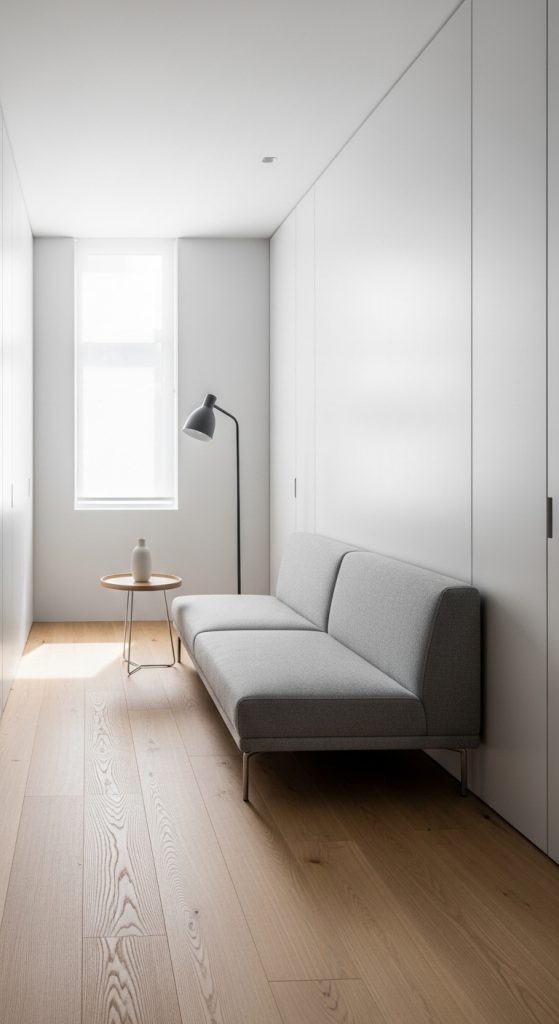
A slim profile sofa is one of the most important furniture pieces for a narrow living room. Traditional sofas are often large and bulky, which can quickly make a narrow room feel cramped. A slim sofa is designed with a narrow depth and clean lines so that it fits comfortably against a wall without occupying too much floor space.
When preparing to place a slim sofa in a narrow room, it is important to measure the width and depth of the area carefully. Ideally, the sofa should leave enough walking space in front of it. Many designers recommend leaving at least 75 to 90 centimeters of walking space to maintain good movement within the room.
The most common materials used for slim sofas include hardwood frames such as oak or beech for durability. Plywood or engineered wood is also used in modern furniture to reduce weight while maintaining strength. For cushioning, high-density foam and pocket springs are commonly used because they provide comfort without increasing bulk.
Upholstery materials also play a role in the overall design. Fabric upholstery such as linen or polyester blends is popular because it is breathable and easy to maintain. Leather or synthetic leather can also work well in narrow spaces because they give a clean and minimal appearance.
A slim sofa helps maintain openness in a narrow living room. It provides comfortable seating while keeping the layout simple and uncluttered.
2. Wall Mounted Shelving Units
Wall mounted shelving units are an excellent solution for narrow living rooms because they use vertical space instead of occupying valuable floor area. These shelves allow homeowners to store books, decorative items, small plants, and everyday accessories without making the room feel crowded.
Before installing wall mounted shelves, proper preparation is necessary. First, the wall must be measured and checked for strength. Concrete or brick walls can support heavier shelves, while drywall may require anchors or metal brackets for stability. Planning the height and spacing of the shelves is also important to ensure they remain accessible while maintaining visual balance.
The most common materials used for shelving units include solid wood, plywood, medium density fiberboard, and metal frames. Solid wood provides strength and durability, while engineered boards are more affordable and lightweight. Metal brackets or frames add stability and give the shelves a modern appearance.
Glass shelves are sometimes used for decorative purposes because they allow light to pass through, making the room feel more open. However, they are usually used for lighter objects.
Wall mounted shelving improves organization in narrow living rooms. Instead of adding bulky cabinets, vertical shelves create storage space while keeping the floor open. This helps maintain a spacious feeling and allows better movement within the room.

3. Narrow Console Table
A narrow console table is another practical furniture piece for long and narrow living rooms. These tables are designed with a slim depth, usually between 25 and 35 centimeters, making them perfect for placement against walls or behind sofas.
When preparing a console table for a narrow room, it is important to determine its purpose. Some people use console tables for decorative displays, while others use them for storage or as a small workspace. Once the function is decided, the size and design can be selected accordingly.
Common materials used for console tables include solid wood, engineered wood, metal, and tempered glass. Wooden console tables provide warmth and durability, while metal frames offer a modern and lightweight structure. Glass tops are often used to create a visually lighter appearance, which helps prevent the room from feeling crowded.
Many console tables also include drawers or lower shelves for additional storage. These compartments are useful for keeping small items such as remote controls, keys, magazines, or charging cables organized.
A narrow console table can also act as a decorative focal point. Placing a lamp, artwork, or mirror above the table can enhance the overall appearance of the room. In narrow living rooms, this furniture piece adds function without occupying significant space.

4. Compact Armchairs
Compact armchairs are ideal for narrow living rooms because they provide additional seating without taking up too much space. Large recliners or oversized chairs can overwhelm a narrow room, but compact armchairs are designed with smaller dimensions while still offering comfort.
Before selecting compact armchairs, it is important to measure the available area where the chairs will be placed. Designers often recommend placing chairs opposite the sofa or slightly angled to create a conversation area without blocking pathways.
The preparation of armchairs typically involves choosing a strong frame material. Hardwood frames such as maple or birch are widely used because they offer durability and long lifespan. Plywood reinforcement is often added to strengthen the seat structure.
For cushioning, manufacturers commonly use high-density foam combined with soft fiber layers to provide both comfort and support. Upholstery options include cotton blends, polyester fabrics, velvet, or leather. Lightweight fabrics are often preferred in narrow spaces because they help maintain a soft and inviting look.
The legs of compact armchairs are usually made from wood or metal. Slim legs raise the chair slightly above the floor, which visually opens the space and makes the room appear less crowded.
Compact armchairs provide flexibility in narrow living rooms. They can be easily moved or rearranged when guests arrive or when the layout needs to be adjusted.

5. Nesting Coffee Tables
Nesting coffee tables are a smart furniture solution for narrow living rooms because they provide flexibility and space efficiency. These tables are designed as a set of two or three tables that fit underneath each other when not in use. This design allows homeowners to expand the surface area when needed and save space afterward.
Preparation for nesting tables involves selecting the right size and height to match the sofa. The top surface of the table should ideally be at the same height or slightly lower than the sofa seat to ensure comfortable use.
The materials used for nesting coffee tables vary widely. Wood is one of the most common materials because it provides durability and a warm appearance. Metal frames are also popular because they are lightweight and strong. Many modern designs combine metal frames with wooden or glass tops.
Tempered glass tops are sometimes used to create a sense of openness. Because glass reflects light, it can make a narrow living room feel brighter and more spacious.
Nesting tables are especially useful when hosting guests. The smaller tables can be separated and placed around the room to hold drinks or snacks. After use, they can be stacked together to free up space.
This type of furniture helps maintain flexibility and practicality in narrow living rooms while keeping the design simple and organized.

6. Built In Storage Benches
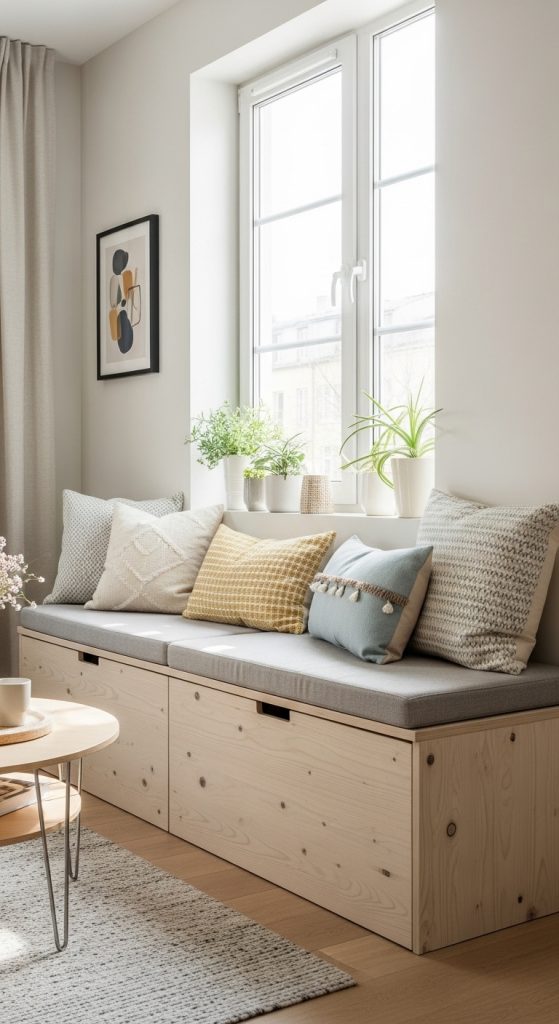
Built in storage benches are an excellent choice for narrow living rooms because they combine seating and storage in a single furniture piece. This multifunctional design helps reduce clutter while maximizing the available space.
Before installing a storage bench, careful planning is required. The bench should be placed along a wall or under a window where it will not block movement. Measuring the width, depth, and height of the space ensures the bench fits comfortably without overwhelming the room.
The materials used for storage benches often include solid wood frames or plywood structures reinforced with internal supports. Medium density fiberboard is also used for affordable designs. The seating surface usually includes foam padding covered with upholstery fabric for comfort.
Storage benches typically feature lift-up seats or drawers underneath. These compartments can be used to store blankets, cushions, magazines, toys, or other household items. Keeping these items hidden helps maintain a clean and organized living room.
Some benches are designed with open shelves beneath the seat, which can hold baskets or decorative boxes. This design makes it easy to access stored items while maintaining visual order.
Built in storage benches are particularly valuable in narrow spaces because they eliminate the need for additional cabinets or storage units.
7. Floating TV Units
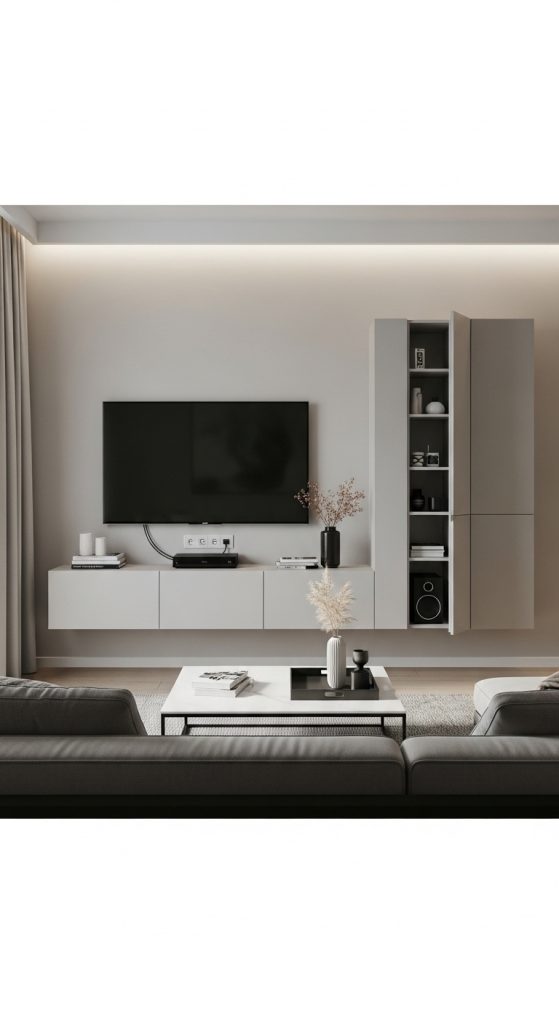
Floating TV units are modern furniture solutions that work well in narrow living rooms. Unlike traditional TV cabinets, floating units are mounted directly on the wall, which frees up floor space and creates a clean, minimal appearance.
Preparing a floating TV unit requires careful wall measurement and strong mounting support. The wall must be capable of supporting the weight of the unit and the television. Anchors, brackets, and metal support frames are commonly used to ensure stability.
The materials used for floating TV units include plywood, engineered wood, laminate boards, and sometimes metal frames. These materials provide strength while keeping the structure relatively lightweight.
Floating units often include built-in shelves, drawers, or compartments for storing media devices, remote controls, gaming consoles, and cables. Cable management systems are also integrated into many designs to keep wires hidden and organized.
One advantage of floating furniture is that it creates the illusion of more space. Because the floor remains visible underneath the unit, the room appears larger and less cluttered.
In narrow living rooms, floating TV units help maintain a streamlined layout while providing essential storage and entertainment functionality.
8. Foldable Furniture Pieces
Foldable furniture is extremely useful in narrow living rooms because it can be expanded when needed and stored away afterward. This flexibility allows homeowners to adapt the space for different activities such as entertaining guests, working, or relaxing.
Preparation for foldable furniture involves selecting pieces that are easy to operate and durable enough for repeated folding. Hinges, joints, and locking mechanisms must be made from strong materials to ensure safety and long-term use.
Common foldable furniture items include folding chairs, folding side tables, and wall mounted drop-leaf desks. These pieces can be quickly opened when extra seating or workspace is required.
Materials used in foldable furniture often include lightweight metals such as aluminum or steel frames combined with wooden or plastic surfaces. Engineered wood panels are also commonly used for foldable desks or tables because they offer strength without excessive weight.
When folded, these furniture pieces take up very little space and can be stored against a wall or inside a closet. This helps keep the living room organized and uncluttered.
Foldable furniture is especially beneficial in small apartments or multi-purpose living rooms where space must be used efficiently.

9. Tall Bookcases
Tall bookcases are another excellent furniture option for narrow living rooms because they utilize vertical space rather than expanding horizontally. Instead of placing wide cabinets that occupy floor area, tall bookcases extend upward to provide storage.
Before installing a tall bookcase, the height of the ceiling and the width of the wall should be measured carefully. The bookcase should fit securely against the wall without blocking windows or doorways. For safety, many tall bookcases are anchored to the wall using brackets.
Common materials used in bookcases include solid wood, plywood, particle board, and metal frames. Wooden bookcases provide strength and classic style, while metal and wood combinations create a more modern appearance.
Shelves can be adjustable to accommodate books of different sizes, decorative items, storage baskets, and plants. Some bookcases also include cabinets or drawers at the bottom for concealed storage.
In narrow living rooms, tall bookcases help maintain organization while keeping the layout balanced. Because they occupy minimal floor space, they allow the room to remain open and functional.
Using vertical storage also draws the eye upward, which can make the room feel taller and more spacious.

10. Mirrors with Storage Frames
Mirrors with storage frames are a clever addition to narrow living rooms because they combine decoration and functionality. Mirrors reflect light and create the illusion of a larger space, which is particularly useful in narrow interiors.
Before installing a mirror, the wall location should be carefully selected. Placing a mirror opposite a window or light source helps maximize brightness and reflection. The size of the mirror should also match the scale of the wall and surrounding furniture.
Many mirrors now include built-in storage frames or hidden compartments. These frames may contain small shelves, hooks, or cabinets for storing everyday items such as keys, small accessories, or decorative objects.
The materials used for mirror frames include wood, metal, and engineered boards. Wood frames provide warmth and durability, while metal frames offer a modern and minimalist appearance.
The mirror itself is typically made from tempered glass with protective backing to ensure safety and longevity. High-quality mirrors maintain clear reflections and resist distortion.
In narrow living rooms, mirrors with storage frames serve multiple purposes. They enhance lighting, visually expand the room, and provide practical storage without occupying additional floor space. This combination makes them an efficient furniture choice for compact interiors.
