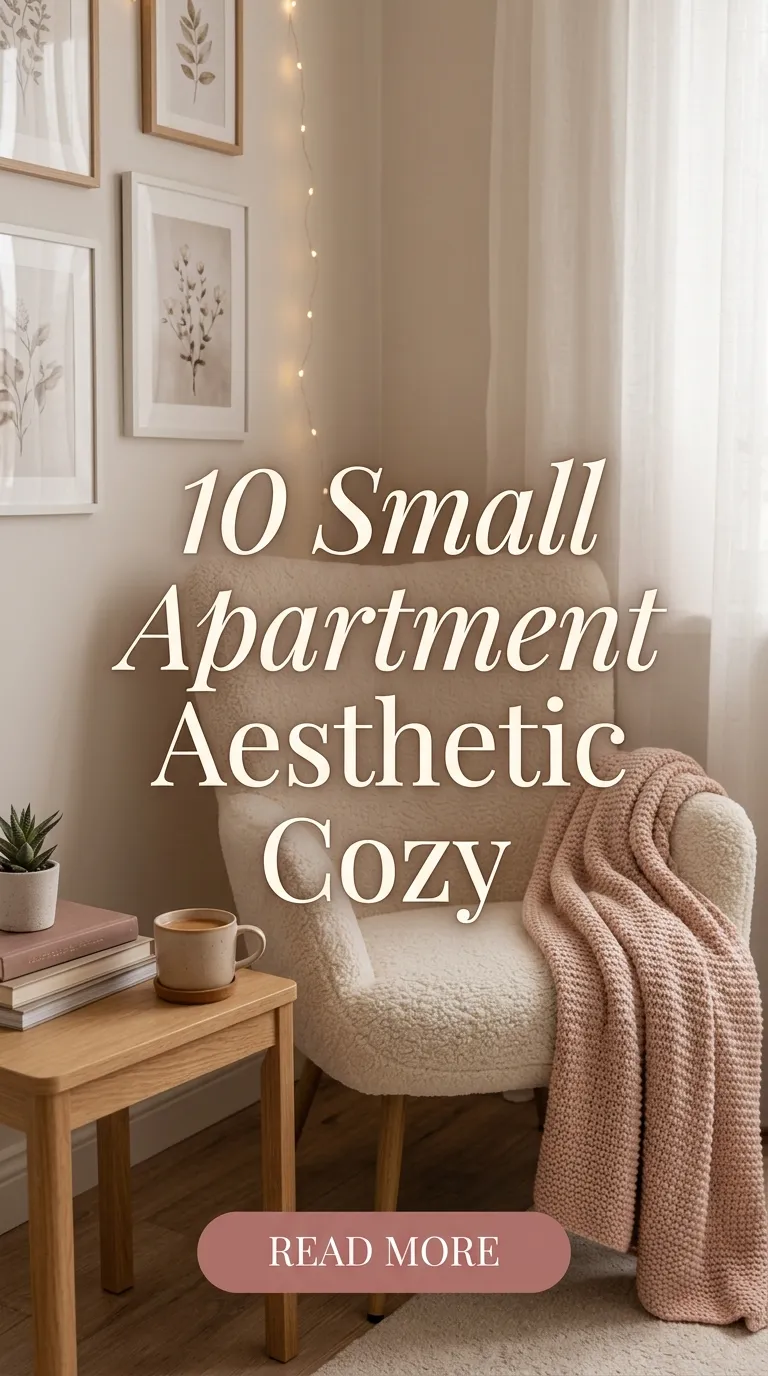
Living in a small apartment does not mean you have to sacrifice comfort, beauty, or personality. In fact, small spaces often have the potential to feel even more cozy and inviting when designed thoughtfully. With the right choices in furniture, colors, lighting, and decoration, a small apartment can become a warm and aesthetically pleasing home. The goal is to create a space that feels calm, organized, and comfortable while still reflecting your personal style.
Many people living in cities choose small apartments because they are affordable and easier to maintain. However, limited space can sometimes feel cramped if it is not designed properly. This is why focusing on cozy aesthetics is important. A cozy aesthetic combines warmth, softness, natural elements, and simple design to make a home feel relaxing and welcoming.
Creating a cozy apartment is not about buying expensive items or completely renovating your home. Instead, it is about smart preparation, selecting the right materials, and using space wisely. Small changes such as warm lighting, soft textiles, and multifunctional furniture can make a huge difference.
In this guide, you will learn ten practical ideas to transform a small apartment into a cozy and aesthetically pleasing space. Each idea includes preparation tips, materials you may need, and helpful suggestions to make your apartment feel like a comfortable and stylish retreat.
1. Choose a Warm and Soft Color Palette
The foundation of any cozy apartment begins with the color palette. Colors have a strong effect on how a space feels. In small apartments, warm and soft colors help create a calm and inviting atmosphere while making the room feel larger and more comfortable.
Before decorating, start by selecting two or three main colors for your apartment. Neutral shades such as beige, cream, light gray, soft brown, and warm white work very well in small spaces. These colors reflect light and create a soft background for furniture and decorations.
Preparation for this step involves assessing your current wall colors, furniture tones, and lighting conditions. If repainting is possible, choose matte or eggshell finish paints because they reduce glare and create a softer look.
Materials that may be required include wall paint, paint rollers, painter’s tape, drop cloths, and small paint brushes for corners. If painting is not possible, you can still introduce your chosen palette through curtains, bedding, rugs, and cushions.
Warm colors should also appear in decorative items such as throws, blankets, and artwork. Wooden textures and natural fabrics help support the cozy look. Try to avoid too many bright or contrasting colors, as they can make a small apartment feel busy and crowded.
A consistent color palette brings harmony to the space and creates the perfect base for a cozy aesthetic.
2. Use Multi Functional Furniture
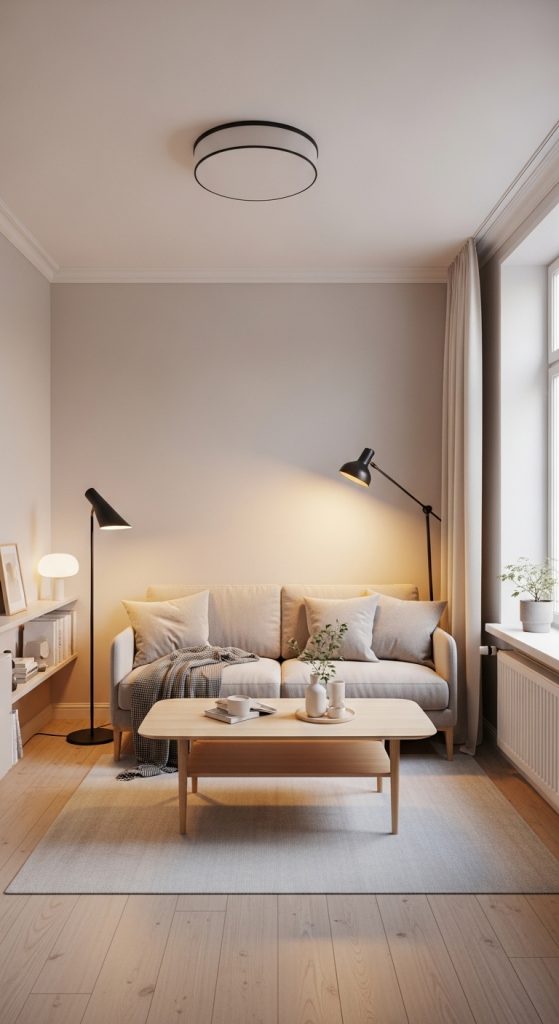
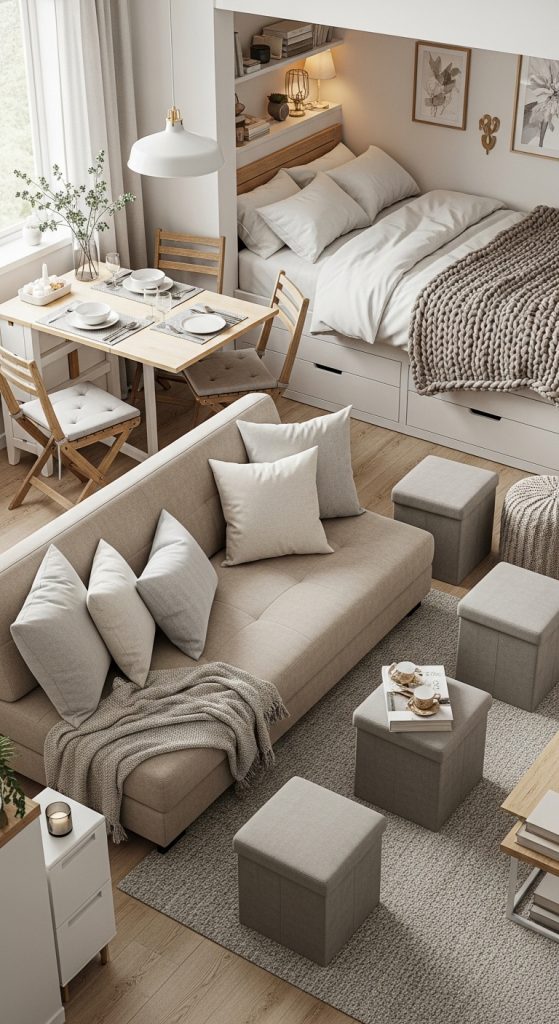
In small apartments, furniture must serve more than one purpose. Multi functional furniture helps save space while keeping the apartment organized and comfortable. It also allows you to maintain a clean and uncluttered aesthetic.
Before purchasing furniture, measure the available space carefully. Create a simple layout plan of the apartment to understand where each item will go. This preparation helps prevent buying furniture that is too large or unnecessary.
Common multi functional furniture pieces include sofa beds, foldable tables, storage ottomans, nesting tables, and beds with built in drawers. A small dining table that can fold against the wall is also a great solution for compact apartments.
The materials you may need depend on the furniture you choose. For example, wooden furniture provides durability and warmth, while metal frames can offer a modern look with less visual weight. Fabric upholstery should ideally be soft and neutral to support the cozy aesthetic.
Furniture with hidden storage is especially useful. Storage benches, coffee tables with compartments, and under bed drawers help keep items out of sight. This reduces clutter and makes the apartment feel more spacious.
By choosing furniture that performs multiple functions, you can maximize the usefulness of every corner in your apartment while maintaining a comfortable and attractive environment.
3. Add Soft Textiles and Layered Fabrics
Soft textiles are essential for creating a cozy atmosphere in any small apartment. They introduce warmth, texture, and comfort that hard surfaces alone cannot provide.
Preparation for this step involves identifying areas where fabrics can be added. Common places include sofas, beds, floors, and windows. Each of these areas offers an opportunity to add softness through different materials.
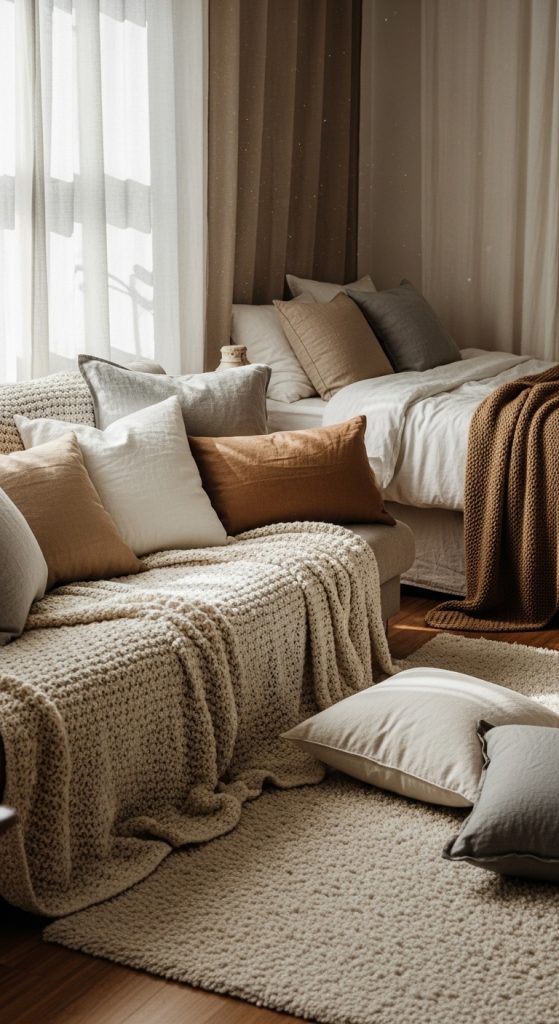
Key materials for cozy textiles include cotton, wool, linen, faux fur, and knitted fabrics. These materials feel comfortable and add depth to the room’s design. For example, a knitted blanket on a sofa or a soft rug under a coffee table instantly makes a space feel warmer.
Layering fabrics is an important technique. Instead of using only one blanket or cushion, combine several layers with slightly different textures. A bed might include a comforter, a throw blanket, and a few decorative pillows. Similarly, a sofa can feature multiple cushions in complementary colors.
Area rugs are particularly useful in small apartments because they visually define different zones. A rug can separate the living area from the sleeping area in studio apartments.
Curtains made from light and flowing fabrics also add softness while helping control natural light. Avoid heavy patterns if the apartment is very small, as simple designs usually look more spacious.
Soft textiles make a home feel comfortable and welcoming while enhancing the overall aesthetic.
4. Create Warm and Layered Lighting
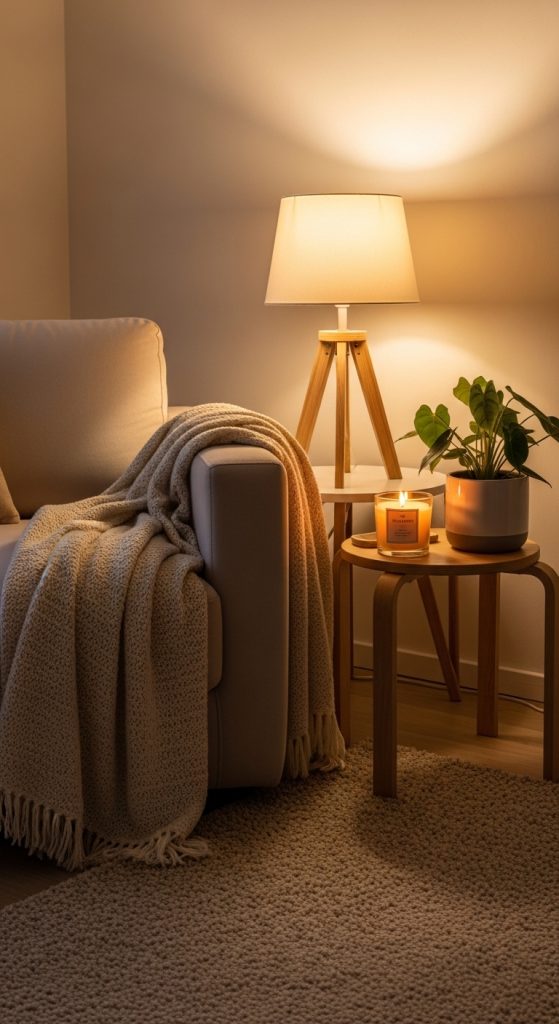
Lighting plays a major role in shaping the mood of a home. Bright overhead lights alone often make a small apartment feel harsh and uninviting. Instead, cozy spaces use layered lighting that combines several soft light sources.
Start by evaluating the natural light in your apartment. Windows should remain as open as possible to allow daylight to brighten the room. During the evening, artificial lighting should create a gentle and relaxing atmosphere.
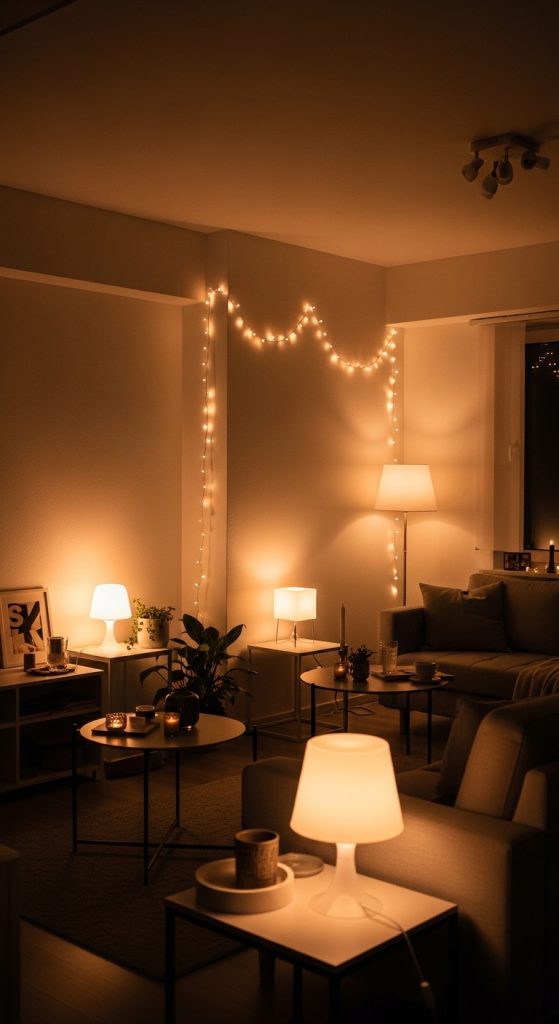
Preparation involves planning three types of lighting. These include ambient lighting, task lighting, and accent lighting. Ambient lighting provides general illumination, task lighting helps with specific activities such as reading, and accent lighting highlights decorative elements.
Materials that may be required include table lamps, floor lamps, LED bulbs, string lights, and small wall mounted lights. Warm white bulbs are recommended because they produce a soft yellow glow that feels relaxing.
Table lamps placed on side tables or shelves can create comfortable reading areas. Floor lamps help illuminate darker corners of the room. String lights are also popular in cozy apartments because they add warmth and charm without taking up much space.
Using dimmable lights can give you more control over brightness levels. This allows you to adjust the atmosphere depending on the time of day or activity.
Layered lighting transforms the apartment into a warm and inviting environment.
5. Incorporate Natural Elements
Natural elements bring life and freshness into a small apartment. They create a peaceful atmosphere and help balance the modern indoor environment with touches of nature.
Preparation begins by identifying places where natural materials or plants can be added. Even a few small items can make a noticeable difference in the overall feel of the apartment.
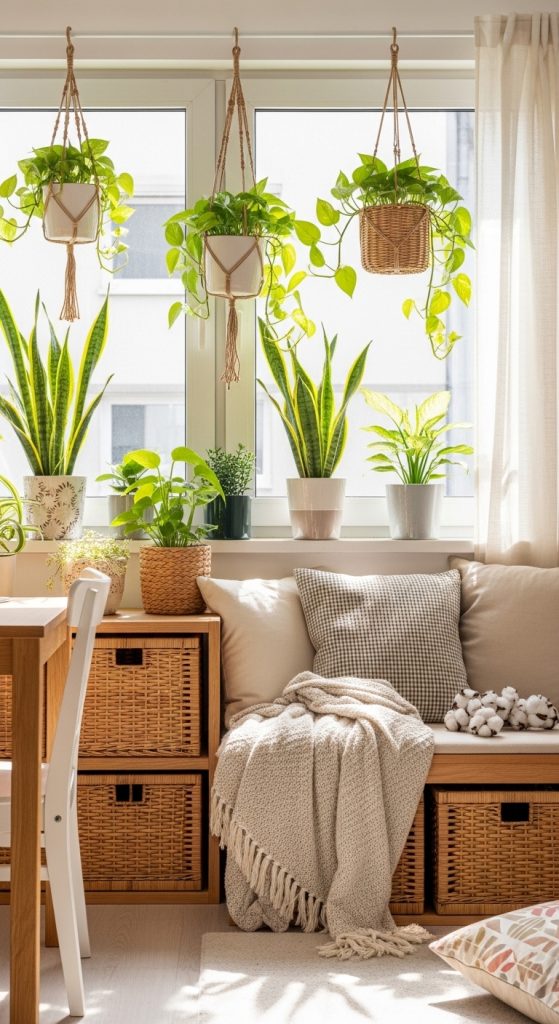
Houseplants are one of the easiest ways to introduce natural elements. Plants such as snake plants, pothos, and peace lilies are popular because they require minimal maintenance and adapt well to indoor conditions.
Materials needed may include plant pots, small watering cans, plant stands, and potting soil. Ceramic or terracotta pots are particularly suitable because they complement natural textures.
Wooden furniture and decorations also contribute to a cozy natural aesthetic. Items like wooden shelves, bamboo trays, and wicker baskets introduce warmth and texture.
Natural fabrics such as cotton and linen further support the theme. These materials breathe well and feel comfortable in everyday use.
If maintaining live plants is difficult, dried flowers or artificial plants can still add a similar visual effect.
Incorporating natural elements helps create a relaxing environment that feels fresh, warm, and inviting.
6. Maximize Vertical Space
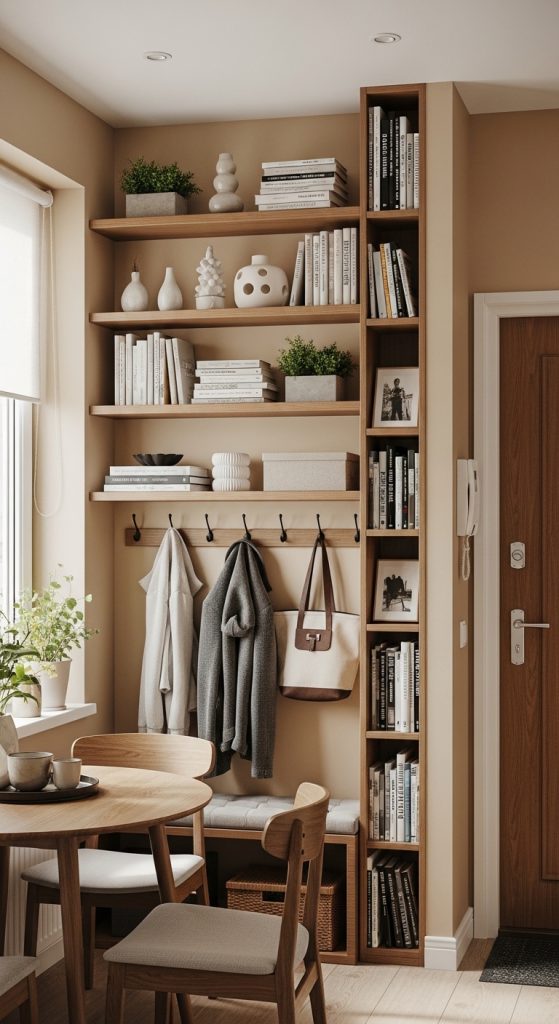
One of the most effective strategies for small apartments is using vertical space. Many people focus only on floor space, but walls offer valuable storage and decoration opportunities.
Preparation involves examining the height of your walls and identifying unused vertical areas. These areas can include spaces above desks, beds, and sofas.
Materials required may include wall shelves, floating shelves, wall mounted cabinets, hooks, and mounting brackets. Floating shelves are especially popular because they provide storage without appearing bulky.
Shelves can be used to store books, small plants, framed photos, and decorative objects. Arranging items thoughtfully helps maintain a clean and balanced look.
Wall hooks are also useful for hanging coats, bags, or hats without taking up floor space. In kitchens, vertical racks can store utensils and cooking tools.
Tall bookshelves are another effective option. They use the full height of the wall while occupying minimal floor area.
When decorating vertically, it is important not to overcrowd the wall. Leave some empty space so the room still feels open and breathable.
Using vertical space efficiently allows a small apartment to remain organized while preserving valuable floor space.
7. Keep the Apartment Organized and Clutter Free
A cozy aesthetic depends heavily on organization. Even the most beautifully decorated apartment can feel uncomfortable if it is filled with clutter.
Preparation for this step involves sorting through your belongings and deciding what is truly necessary. Items that are rarely used can be donated, stored, or removed from the apartment.
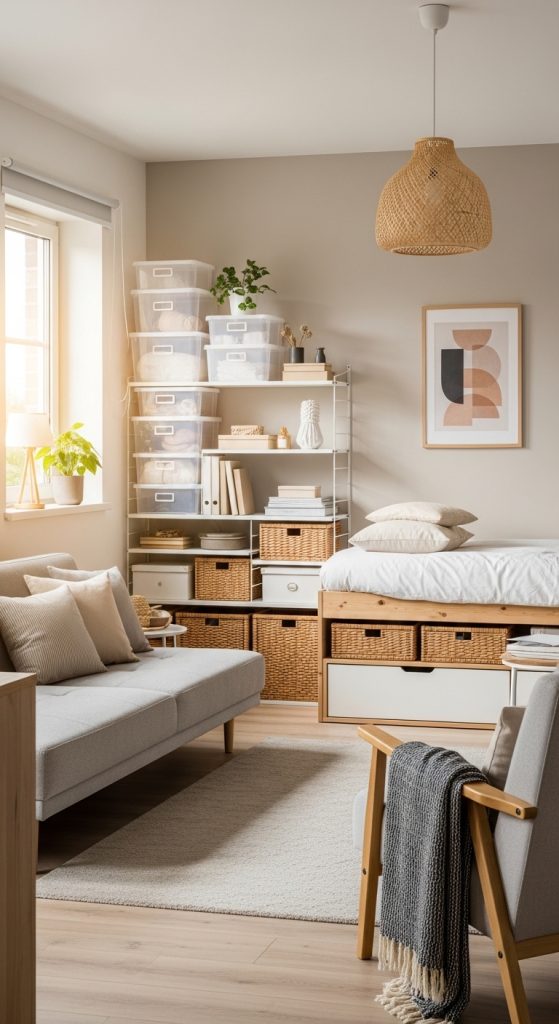
Materials that help with organization include storage boxes, drawer dividers, baskets, and under bed containers. Clear containers are useful because they allow you to see the contents easily.
Wicker baskets are both functional and decorative. They can hold blankets, magazines, or toys while adding texture to the room.
Closet organizers are also helpful for maximizing limited wardrobe space. Hanging shelves, shoe racks, and storage bins keep clothing items neat and accessible.
Developing simple daily habits helps maintain organization. For example, returning items to their designated places and cleaning surfaces regularly prevents clutter from building up.
Minimal decoration often works best in small apartments. Choose a few meaningful decorative pieces rather than filling every surface.
An organized apartment feels calmer, larger, and more relaxing, which is essential for achieving a cozy living environment.
8. Personalize the Space with Meaningful Decor
A cozy apartment should reflect the personality and memories of the person living there. Personal decorations transform a simple living space into a home filled with character and warmth.
Preparation involves selecting items that hold personal meaning. These might include photographs, artwork, souvenirs from travel, handmade crafts, or family heirlooms.
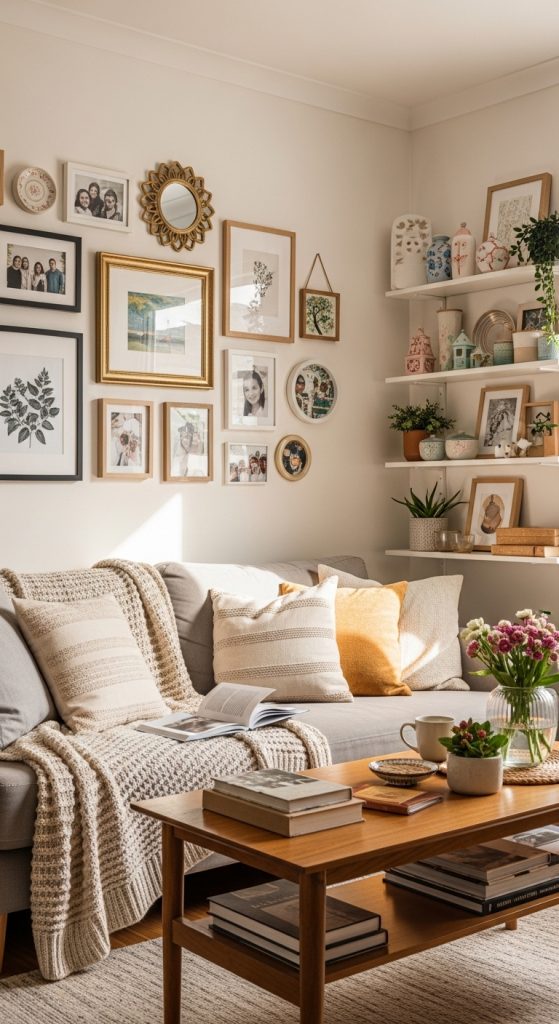
Materials that may be used include picture frames, wall art prints, decorative shelves, and small display stands. Wooden or neutral colored frames often blend well with cozy aesthetics.
Creating a small gallery wall is a popular option for displaying photographs and artwork. Arrange frames in a balanced pattern while maintaining some space between them.
Memory corners can also be created on shelves or desks. These areas may include books, candles, framed pictures, and small decorative objects.
Handmade items such as knitted blankets, pottery, or DIY crafts add authenticity to the apartment. These items often carry emotional value that store bought decorations may not have.
While personalization is important, moderation is key. Too many decorative items can overwhelm a small apartment.
Carefully chosen personal decor creates a warm atmosphere that tells your story and makes the apartment feel uniquely yours.
9. Design Small Functional Zones
Even in a small apartment, dividing the space into functional zones can improve comfort and organization. Zones help separate activities such as sleeping, working, relaxing, and dining.
Preparation begins with understanding how you use your apartment daily. Identify areas where specific activities usually happen and consider how these areas can be visually defined.
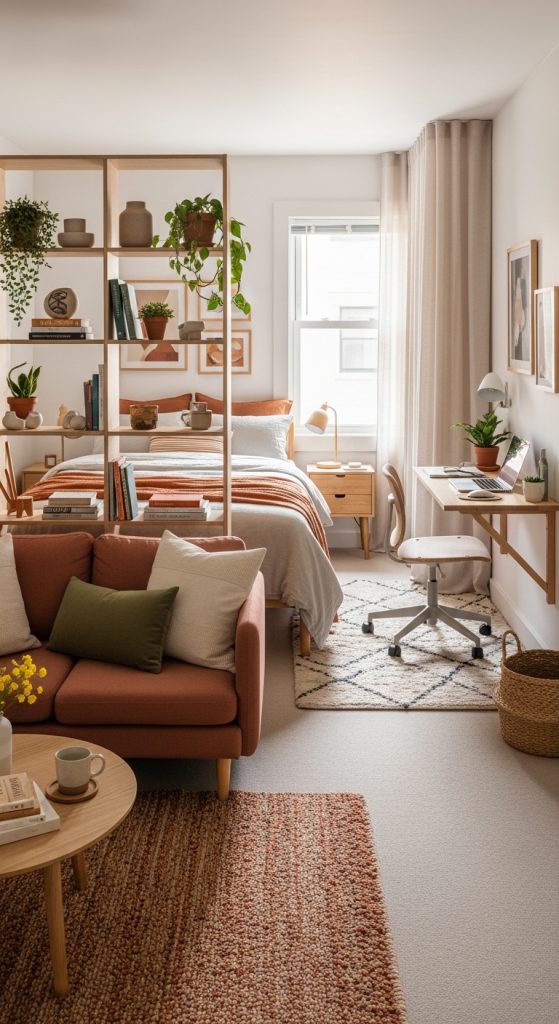
Materials that help create zones include rugs, room dividers, curtains, shelves, and furniture arrangement. For example, a rug can mark the living area while a desk lamp indicates a workspace.
Bookshelves can act as subtle room dividers without blocking light. Curtains are another flexible solution that can be opened or closed depending on the need for privacy.
Furniture placement also plays an important role. Positioning a sofa to face a particular direction can create a natural separation between living and sleeping spaces.
In studio apartments, beds can be placed near walls or partially screened by shelves. Small folding screens are another option for creating visual separation.
Designing zones makes the apartment feel more structured and functional. It allows each activity to have its own comfortable space while maintaining an open overall layout.
10. Maintain a Calm and Relaxing Atmosphere
The final element of a cozy apartment is maintaining a peaceful atmosphere. The goal is to create a home where you can relax after a long day and feel comfortable spending time.
Preparation involves identifying small habits and design choices that contribute to relaxation. This includes controlling noise, maintaining cleanliness, and using calming scents.
Materials that may enhance the atmosphere include scented candles, essential oil diffusers, soft blankets, and comfortable seating. Natural scents such as lavender, vanilla, and sandalwood are often associated with relaxation.
Background music or soft ambient sounds can also improve the mood of a space. Small speakers placed discreetly around the apartment can provide gentle audio without taking up much room.
Regular cleaning is another important factor. Dust free surfaces, fresh bedding, and clean floors help maintain a healthy and pleasant environment.
Comfortable seating areas encourage relaxation. A small reading chair, soft cushions, and warm lighting can create a perfect spot for unwinding.
A calm and relaxing atmosphere ties together all other design elements. It ensures that your small apartment not only looks aesthetically pleasing but also feels like a true sanctuary.