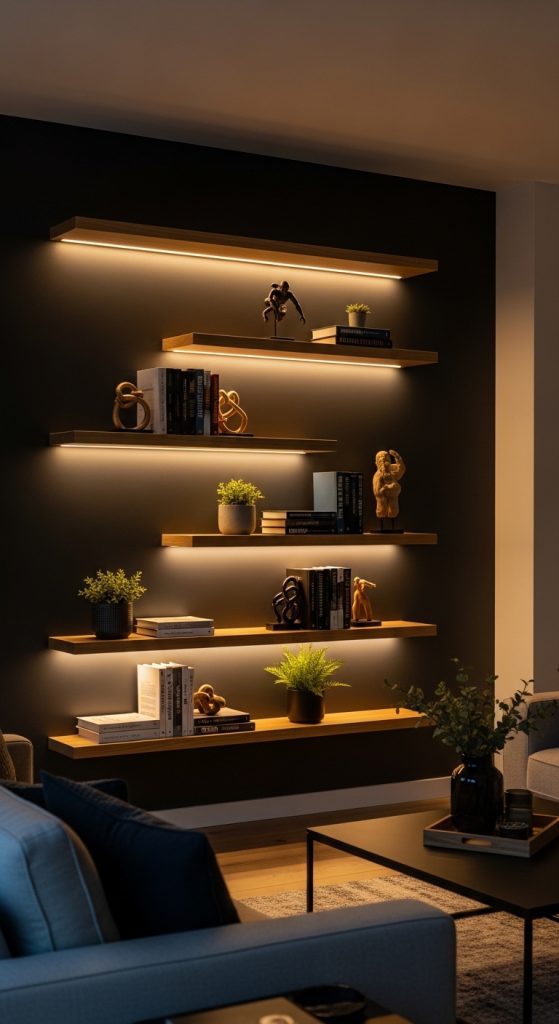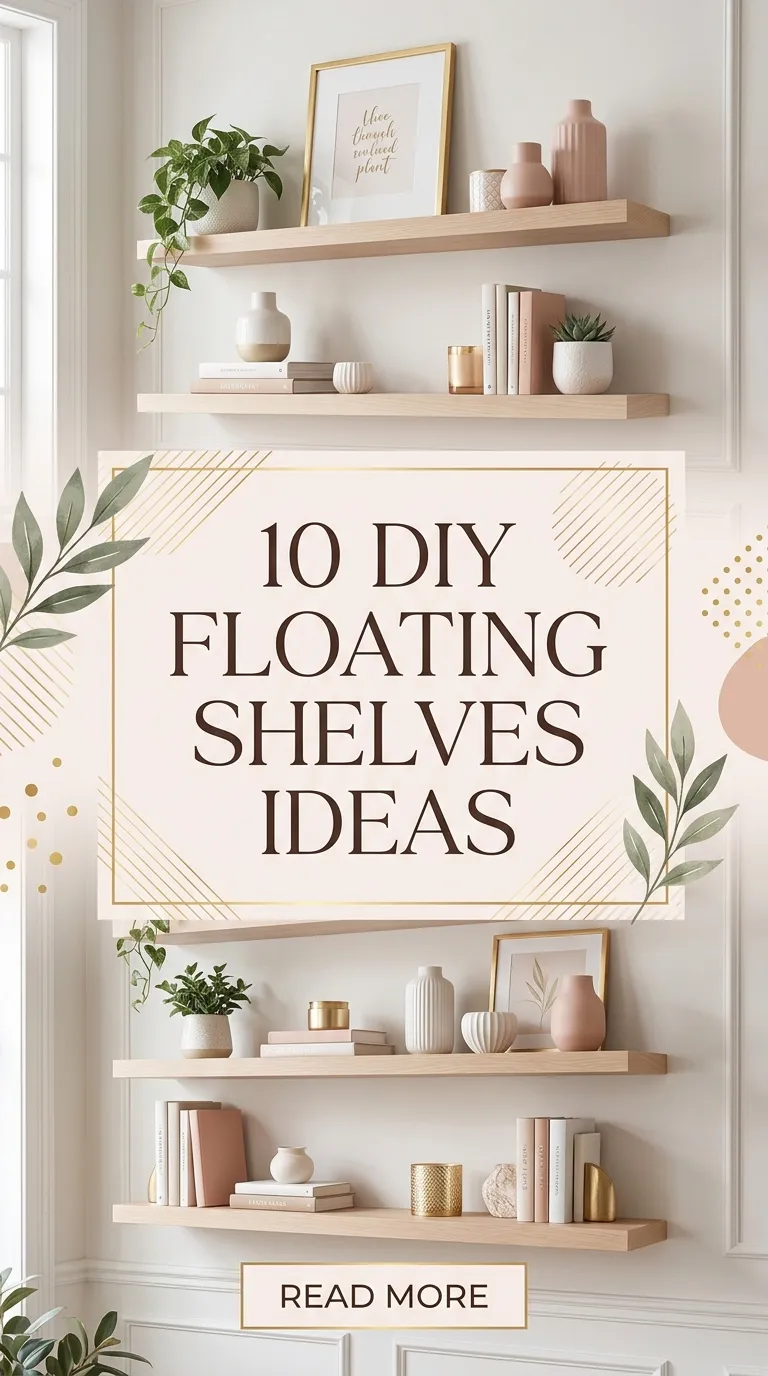

Floating shelves are one of the simplest ways to improve the look and usefulness of any room. They add storage without taking up floor space and create a clean, modern style that works in living rooms, kitchens, bedrooms, offices, and even bathrooms. Unlike traditional shelves that use visible brackets, floating shelves hide the support system inside the shelf itself. This creates the illusion that the shelf is “floating” on the wall.
Another reason floating shelves are so popular is that they are perfect for DIY projects. With a few basic tools and affordable materials, you can build beautiful shelves that match your home’s style. Whether you prefer rustic wood, modern minimal designs, or creative shapes, there are many ways to customize floating shelves to suit your needs.
Before starting any floating shelf project, preparation is important. You should measure the wall space, decide the shelf length and depth, and choose the right materials such as wood boards, brackets, screws, wall anchors, sandpaper, and paint or stain. Basic tools like a drill, level, measuring tape, and stud finder will help you install the shelves safely and securely.
In this guide, you will learn ten creative DIY floating shelf ideas. Each idea includes preparation tips, materials required, and instructions so you can build stylish and practical shelves for your home.
1. Classic Wooden Floating Shelves
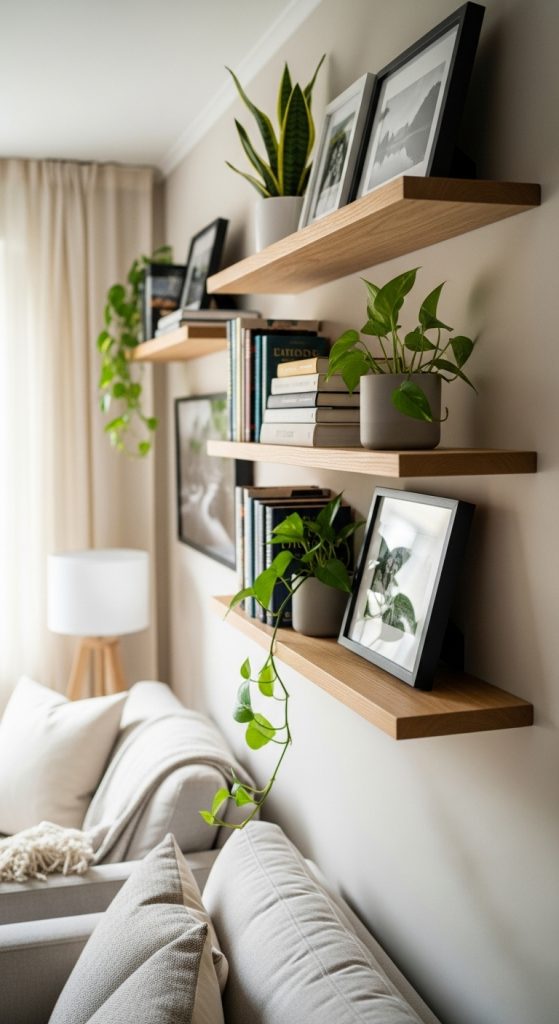
Classic wooden floating shelves are one of the easiest and most popular DIY projects. They work well in almost any room and can match many interior styles including modern, farmhouse, and traditional designs.
Preparation begins with measuring the wall where the shelf will be installed. Decide the shelf length and depth depending on what you plan to place on it. A typical floating shelf is about 24 to 36 inches long and 8 to 10 inches deep.
Materials needed include solid wood boards, hidden floating shelf brackets or metal rods, screws, wall anchors, wood stain or paint, sandpaper, and wood filler. Tools such as a drill, level, stud finder, measuring tape, and screwdriver are also necessary.
Start by sanding the wooden board until the surface is smooth. Apply wood stain or paint to match your room decor and allow it to dry completely. Next, use a stud finder to locate wall studs for strong support. Mark the drilling points and install the hidden brackets securely into the wall.
Once the brackets are fixed, carefully slide the wooden board onto the bracket rods. Check with a level to ensure the shelf is straight. Tighten any support screws if needed.
These shelves are perfect for displaying books, decorative items, plants, photo frames, or small storage baskets.
2. Rustic Reclaimed Wood Shelves
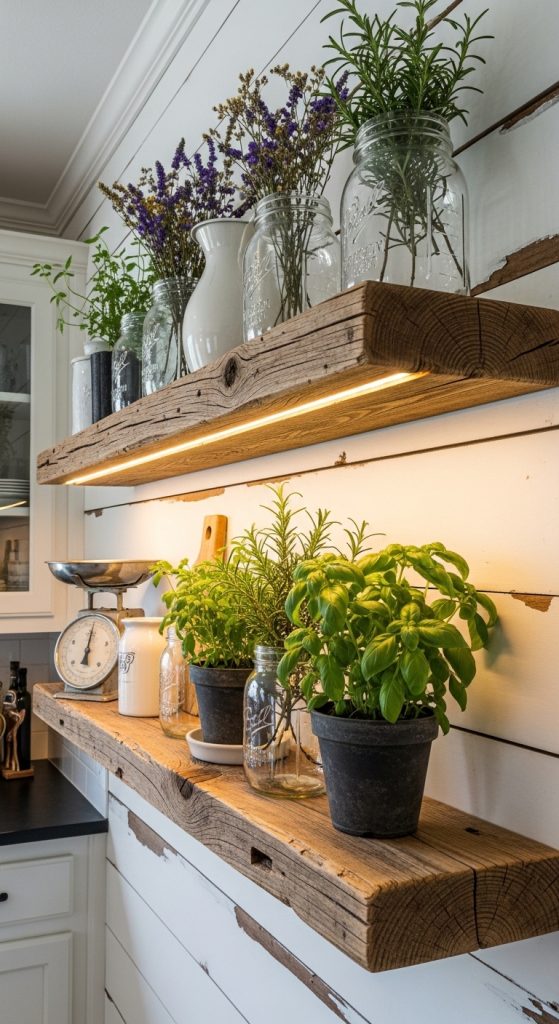
Rustic reclaimed wood shelves bring warmth and character to any room. They are perfect for farmhouse or vintage style interiors and also support sustainable living by reusing old wood.
Preparation starts with finding reclaimed wood. You can use wood from old furniture, pallets, barn boards, or leftover construction materials. Make sure the wood is strong, dry, and free from pests or damage.
Materials required include reclaimed wood planks, floating shelf brackets, screws, wall anchors, wood cleaner, sandpaper, and a clear protective finish such as polyurethane.
First clean the wood thoroughly to remove dust, grease, or old nails. Lightly sand the surface while keeping some natural imperfections for a rustic look. Apply a clear sealant to protect the wood from moisture and stains.
Next measure and mark the installation area on the wall. Locate studs using a stud finder and install the hidden brackets securely. Because reclaimed wood can be heavier than new boards, strong wall support is important.
Slide the wood plank onto the bracket rods and check the level. Tighten screws if the bracket system includes locking screws.
These rustic shelves work beautifully in living rooms, kitchens, or dining areas where they can hold plants, jars, cookbooks, or decorative pieces.
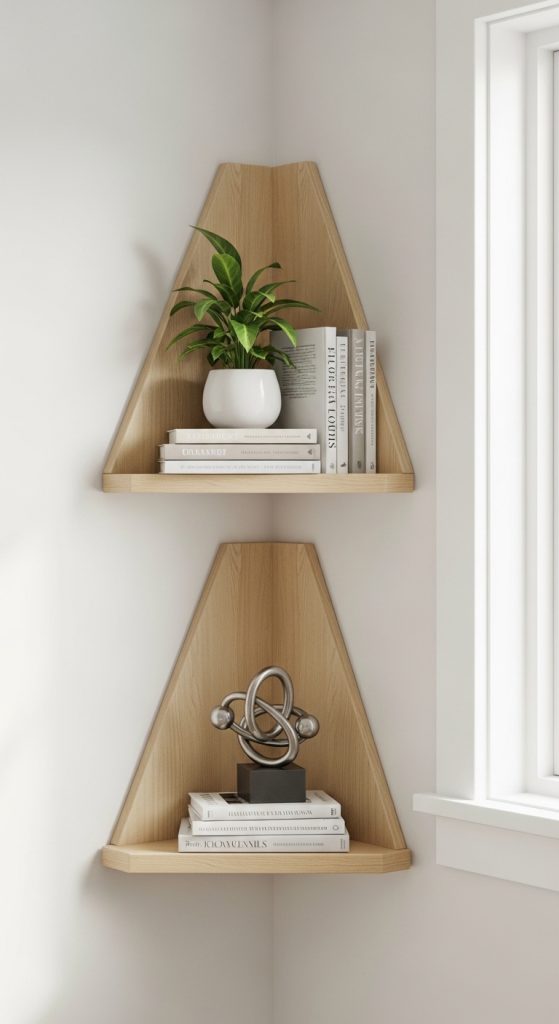
3. Corner Floating Shelves
Corner floating shelves are an excellent way to use empty corner spaces in a room. They maximize storage in small areas and create a unique design feature.
Preparation involves measuring the corner area carefully. Decide how many shelves you want and the distance between them. Triangle or L-shaped shelves usually work best for corners.
Materials include plywood or solid wood boards, corner floating shelf brackets, screws, wall anchors, wood glue, sandpaper, and paint or stain.
Start by cutting the wood into triangle or L-shaped pieces that fit perfectly into the corner. Sand the edges and surfaces to create a smooth finish. Apply paint or wood stain depending on your interior style.
Next install the corner brackets on both walls that meet at the corner. Use a level to ensure the brackets are aligned. Secure them using screws and wall anchors.
Place the shelf board onto the brackets and fix it in place with screws from underneath if necessary.
Corner floating shelves are ideal for displaying decorative items, plants, candles, or small books. They also work well in kitchens for spice jars or small containers.
4. Box Style Floating Shelves
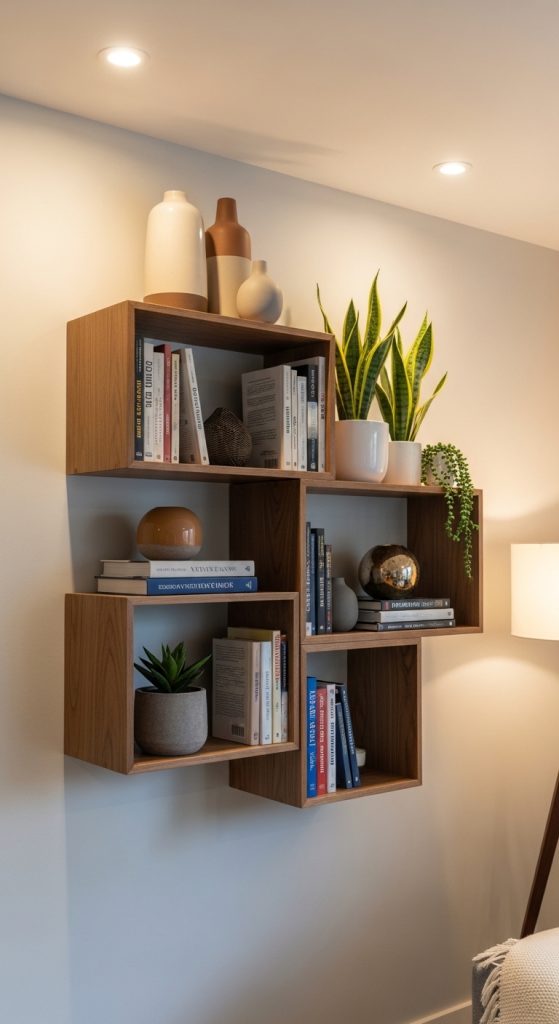
Box style floating shelves provide both decoration and storage. Unlike flat shelves, they have a hollow box design that hides the support frame inside.
Preparation starts by deciding the box dimensions. A typical size might be 24 inches long, 8 inches deep, and 3 to 4 inches thick.
Materials needed include wood boards for the top, bottom, and sides, a wooden support frame, wood glue, screws, nails, sandpaper, paint or stain, and wall mounting hardware.
Begin by building the internal support frame using narrow wooden strips. This frame will attach to the wall and support the outer box.
Next assemble the box by attaching the top, bottom, and side boards using wood glue and nails. Make sure the box is square and strong.
Sand the entire shelf and apply paint or stain. Allow it to dry before installation.
Mount the internal frame to the wall using screws and anchors or directly into wall studs. Once the frame is secure, slide the wooden box over it and fix it with small screws from underneath.
Box style floating shelves are great for displaying framed photos, small sculptures, or decorative pieces.
5. Floating Shelves with Hidden Drawer
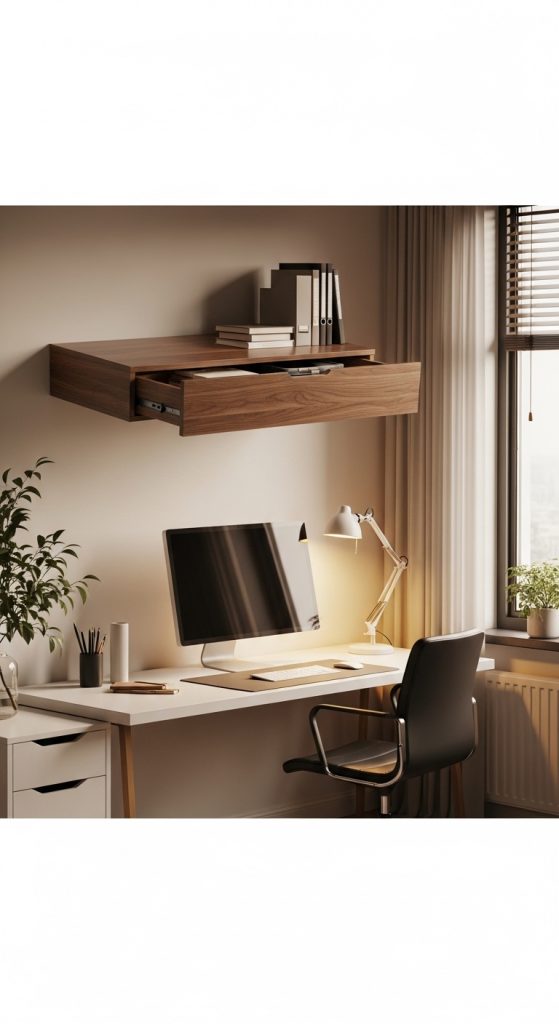
Floating shelves with hidden drawers combine style and secret storage. They look like simple shelves but include a small drawer underneath for storing small items.
Preparation includes deciding the shelf size and drawer depth. Plan the drawer mechanism so it slides smoothly without being visible.
Materials required include wood boards, drawer slides, small drawer handles or push-to-open mechanisms, screws, wood glue, sandpaper, and paint or stain.
Start by building the outer shelf box similar to a box style shelf. Inside the box, install the drawer slides along the sides.
Next build a small drawer that fits perfectly inside the shelf. Sand the edges and attach the drawer front panel.
Finish all wooden parts with paint or stain.
Mount the shelf frame securely on the wall using screws and anchors. Insert the drawer into the slides and test the opening mechanism.
These shelves are perfect for storing keys, chargers, notebooks, or small office items while keeping the room neat and organized.
6. Industrial Pipe Floating Shelves
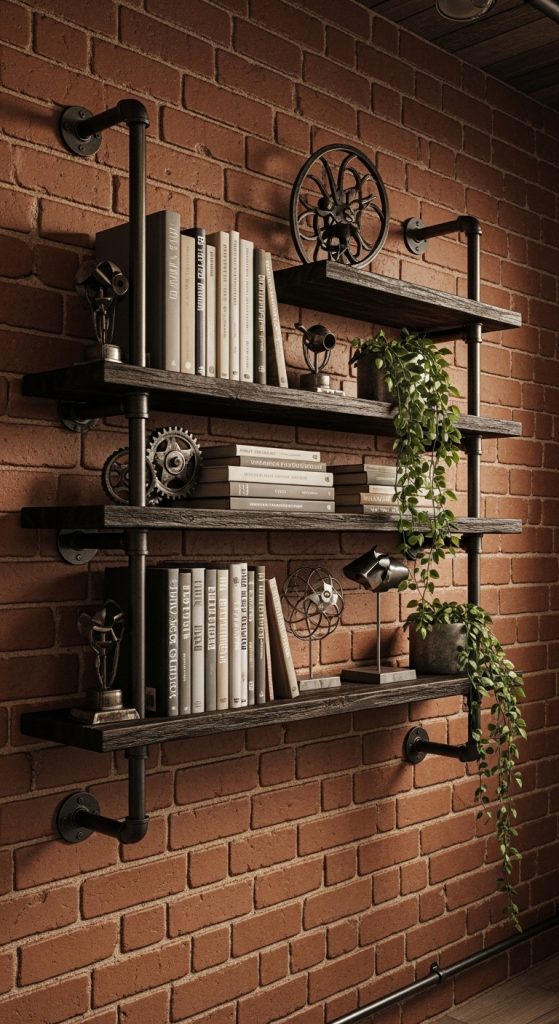
Industrial pipe shelves combine wood with metal pipes to create a strong and stylish design inspired by industrial interiors.
Preparation includes planning the shelf layout and selecting strong pipes that can support weight.
Materials include wooden boards, metal pipes, pipe flanges, screws, wall anchors, sandpaper, and wood stain.
First sand and stain the wooden boards. Allow them to dry completely.
Next attach pipe flanges to the wall using screws and anchors. Screw the metal pipes into the flanges to create a support structure.
Place the wooden shelf board on top of the pipes and secure it with screws from underneath if needed.
These shelves are extremely strong and suitable for holding books, kitchen supplies, or decorative objects. They work well in living rooms, home offices, and kitchens.
7. Minimalist Thin Floating Shelves
Minimalist floating shelves focus on simplicity and clean lines. They are perfect for modern interiors where clutter-free design is important.
Preparation begins with choosing thin but strong wood boards. The shelf should be lightweight yet capable of holding decorative items.
Materials include plywood or MDF boards, slim floating brackets, screws, wall anchors, sandpaper, and white or neutral paint.
Start by cutting the boards to the desired size and sanding the surface. Apply a smooth coat of paint or finish.
Next mark the installation points on the wall. Use a level to ensure perfect alignment.
Install the slim brackets securely into the wall and slide the shelf board onto them.
These minimalist shelves are perfect for displaying small plants, candles, framed photos, or decorative items while maintaining a modern look.
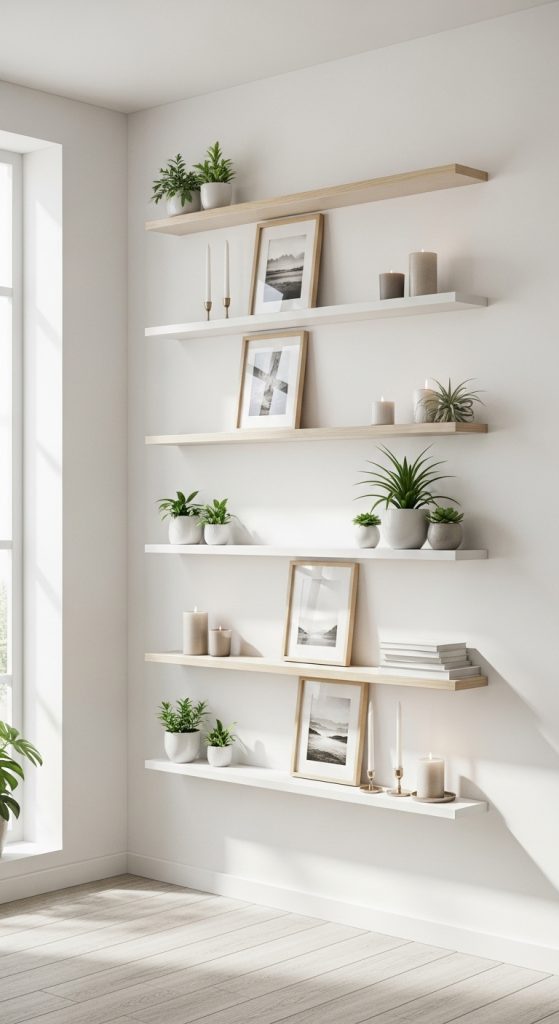
8. Floating Bookshelves
Floating bookshelves are designed specifically to hold books while creating a unique visual effect. Some designs even make books appear to float on the wall.
Preparation involves determining how many books you want to store and how much weight the shelf must support.
Materials include strong wooden boards or metal book brackets, screws, wall anchors, paint, and sandpaper.
Install strong brackets into the wall studs to support the weight of books. Place the shelf board over the brackets and secure it.
Another creative option is using hidden metal book supports that hold the bottom book, making the stack look like it is floating.
Floating bookshelves are perfect for reading corners, home offices, or study rooms.
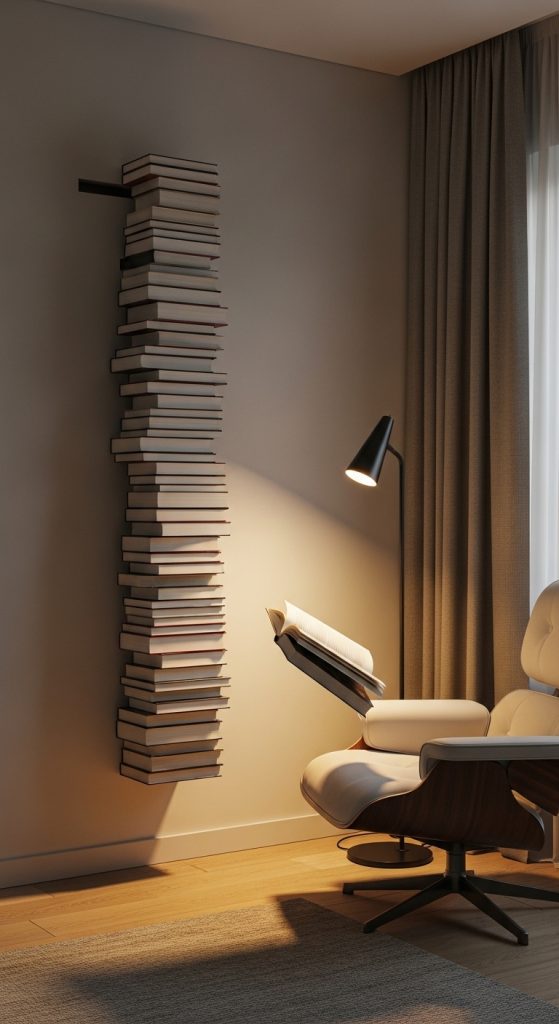
9. Geometric Floating Shelves
Geometric shelves add artistic style to walls. Instead of straight shelves, they use shapes such as hexagons, triangles, or squares.
Preparation includes drawing the design and measuring each shape carefully.
Materials required include wooden strips or boards, wood glue, nails, screws, sandpaper, and paint.
Cut the wooden pieces according to the geometric design and assemble them using glue and nails. Sand the edges and apply paint or stain.
Mount the geometric shelf units to the wall using screws and anchors.
These shelves function as both storage and wall art. They work well for displaying small plants, decorative objects, or collectibles.
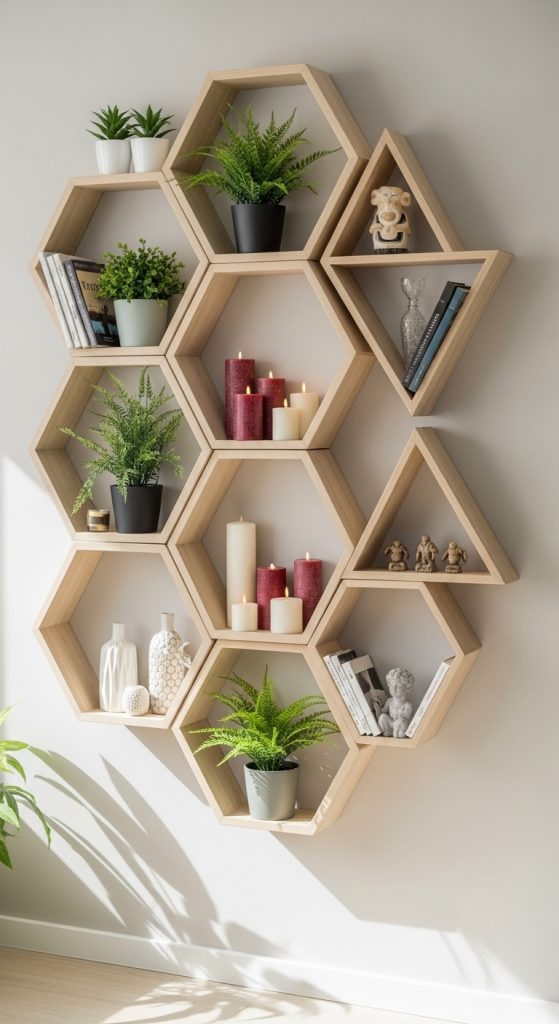
10. Floating Shelves with LED Lighting
Floating shelves with LED lighting add a modern and elegant touch to any room. The lighting highlights decorative items and creates a warm atmosphere.
Preparation involves choosing LED strip lights and planning where the wires will be hidden.
Materials include wooden shelf boards, floating brackets, LED strip lights, power adapter, cable clips, screws, wall anchors, sandpaper, and paint or stain.
Start by sanding and finishing the wooden shelf board. Install the floating brackets on the wall and slide the shelf into place.
Attach LED strip lights to the underside or back edge of the shelf. Hide the wires along the wall using cable clips.
Connect the LED strip to the power adapter and test the lighting.
These shelves are ideal for living rooms, bedrooms, or entertainment areas where soft lighting enhances the overall design.